
Title
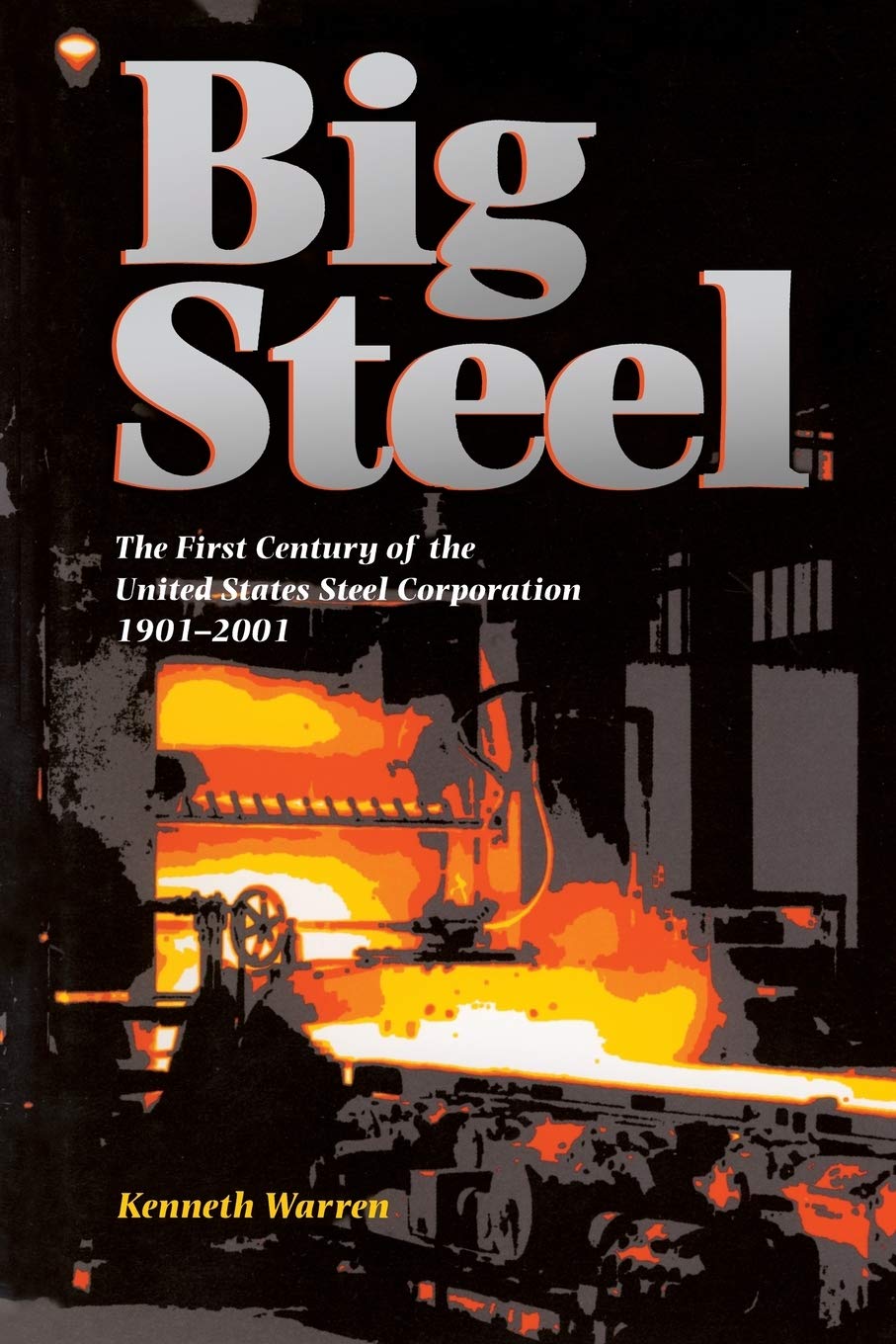
Big Steel: The First Century of the United States Steel Corporation 19012001,Used
Sold by Ergodebooks, an authorized reseller.
Returns accepted within 30 days | support@ergodebooks.com
Shipping Information
- Free Standard Shipping — United States only
- Processing Time: 3–5 business days
- Estimated Delivery: 6–10 business days after dispatch
- Double-boxed, fully insured & discreetly packaged
- Tracking number sent via email once dispatched
Returns & Refund
Returns accepted within 30 days of delivery.
Damaged or Defective Item
Free return shipping + replacement or full refund
Wrong Item Received
Free return shipping + replacement or full refund
Change of Mind
Return shipping at customer's expense · 25% restocking fee applies
Payment Option

At its formation in 1901, the United States Steel Corporation was the earths biggest industrial corporation, a wonder of the manufacturing world. Immediately it produced two thirds of Americas raw steel and thirty percent of the steel made worldwide. The behemoth company would go on to support the manufacturing superstructure of practically every other industry in America. It would create and sustain the economies of many industrial communities, especially Pittsburgh, employing more than a million people over the course of the century.A hundred years later, the U.S. Steel Group of USX makes scarcely ten percent of the steel in the United States and just over one and a half percent of global output. Far from the biggest, the company is now considered the most efficient steel producer in the world. What happened between then and now, and why, is the subject of Big Steel, the first comprehensive history of the company at the center of Americas twentiethcentury industrial life.Granted privileged and unprecedented access to the U.S. Steel archives, Kenneth Warren has sifted through a long, complex business history to tell a compelling story. Its preeminent size was supposed to confer many advantages to U.S. Steeleconomies of scale, monopolies of talent, etc. Yet in practice, many of those advantages proved illusory. Warren shows how, even in its early years, the company was outmaneuvered by smaller competitors and how, over the century, U.S. Steels share of the industry, by every measure, steadily declined.Warrens subtle analysis of years of internal decision making reveals that the companys size and clumsy hierarchical structure made it uniquely difficult to direct and manage. He profiles the chairmen who grappled with this lumbering giant, paying particular attention to those who long ago created its enduring corporate cultureCharles M. Schwab, Elbert H. Gary, and Myron C. Taylor.Warren points to the way U.S. Steels dominating size exposed it to public scrutiny and government oversighta cautionary force. He analyzes the ways that labor relations affected company management and strategy. And he demonstrates how U.S. Steel suffered gradually, steadily, from its paradoxical ability to make high profits while failing to keep pace with the best practices. Only after the drastic pruning late in the centurywhen U.S. Steel reduced its capacity by twothirdsdid the company become a world leader in steelmaking efficiency, rather than merely in size.These lessons, drawn from the history of an extraordinary company, will enrich the scholarship of industry and inform the practice of business in the twentyfirst century.
⚠️ WARNING (California Proposition 65):
This product may contain chemicals known to the State of California to cause cancer, birth defects, or other reproductive harm.
For more information, please visit www.P65Warnings.ca.gov.