
Title
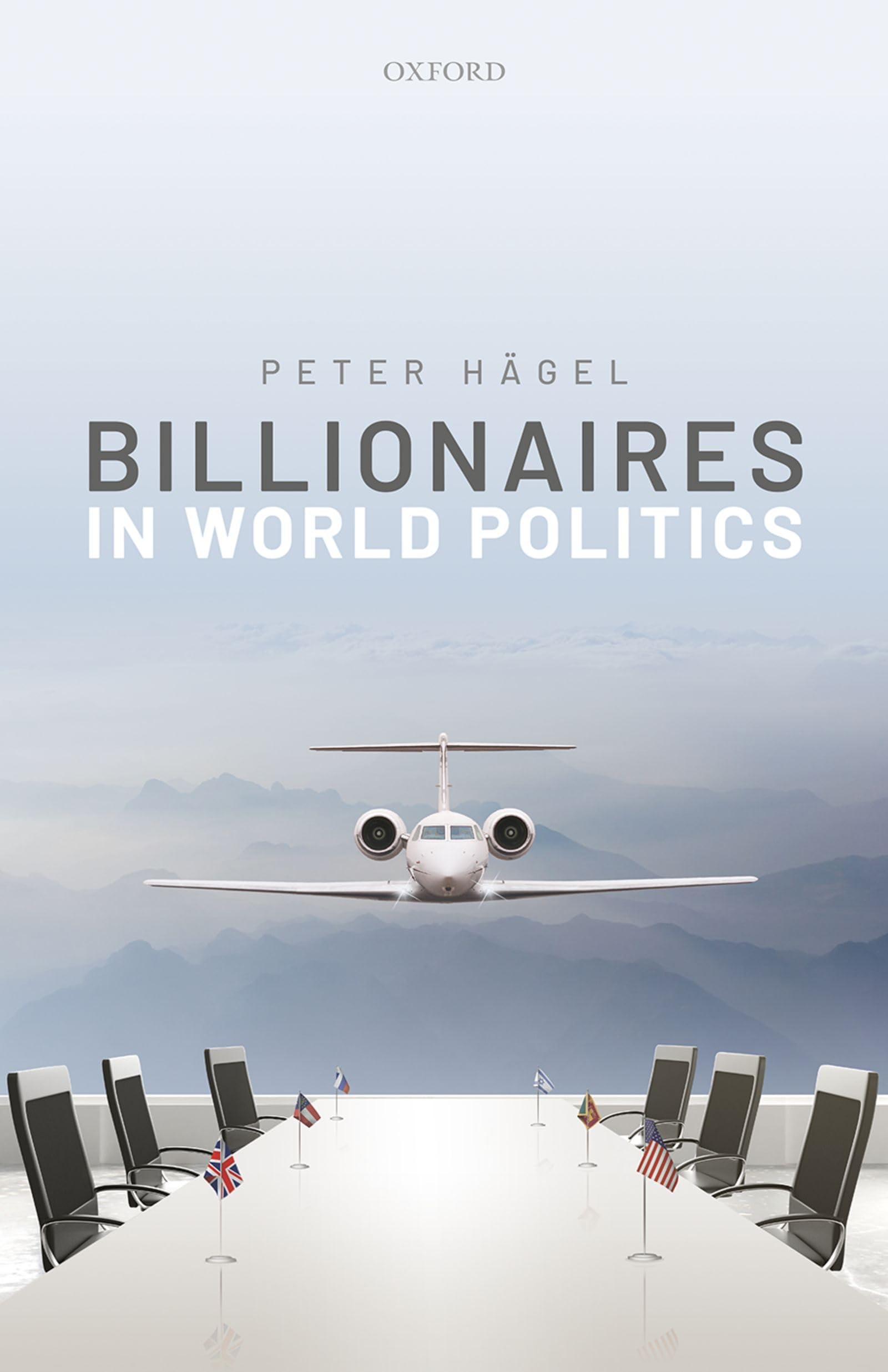
Billionaires in World Politics,Used
Sold by Ergodebooks, an authorized reseller.
Returns accepted within 30 days | support@ergodebooks.com
Shipping Information
- Free Standard Shipping — United States only
- Processing Time: 3–5 business days
- Estimated Delivery: 6–10 business days after dispatch
- Double-boxed, fully insured & discreetly packaged
- Tracking number sent via email once dispatched
Returns & Refund
Returns accepted within 30 days of delivery.
Damaged or Defective Item
Free return shipping + replacement or full refund
Wrong Item Received
Free return shipping + replacement or full refund
Change of Mind
Return shipping at customer's expense · 25% restocking fee applies
Payment Option

Billionaires in World Politics shows how the privatization of politics assumes a new dimension when billionaires wield power in world politics, which requires a rethinking of individual agency in International Relations. Structural changes (globalization, neoliberalism, competition states, and global governance) have generated new opportunities for individuals to become extremely rich and to engage in politics across borders. The political agency of billionaires is being conceptualized in terms of capacities, goals, and power, which is contingent upon the specific political field a billionaire is trying to enter.Six case studies explore the power of billionaires in their pursuit of security, wealth, and esteem. The chapter on security analyzes Raj Rajaratnam's relationship to the Tamil cause in Sri Lanka, and Sheldon Adelson's transnational electioneering in the IsraelPalestine conflict. Regarding the economy, the book studies how the Koch brothers' political protection of fossil fuels is affecting climate change mitigation, and how Rupert Murdoch's opinionshaping is valorizing conservatism across borders. The chapter on social entrepreneurship and esteem examines the role of Bill Gates in the governance of global health and George Soros's attempts to build open societies as a 'stateless statesman'. An analytical conclusion evaluates the prior findings in order to address three major questions: Is it more appropriate to see billionaires as 'superactors', or as a global 'superclass'? What is the relative power of billionaires within the international system? What does the power of billionaires mean for the liberal norms of legitimate political order?
⚠️ WARNING (California Proposition 65):
This product may contain chemicals known to the State of California to cause cancer, birth defects, or other reproductive harm.
For more information, please visit www.P65Warnings.ca.gov.