
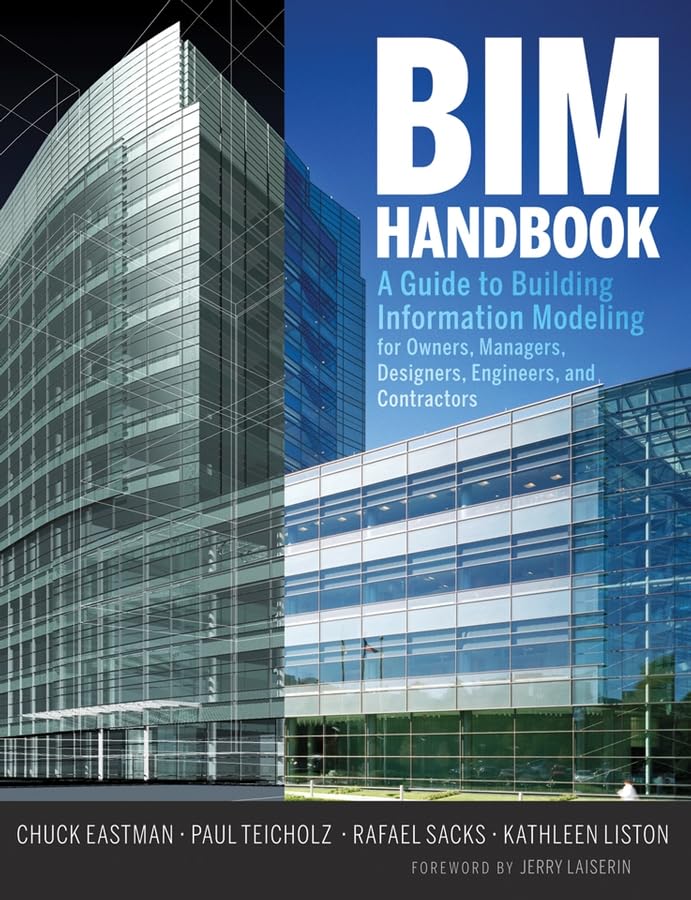
Title
Bim Handbook: A Guide To Building Information Modeling For Owners, Managers, Designers, Engineers And Contractors
Sold by Ergodebooks, an authorized reseller.
Returns accepted within 30 days | support@ergodebooks.com
Shipping Information
- Free Standard Shipping — United States only
- Processing Time: 3–5 business days
- Estimated Delivery: 6–10 business days after dispatch
- Double-boxed, fully insured & discreetly packaged
- Tracking number sent via email once dispatched
Returns & Refund
Returns accepted within 30 days of delivery.
Damaged or Defective Item
Free return shipping + replacement or full refund
Wrong Item Received
Free return shipping + replacement or full refund
Change of Mind
Return shipping at customer's expense · 25% restocking fee applies
Payment Option

Discover Bim: A Better Way To Build Better Buildings.Building Information Modeling (Bim) Is A New Approach To Design, Construction, And Facility Management In Which A Digital Representation Of The Building Process Is Used To Facilitate The Exchange And Interoperability Of Information In Digital Format. Bim Is Beginning To Change The Way Buildings Look, The Way They Function, And The Ways In Which They Are Designed And Built.Bim Handbook: A Guide To Building Information Modeling For Owners,Managers, Designers, Engineers, And Contractors Provides An Indepth Understanding Of Bim Technologies, The Business And Organizational Issues Associated With Its Implementation, And The Profound Advantages That Effective Use Of Bim Can Provide To All Members Of A Project Team. The Handbook:Introduces Building Information Modeling And The Technologies That Support Itreviews Bim And Its Related Technologies, In Particular Parametric And Objectoriented Modeling, Its Potential Benefits, Its Costs, And Needed Infrastructureexplains How Designing, Constructing, And Operating Buildings With Bim Differs From Pursuing The Same Activities In The Traditional Way Using Drawings, Whether Paper Or Electronicdiscusses The Present And Future Influences Of Bim On Regulatory Agencies; Legal Practice Associated With The Building Industry; And Manufacturers Of Building Productspresents A Rich Set Of Bim Case Studies And Describes Various Bim Tools And Technologiesshows How Specific Disciplines?Owners, Designers, Contractors, And Fabricators?Can Adopt And Implement Bim In Their Companiesexplores Bim'S Current And Future Impact On Industry And Societypainting A Colorful And Thorough Picture Of The State Of The Art In Building Information Modeling, The Bim Handbook Guides Readers To Successful Implementations, Helping Them To Avoid Needless Frustration And Costs And Take Full Advantage Of This Paradigmshifting Approach To Build Better Buildings, That Consume Fewer Materials, And Require Less Time, Labor, And Capital Resources.
⚠️ WARNING (California Proposition 65):
This product may contain chemicals known to the State of California to cause cancer, birth defects, or other reproductive harm.
For more information, please visit www.P65Warnings.ca.gov.
- Q: How many pages does the BIM Handbook have? A: The BIM Handbook has five hundred pages. This extensive coverage allows for a deep dive into Building Information Modeling.
- Q: What is the binding type of this book? A: The BIM Handbook is hardcover. This type of binding enhances durability and makes it suitable for frequent use.
- Q: What are the dimensions of the BIM Handbook? A: The dimensions of the BIM Handbook are seven point seventy-eight inches by one point thirty-one inches by nine point forty-three inches. These measurements make it a standard-sized reference book.
- Q: How do I use the BIM Handbook effectively? A: To use the BIM Handbook effectively, read it chapter by chapter as it builds on concepts progressively. It's designed for professionals interested in implementing BIM in their projects.
- Q: Is this book suitable for beginners in BIM? A: Yes, the BIM Handbook is suitable for beginners. It introduces key concepts and technologies, making it accessible to those new to Building Information Modeling.
- Q: Can I apply BIM techniques from this book to my construction projects? A: Yes, you can apply BIM techniques from this book to your construction projects. It includes case studies and practical guidance for implementation.
- Q: How should I store the BIM Handbook to keep it in good condition? A: Store the BIM Handbook upright on a shelf to prevent warping. Avoid exposing it to moisture or direct sunlight for longevity.
- Q: Are there any specific cleaning instructions for the BIM Handbook? A: No specific cleaning instructions are necessary for the BIM Handbook. However, keeping it dust-free will help maintain its appearance.
- Q: What if my BIM Handbook arrives damaged? A: If your BIM Handbook arrives damaged, contact the seller for a return or exchange. Always check the book upon receipt to address issues promptly.
- Q: How does the BIM Handbook compare to other BIM resources? A: The BIM Handbook is comprehensive and in-depth, making it a strong choice compared to other resources. It covers both technical and organizational aspects of BIM.
- Q: Is the BIM Handbook suitable for contractors? A: Yes, the BIM Handbook is suitable for contractors. It offers insights into how BIM can enhance project management and construction efficiency.
- Q: Does the BIM Handbook cover future trends in BIM? A: Yes, the BIM Handbook discusses future trends in BIM. It examines potential impacts on the building industry and regulatory practices.
- Q: Can I use this book for academic purposes? A: Yes, the BIM Handbook can be used for academic purposes. Its detailed information and case studies make it useful for students studying architecture and engineering.
- Q: Is this book authored by a recognized expert? A: Yes, the BIM Handbook is authored by Chuck Eastman, a recognized expert in Building Information Modeling.
- Q: What is the primary focus of the BIM Handbook? A: The primary focus of the BIM Handbook is to provide a comprehensive understanding of Building Information Modeling technologies and their applications.