
Title
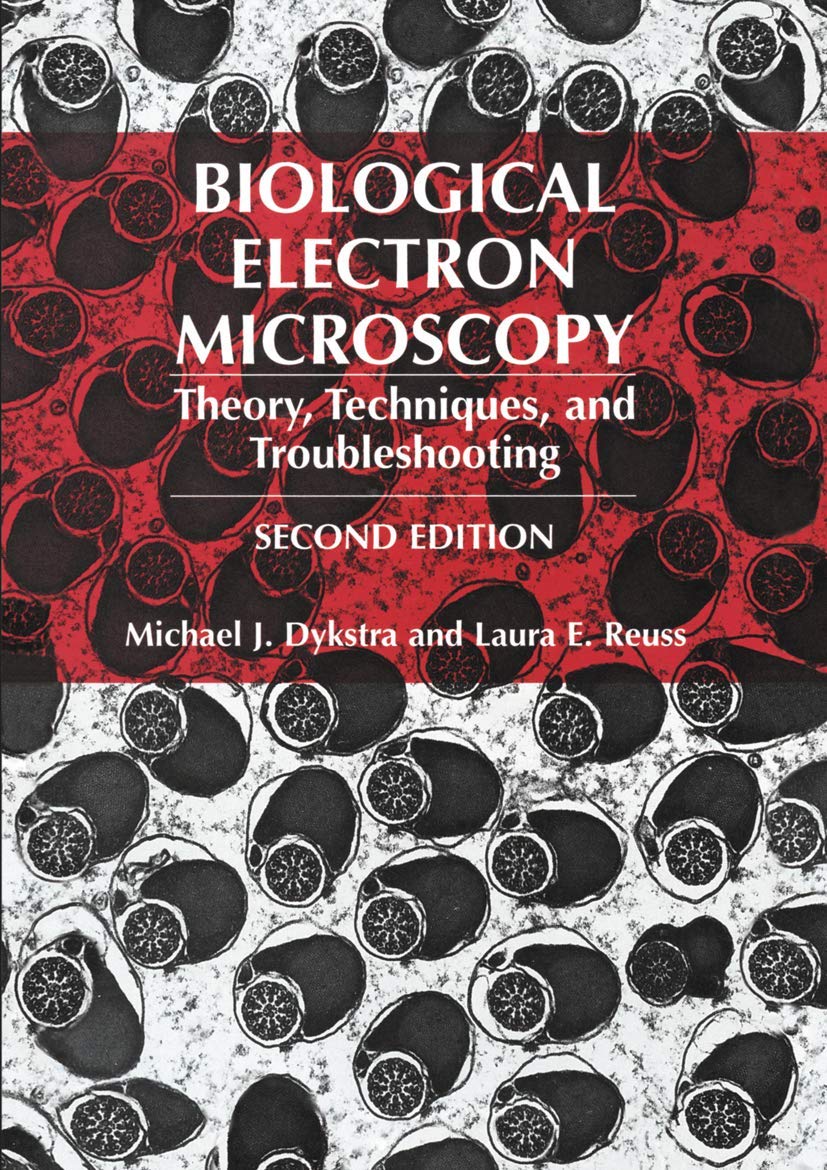
Biological Electron Microscopy: Theory, Techniques, and Troubleshooting,Used
Sold by Ergodebooks, an authorized reseller.
Returns accepted within 30 days | support@ergodebooks.com
Shipping Information
- Free Standard Shipping — United States only
- Processing Time: 3–5 business days
- Estimated Delivery: 6–10 business days after dispatch
- Double-boxed, fully insured & discreetly packaged
- Tracking number sent via email once dispatched
Returns & Refund
Returns accepted within 30 days of delivery.
Damaged or Defective Item
Free return shipping + replacement or full refund
Wrong Item Received
Free return shipping + replacement or full refund
Change of Mind
Return shipping at customer's expense · 25% restocking fee applies
Payment Option

Electron microscopy is frequently portrayed as a discipline that stands alone, separated from molecular biology, light microscopy, physiology, and biochemistry, among other disciplines. It is also presented as a technically demanding discipline operating largely in the sphere of 'black boxes' and governed by many absolute laws of procedure. At the introductory level, this portrayal does the discipline and the student a disservice. The instrumentation we use is complex, but ultimately understandable and, more importantly, repairable. The procedures we employ for preparing tissues and cells are not totally understood, but enough information is available to allow investigators to make reasonable choices concerning the best techniques to apply to their parti cular problems. There are countless specialized techniques in the field of electron and light microscopy that require the acquisition of specialized knowledge, particularly for interpretation of results (electron tomography and energy dispersive spectroscopy immediately come to mind), but most laboratories possessing the equipment to effect these approaches have specialists to help the casual user. The advent of computer operated electron microscopes has also broadened access to these instruments, allowing users with little technical knowledge about electron microscope design to quickly become operators. This has been a welcome advance, because earlier instru ments required a level of knowledge about electron optics and vacuum systems to produce optimal photographs and to avoid 'crashing' the instruments that typically made it difficult for beginners.
⚠️ WARNING (California Proposition 65):
This product may contain chemicals known to the State of California to cause cancer, birth defects, or other reproductive harm.
For more information, please visit www.P65Warnings.ca.gov.