
Title
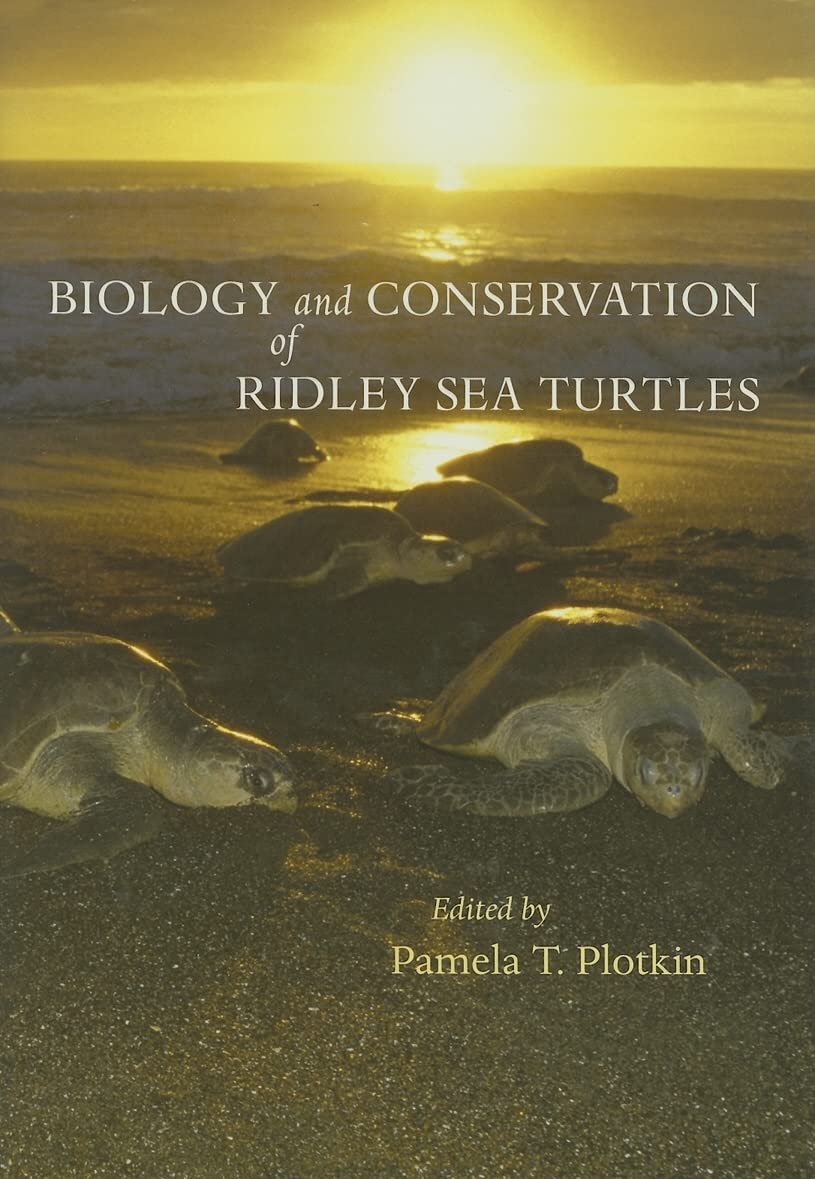
Biology and Conservation of Ridley Sea Turtles,New
Sold by Ergodebooks, an authorized reseller.
Returns accepted within 30 days | support@ergodebooks.com
Shipping Information
- Free Standard Shipping — United States only
- Processing Time: 3–5 business days
- Estimated Delivery: 6–10 business days after dispatch
- Double-boxed, fully insured & discreetly packaged
- Tracking number sent via email once dispatched
Returns & Refund
Returns accepted within 30 days of delivery.
Damaged or Defective Item
Free return shipping + replacement or full refund
Wrong Item Received
Free return shipping + replacement or full refund
Change of Mind
Return shipping at customer's expense · 25% restocking fee applies
Payment Option

The smallest of the sea turtles, olive and Kemps ridleys are the only marine turtles to exhibit massnesting behavior, known as arribadas. This fascinating phenomenon, during which one could literally walk shelltoshell across a beach, is considered one of the most amazing wonders of nature.In Biology and Conservation of Ridley Sea Turtles, Pamela T. Plotkin brings together the worlds experts on the genus Lepidochelys to present the first comprehensive, booklength examination of these fascinating animals. Featuring the writings of noted experts including Peter C. H. Pritchard, Jack Frazier, Rene MrquezM., and Donna J. Shaver, the volume synthesizes over a half century of research. With chapters focused on evolution, development, genetics, physiology, reproduction, migration, and conservation, this book combines a wealth of knowledge and describes an agenda for further research.An integral part of oceanic ecosystems, ridleys present challenges for conservation. Olive ridleys are abundant in some areas and declining in others, whereas Kemps ridleys are endangered but slowly recovering. Both face beachbased threats and are prone to capture by commercial fisheries. Here Plotkin and her colleagues reveal the nature of these species and the steps needed to make sure they remain a permanent part of the marine environment.
⚠️ WARNING (California Proposition 65):
This product may contain chemicals known to the State of California to cause cancer, birth defects, or other reproductive harm.
For more information, please visit www.P65Warnings.ca.gov.