
Title
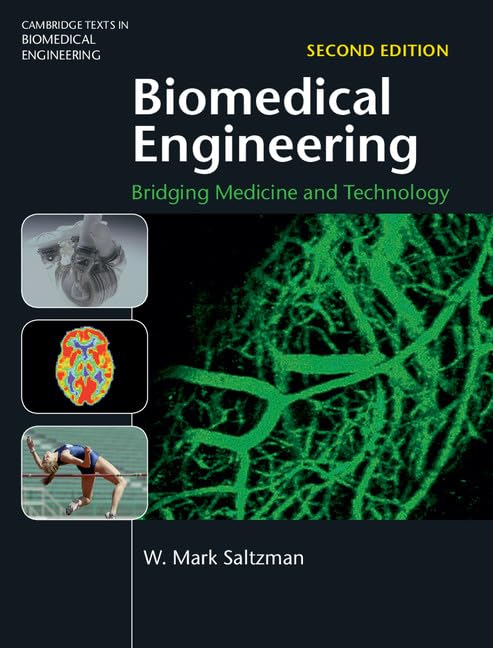
Biomedical Engineering: Bridging Medicine And Technology (Cambridge Texts In Biomedical Engineering)
Sold by Ergodebooks, an authorized reseller.
Returns accepted within 30 days | support@ergodebooks.com
Shipping Information
- Free Standard Shipping — United States only
- Processing Time: 3–5 business days
- Estimated Delivery: 6–10 business days after dispatch
- Double-boxed, fully insured & discreetly packaged
- Tracking number sent via email once dispatched
Returns & Refund
Returns accepted within 30 days of delivery.
Damaged or Defective Item
Free return shipping + replacement or full refund
Wrong Item Received
Free return shipping + replacement or full refund
Change of Mind
Return shipping at customer's expense · 25% restocking fee applies
Payment Option

The Second Edition Of This Popular Introductory Undergraduate Textbook Uses Examples, Applications, And Profiles Of Biomedical Engineers To Show Students The Relevance Of The Theory And How It Can Be Used To Solve Real Problems In Human Medicine. The Essential Molecular Biology, Cellular Biology, And Human Physiology Background Is Included For Students To Understand The Context In Which Biomedical Engineers Work. Updates Throughout Highlight Important Advances Made Over Recent Years, Including Ips Cells, Microrna, Nanomedicine, Imaging Technology, Biosensors, And Drug Delivery Systems, Giving Students A Modern Description Of The Various Subfields Of Biomedical Engineering. Over Two Hundred Quantitative And Qualitative Exercises, Many New To This Edition, Help Consolidate Learning, Whilst A Solutions Manual, Passwordprotected For Instructors, Is Available Online. Finally, Students Can Enjoy An Expanded Set Of Leader Profiles In Biomedical Engineering Within The Book, Showcasing The Broad Range Of Career Paths Open To Students Who Make Biomedical Engineering Their Calling.
⚠️ WARNING (California Proposition 65):
This product may contain chemicals known to the State of California to cause cancer, birth defects, or other reproductive harm.
For more information, please visit www.P65Warnings.ca.gov.
- Q: What is the page count of this book? A: This book has seven hundred seventy-nine pages. It covers a wide range of topics in biomedical engineering.
- Q: What are the dimensions of this book? A: The book measures seven point seven two inches in length, one point six one inches in width, and nine point eight inches in height.
- Q: What type of binding does this book have? A: This book is bound in hardcover. This provides durability and a professional appearance.
- Q: Who is the author of this book? A: The author of this book is W. Mark Saltzman. He is a recognized expert in biomedical engineering.
- Q: What category does this book fall under? A: This book falls under the Biomedical Engineering category. It is suitable for students and professionals in the field.
- Q: How is this book structured for learning? A: The book includes over two hundred exercises. These exercises help consolidate learning and provide practical application.
- Q: Is this book suitable for beginners? A: Yes, this book is suitable for beginners. It is designed as an introductory textbook for undergraduate students.
- Q: Are there any profiles of biomedical engineers in this book? A: Yes, the book features expanded profiles of biomedical engineers. This showcases various career paths in the field.
- Q: Can instructors access additional resources for this book? A: Yes, a solutions manual is available online for instructors. It is password-protected to ensure accessibility for teaching.
- Q: How does this book address modern advancements in biomedical engineering? A: The book highlights important advancements such as iPS cells, microRNA, and nanomedicine. This provides a current perspective on the field.
- Q: What background knowledge is included in this book? A: The book includes essential molecular biology, cellular biology, and human physiology background. This helps students understand the context of biomedical engineering.
- Q: Does this book include qualitative exercises? A: Yes, this book includes both quantitative and qualitative exercises. This variety aids in comprehensive learning.
- Q: Is this book appropriate for someone interested in drug delivery systems? A: Yes, this book covers drug delivery systems in detail. It is a relevant topic within biomedical engineering.
- Q: What is the primary focus of this book? A: The primary focus is bridging medicine and technology. It emphasizes the application of engineering principles in healthcare.
- Q: Are there any updates from the first edition of this book? A: Yes, this is the second edition, which includes updates on significant advancements. These updates reflect the latest trends in biomedical engineering.