If you have any questions, you are always welcome to contact us. We'll get back to you as soon as possible, withing 24 hours on weekdays.
Customer service
All questions about your order, return and delivery must be sent to our customer service team by e-mail at yourstore@yourdomain.com
Sale & Press
If you are interested in selling our products, need more information about our brand or wish to make a collaboration, please contact us at press@yourdomain.com
Help
If you have any questions, you are always welcome to contact us. We'll get back to you as soon as possible, withing 24 hours on weekdays.
Customer service
All questions about your order, return and delivery must be sent to our customer service team by e-mail at yourstore@yourdomain.com
Sale & Press
If you are interested in selling our products, need more information about our brand or wish to make a collaboration, please contact us at press@yourdomain.com
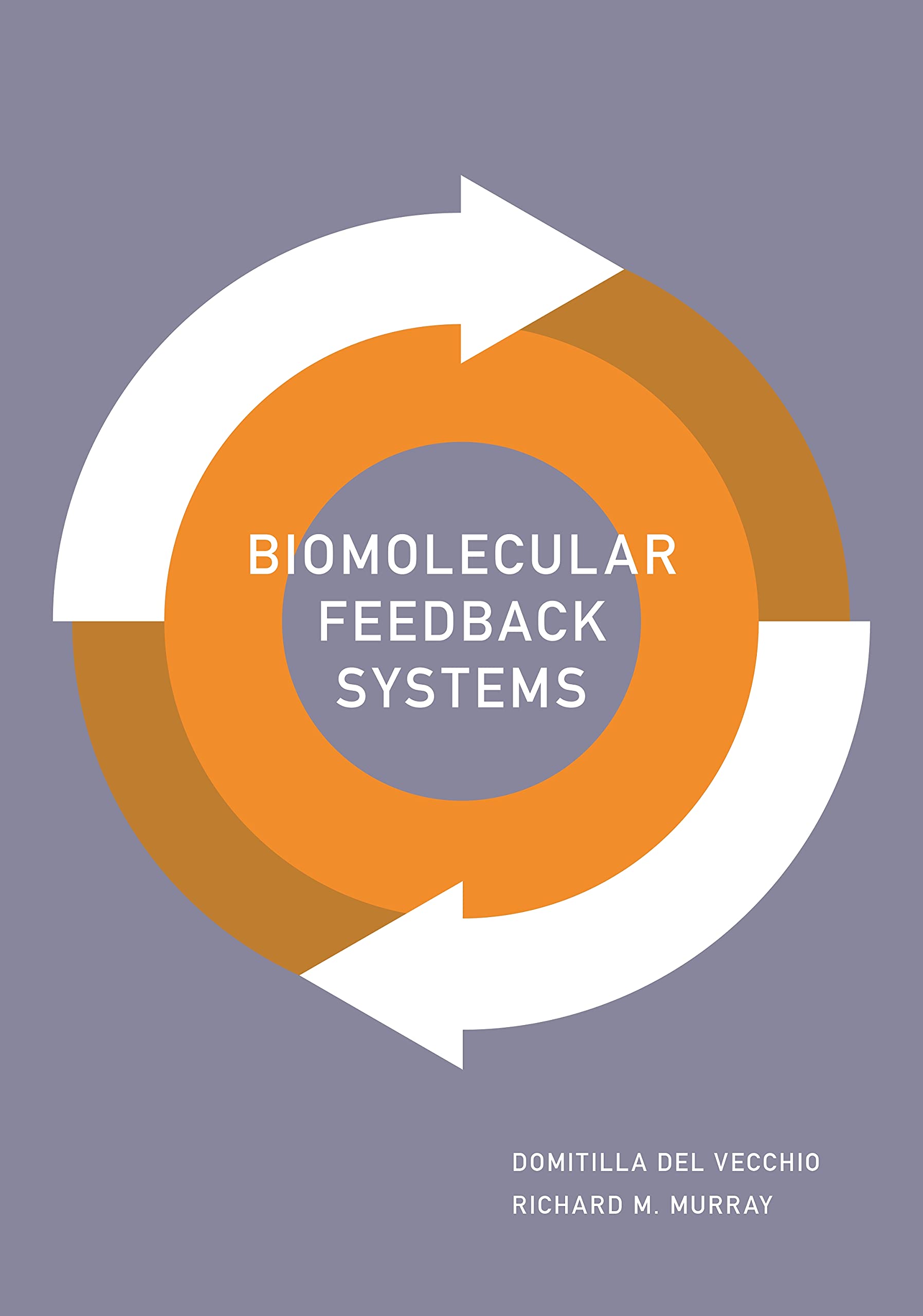
This book provides an accessible introduction to the principles and tools for modeling, analyzing, and synthesizing biomolecular systems. It begins with modeling tools such as reactionrate equations, reducedorder models, stochastic models, and specific models of important core processes. It then describes in detail the control and dynamical systems tools used to analyze these models. These include tools for analyzing stability of equilibria, limit cycles, robustness, and parameter uncertainty. Modeling and analysis techniques are then applied to design examples from both natural systems and synthetic biomolecular circuits. In addition, this comprehensive book addresses the problem of modular composition of synthetic circuits, the tools for analyzing the extent of modularity, and the design techniques for ensuring modular behavior. It also looks at design tradeoffs, focusing on perturbations due to noise and competition for shared cellular resources.Featuring numerous exercises and illustrations throughout, Biomolecular Feedback Systems is the ideal textbook for advanced undergraduates and graduate students. For researchers, it can also serve as a selfcontained reference on the feedback control techniques that can be applied to biomolecular systems.Provides a userfriendly introduction to essential concepts, tools, and applications Covers the most commonly used modeling methods Addresses the modular design problem for biomolecular systems Uses design examples from both natural systems and synthetic circuits Solutions manual (available only to professors at press.princeton.edu) An online illustration package is available to professors at press.princeton.edu
⚠️ WARNING (California Proposition 65):
This product may contain chemicals known to the State of California to cause cancer,
birth defects, or other reproductive harm.
For MAP (Minimum Advertised Price) violations and Intellectual Property (IP) or Trademark concerns, please contact:
support@ergodebooks.com
⚠️ California Proposition 65 Warning: Some products sold on this website may expose you to chemicals known to the State of California to cause cancer, birth defects, or other reproductive harm. For more information, visit www.P65Warnings.ca.gov.