
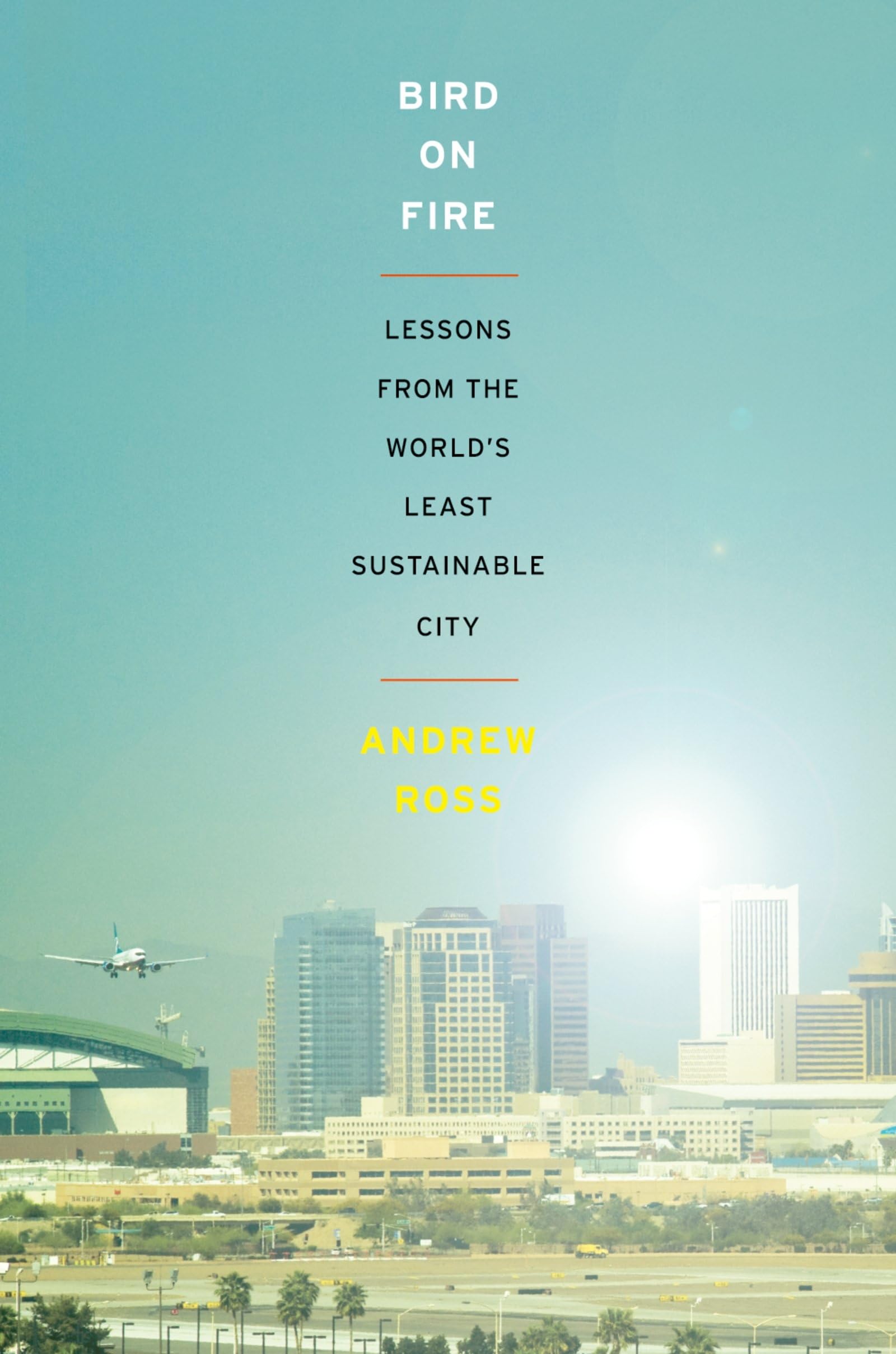
Title
Bird on Fire: Lessons from the World's Least Sustainable City,Used
Sold by Ergodebooks, an authorized reseller.
Returns accepted within 30 days | support@ergodebooks.com
Shipping Information
- Free Standard Shipping — United States only
- Processing Time: 3–5 business days
- Estimated Delivery: 6–10 business days after dispatch
- Double-boxed, fully insured & discreetly packaged
- Tracking number sent via email once dispatched
Returns & Refund
Returns accepted within 30 days of delivery.
Damaged or Defective Item
Free return shipping + replacement or full refund
Wrong Item Received
Free return shipping + replacement or full refund
Change of Mind
Return shipping at customer's expense · 25% restocking fee applies
Payment Option

Phoenix, Arizona is one of America's fastest growing metropolitan regions. It is also its least sustainable one, sprawling over a thousand square miles, with a population of four and a half million, minimal rainfall, scorching heat, and an insatiable appetite for unrestrained growth and unrestricted property rights.In Bird on Fire, eminent social and cultural analyst Andrew Ross focuses on the prospects for sustainability in Phoenixa city in the bull's eye of global warmingand also the obstacles that stand in the way. Most authors writing on sustainable cities look at places that have excellent public transit systems and relatively high density, such as Portland, Seattle, or New York. But Ross contends that if we can't change the game in fastgrowing, lowdensity cities like Phoenix, the whole movement has a major problem. Drawing on interviews with 200 influential residentsfrom state legislators, urban planners, developers, and green business advocates to civil rights champions, energy lobbyists, solar entrepreneurs, and community activistsRoss argues that if Phoenix is ever to become sustainable, it will occur more through political and social change than through technological fixes. Ross explains how Arizona's increasingly xenophobic immigration laws, sciencedenying legislature, and growthatallcosts business ethic have perpetuated social injustice and environmental degradation. But he also highlights the positive changes happening in Phoenix, in particular the Gila River Indian Community's successful struggle to win back its water rights, potentially shifting resources away from new housing developments to producing healthy local food for the people of the Phoenix Basin. Ross argues that this victory may serve as a new model for how green democracy can work, redressing the claims of those who have been aggrieved in a way that creates longterm benefits for all.Bird on Fire offers a compelling take on one of the pressing issues of our timefinding pathways to sustainability at a time when governments are dismally failing in their responsibility to address climate change.
⚠️ WARNING (California Proposition 65):
This product may contain chemicals known to the State of California to cause cancer, birth defects, or other reproductive harm.
For more information, please visit www.P65Warnings.ca.gov.
- Q: What is the main focus of the book 'Bird on Fire'? A: The book focuses on sustainability challenges in Phoenix, Arizona, examining social and political obstacles to achieving sustainable growth in a rapidly expanding, low-density city.
- Q: Who is the author of 'Bird on Fire'? A: The author of 'Bird on Fire' is Andrew Ross, a prominent social and cultural analyst.
- Q: What are the key themes discussed in 'Bird on Fire'? A: Key themes include the relationship between growth and sustainability, social injustice, environmental degradation, and the potential for political change to drive sustainability.
- Q: How many pages does 'Bird on Fire' have? A: 'Bird on Fire' has a total of 312 pages.
- Q: What edition of the book is available? A: The available edition of 'Bird on Fire' is a reprint.
- Q: When was 'Bird on Fire' published? A: 'Bird on Fire' was published on May 1, 2013.
- Q: What type of binding does the book have? A: 'Bird on Fire' is bound in paperback.
- Q: Is 'Bird on Fire' a new or used book? A: 'Bird on Fire' is categorized as a new book.
- Q: What is the significance of the Gila River Indian Community in the book? A: The Gila River Indian Community's struggle to regain water rights is highlighted as a positive example of advocacy for sustainability and social justice in Phoenix.
- Q: What makes 'Bird on Fire' different from other books about sustainable cities? A: Unlike many books that focus on cities with effective public transit and high density, 'Bird on Fire' addresses the unique challenges faced by fast-growing, low-density cities like Phoenix.