
Title
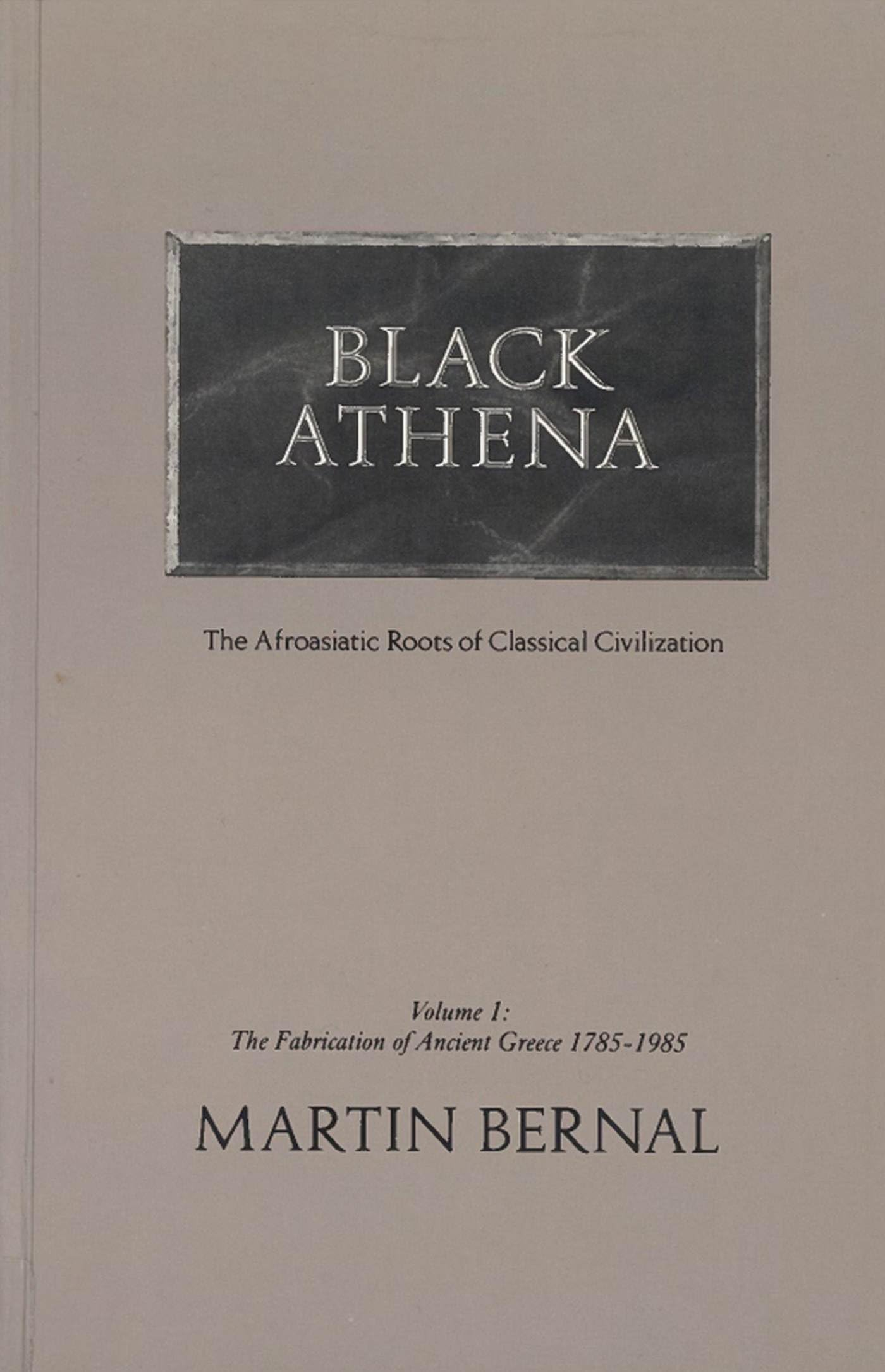
Black Athena: The Afroasiatic Roots Of Classical Civilization (The Fabrication Of Ancient Greece 17851985, Volume 1),Used
Sold by Ergodebooks, an authorized reseller.
Returns accepted within 30 days | support@ergodebooks.com
Shipping Information
- Free Standard Shipping — United States only
- Processing Time: 3–5 business days
- Estimated Delivery: 6–10 business days after dispatch
- Double-boxed, fully insured & discreetly packaged
- Tracking number sent via email once dispatched
Returns & Refund
Returns accepted within 30 days of delivery.
Damaged or Defective Item
Free return shipping + replacement or full refund
Wrong Item Received
Free return shipping + replacement or full refund
Change of Mind
Return shipping at customer's expense · 25% restocking fee applies
Payment Option

Winner of the American Book Award, 1990.Could Greek philosophy be rooted in Egyptian thought? Is it possible that the Pythagorean theory was conceived on the shores of the Nile and the Euphrates rather than in ancient Greece? Could it be that Western civilization was born on the socalled Dark Continent? For almost two centuries, Western scholars have given little credence to the possibility of such scenarios.In Black Athena, an audacious threevolume series that strikes at the heart of today's most heated culture wars, Martin Bernal challenges Eurocentric attitudes by calling into question two of the longestestablished explanations for the origins of classical civilization. The Aryan Model, which is current today, claims that Greek culture arose as the result of the conquest from the north by IndoEuropean speakers, or 'Aryans,' of the native 'preHellenes.' The Ancient Model, which was maintained in Classical Greece, held that the native population of Greece had initially been civilized by Egyptian and Phoenician colonists and that additional Near Eastern culture had been introduced to Greece by Greeks studying in Egypt and Southwest Asia. Moving beyond these prevailing models, Bernal proposes a Revised Ancient Model, which suggests that classical civilization in fact had deep roots in Afroasiatic cultures.This longawaited third and final volume of the series is concerned with the linguistic evidence that contradicts the Aryan Model of ancient Greece. Bernal shows how nearly 40 percent of the Greek vocabulary has been plausibly derived from two Afroasiatic languagesAncient Egyptian and West Semitic. He also reveals how these derivations are not limited to matters of trade, but extended to the sophisticated language of politics, religion, and philosophy. This evidence, according to Bernal, confirms the fact that in Greece an IndoEuropean people was culturally dominated by speakers of Ancient Egyptian and West Semitic.Provocative, passionate, and colossal in scope, this volume caps a thoughtful rewriting of history that has been stirring academic and political controversy since the publication of the first volume.'A work which has much to offer the lay reader, and its multidisciplinary sweep is refreshing: it is an important contribution to his to historiography and the sociology of knowledge, written with elegance, wit, and selfawareness... a thrilling journey... his account is as gripping a tale of scholarly detection and discovery as one could hope to find.' Margaret Drabble, The Observer'An astonishing work, breathtaking bold in conception and passionately written... salutary, exciting, and in its historiographical aspects, convincing.' G. W. Bowersock, Institute for Advanced Study, Princeton'The next far in book.... A formidable work of intellectual history.' Christian Science Monitor
⚠️ WARNING (California Proposition 65):
This product may contain chemicals known to the State of California to cause cancer, birth defects, or other reproductive harm.
For more information, please visit www.P65Warnings.ca.gov.
- Q: How many pages does 'Black Athena' have? A: The book contains six hundred eight pages. It offers an extensive exploration of Afroasiatic roots in classical civilization.
- Q: What is the binding type of this book? A: The book is a paperback. This makes it lightweight and portable for easy reading.
- Q: What are the dimensions of 'Black Athena'? A: The dimensions are six inches in length, one point seven inches in width, and nine point zero two inches in height.
- Q: Who is the author of 'Black Athena'? A: The book is authored by Martin Bernal. He presents a thought-provoking challenge to Eurocentric historical narratives.
- Q: What category does 'Black Athena' fall under? A: The book is categorized under Greece. It deals with the cultural and historical connections between Greece and Afroasiatic civilizations.
- Q: How do I read 'Black Athena'? A: You can read this book at your own pace. It's suitable for anyone interested in history, culture, and philosophy.
- Q: Is 'Black Athena' suitable for academic study? A: Yes, it is suitable for academic study. The book provides in-depth historical analysis and challenges established theories.
- Q: What age group is 'Black Athena' suitable for? A: The book is aimed at adult readers. It discusses complex themes that require a mature understanding.
- Q: How should I store 'Black Athena' to keep it in good condition? A: Store the book in a cool, dry place away from direct sunlight. This helps preserve the cover and pages.
- Q: Can 'Black Athena' be used for book clubs? A: Yes, it can be used for book clubs. The themes and discussions it raises are engaging and thought-provoking.
- Q: What should I do if 'Black Athena' arrives damaged? A: If the book arrives damaged, contact the retailer for a return or exchange. Most retailers have a return policy for such issues.
- Q: Is there a warranty on 'Black Athena'? A: No, there is typically no warranty on books. However, check with your retailer for their specific return policies.
- Q: What if I need more information about 'Black Athena'? A: You can look for reviews or summaries online. Many academic resources discuss the book's themes and significance.
- Q: Is 'Black Athena' a good choice for beginners in history? A: Yes, it is a good choice for beginners. The narrative is engaging and presents historical concepts in an accessible way.
- Q: What themes are explored in 'Black Athena'? A: The book explores themes of cultural exchange, historical revisionism, and the roots of Western civilization.
- Q: Where can I buy 'Black Athena'? A: You can buy the book online or at local bookstores. It is published by Rutgers University Press.