
Title
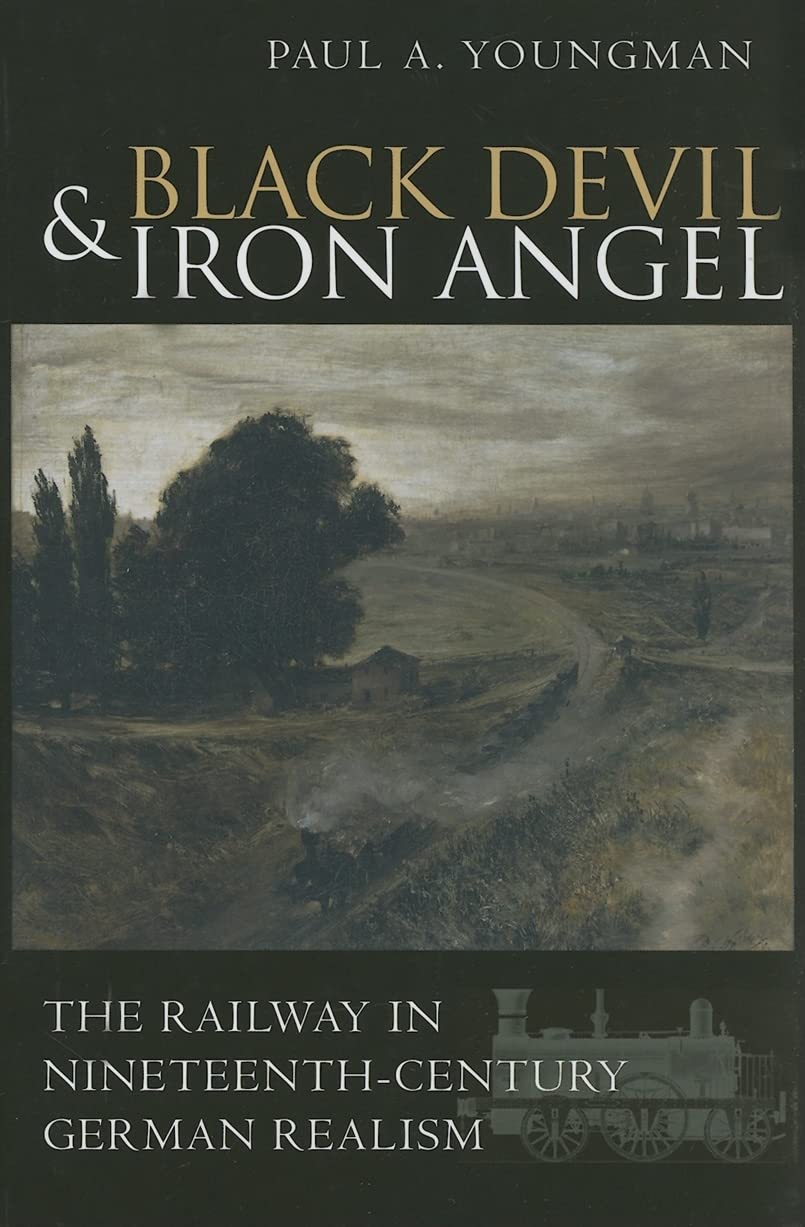
Black Devil and Iron Angel: The Railway in NineteenthCentury German Realism,Used
Delivery time: 8-12 business days (International)
Black Devil and Iron Angel examines how the railway was received and represented by a variety of nineteenthcentury German and Austrian realist authors including Berthold Auerbach, Theodor Fontane, and Gerhart Hauptmann. This book is a compelling, focused analysis of the point at which mythology and technology merge, signifying the composition of a larger narrative desired by human beings to gain some sense of control over a world in which they have little powera problem not by any means confined to Germanspeaking lands.Using Theodor Adorno and Max Horkheimer's seminal work on the dialectical nature of the Enlightenment as a framework, Youngman makes the original claim that realist authors are a particularly rich source in which to study the intersection of technology and mythology. Authors of nineteenthcentury literature often introduced scientific ideas and technological developments in order to bolster the claim that what they write is "real" and therefore represents "truth." In doing so, however, they often fail to divorce these developments from myth. They either couch the train and its associated technologies, for example, in mythological terms, or show how these technologies begin to create their own myths.In his emphasis on the legitimacy of both scientific and nonscientific approaches to understanding, Youngman follows the lead of Charles Percy Snow, who, in the midtwentieth century, identified what he considered a dangerous rift between literary intellectuals on the one hand and scientists on the other. In order to prevent the establishment of two distinct cultures incapable of communicating with one another, he admonished intellectuals to establish a "third culture," a culture bridging the gap between the technoscientific realm and the mytholiterary realm. Youngman's work is intended as a contribution to what has become known as ThirdCulture Studies.ABOUT THE AUTHOR:Paul A. Youngman is assistant professor of German at the University of North CarolinaCharlotte.PRAISE FOR THE BOOK:"The author cites numerous examples of the railway as a symbol of technology and myth, with the two often merging. Excursions into the history of the German railway, vignettes of an antique steam locomotive at the beginning of each chapter, and English translations of all quotations enhance the attractiveness of this volume to a wide readership."J. K. Fugate, Choice"Youngman makes an important contribution to our understanding of realism by showing the continuity between technology and mythology. He combines meticulous scholarship with stimulating, provocative ideas."Lilian R. Furst, Marcel Bataillon Professor of Comparative Literature, University of North Carolina at Chapel Hill"This book covers its topic better than any I have seen. Youngman's treatment of literature in the age of the railway will fascinate specialists and nonspecialists alike, who, in chapter after chapter, will find themselves rethinking many of their assumptions, not only about the relationship of technology to literature, but also about nineteenthcentury literature more generally."Peter McIsaac, Duke University"Youngman places himself right in the center of the debates surrounding German realism and 19th century thought.... He offers a combination of excellent literary interpretations with carefully argued and wellpresented theoretical insights."Peter C. Pfeiffer, Georgetown University"[There is a] disciplined interpretation of textual details in this stimulating, wellinformed study." Jeffrey Sammons, German Studies Review"This monograph presents a valuable contribution to thirdculture studies.... [T]he term "third culture" more widely refers to the triangle of scienceartstechnology, in which technology represents the third, bridging culture between the othe
By changing our most important processes and
products, we have already made a big leap forward. This ranges from the
increased use of more sustainable fibers to the use of more
environmentally friendly printing processes to the development of
efficient waste management in our value chain.
⚠️ WARNING (California Proposition 65):
This product may contain chemicals known to the State of California to cause cancer, birth defects, or other reproductive harm.
For more information, please visit www.P65Warnings.ca.gov.
Shipping & Returns
Shipping
We ship your order within 2–3 business days for USA deliveries and 5–8 business days for international shipments. Once your package has been dispatched from our warehouse, you'll receive an email confirmation with a tracking number, allowing you to track the status of your delivery.
Returns
To facilitate a smooth return process, a Return Authorization (RA) Number is required for all returns. Returns without a valid RA number will be declined and may incur additional fees. You can request an RA number within 15 days of the original delivery date. For more details, please refer to our Return & Refund Policy page.
Shipping & Returns
Shipping
We ship your order within 2–3 business days for USA deliveries and 5–8 business days for international shipments. Once your package has been dispatched from our warehouse, you'll receive an email confirmation with a tracking number, allowing you to track the status of your delivery.
Returns
To facilitate a smooth return process, a Return Authorization (RA) Number is required for all returns. Returns without a valid RA number will be declined and may incur additional fees. You can request an RA number within 15 days of the original delivery date. For more details, please refer to our Return & Refund Policy page.
Warranty
We provide a 2-year limited warranty, from the date of purchase for all our products.
If you believe you have received a defective product, or are experiencing any problems with your product, please contact us.
This warranty strictly does not cover damages that arose from negligence, misuse, wear and tear, or not in accordance with product instructions (dropping the product, etc.).
Warranty
We provide a 2-year limited warranty, from the date of purchase for all our products.
If you believe you have received a defective product, or are experiencing any problems with your product, please contact us.
This warranty strictly does not cover damages that arose from negligence, misuse, wear and tear, or not in accordance with product instructions (dropping the product, etc.).
Secure Payment
Your payment information is processed securely. We do not store credit card details nor have access to your credit card information.
We accept payments with :
Visa, MasterCard, American Express, Paypal, Shopify Payments, Shop Pay and more.
Secure Payment
Your payment information is processed securely. We do not store credit card details nor have access to your credit card information.
We accept payments with :
Visa, MasterCard, American Express, Paypal, Shopify Payments, Shop Pay and more.