
Title
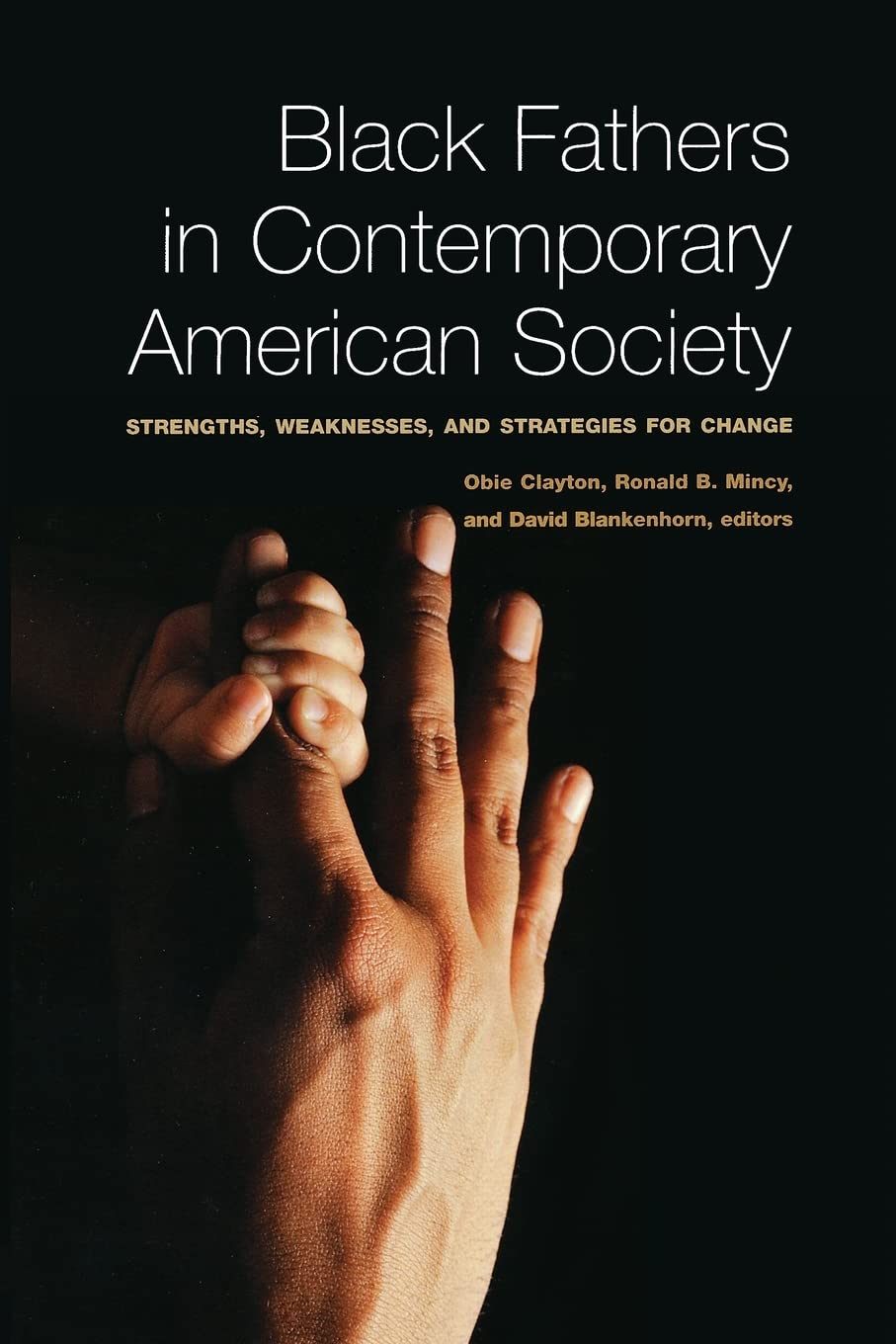
Black Fathers in Contemporary American Society: Strengths, Weaknesses, and Strategies for Change,Used
Sold by Ergodebooks, an authorized reseller.
Returns accepted within 30 days | support@ergodebooks.com
Shipping Information
- Free Standard Shipping — United States only
- Processing Time: 3–5 business days
- Estimated Delivery: 6–10 business days after dispatch
- Double-boxed, fully insured & discreetly packaged
- Tracking number sent via email once dispatched
Returns & Refund
Returns accepted within 30 days of delivery.
Damaged or Defective Item
Free return shipping + replacement or full refund
Wrong Item Received
Free return shipping + replacement or full refund
Change of Mind
Return shipping at customer's expense · 25% restocking fee applies
Payment Option

The majority of African American children live in homes without their fathers, but the proportion of African American children living in intact, twoparent families has risen significantly since 1995. Black Fathers in Contemporary American Society looks at father absence from two sides, offering an indepth analysis of how the absence of African American fathers affects their children, their relationships, and society as a whole, while countering the notion that father absence and family fragmentation within the African American community is inevitable. Editors Obie Clayton, Ronald B. Mincy, and David Blankenhorn lead a diverse group of contributors encompassing a range of disciplines and ideological perspectives who all agree that father absence among black families is one of the most pressing social problems today. In part I, the contributors offer possible explanations for the decline in marriage among African American families. William Julius Wilson believes that many men who live in the inner city no longer consider marriage an option because their limited economic prospects do not enable them to provide for a family. Part II considers marriage from an economic perspective, emphasizing that it is in part a wealthproducing institution. Maggie Gallagher points out that married people earn, invest, and save more than single people, and that when marriage rates are low in a community, it is the children who suffer most. In part III, the contributors discuss policies to reduce absentee fatherhood. Wornie Reed demonstrates how public health interventions, such as personal development workshops and workrelated skillbuilding services, can be used to address the causes of fatherlessness. Wade Horn illustrates the positive results achieved by fatherhood programs, especially when held early in a man's life. In the last chapter, Enola Aird notes that from 1995 to 2000, the proportion of African American children living in twoparent, married couple homes rose from 34.8 to 38.9 percent; a significant increase indicating the possible reversal of the longterm shift toward black family fragmentation. Black Fathers in Contemporary American Society provides an indepth look at a problem affecting millions of children while offering proof that the trend of father absence is not irrevocable.
⚠️ WARNING (California Proposition 65):
This product may contain chemicals known to the State of California to cause cancer, birth defects, or other reproductive harm.
For more information, please visit www.P65Warnings.ca.gov.