
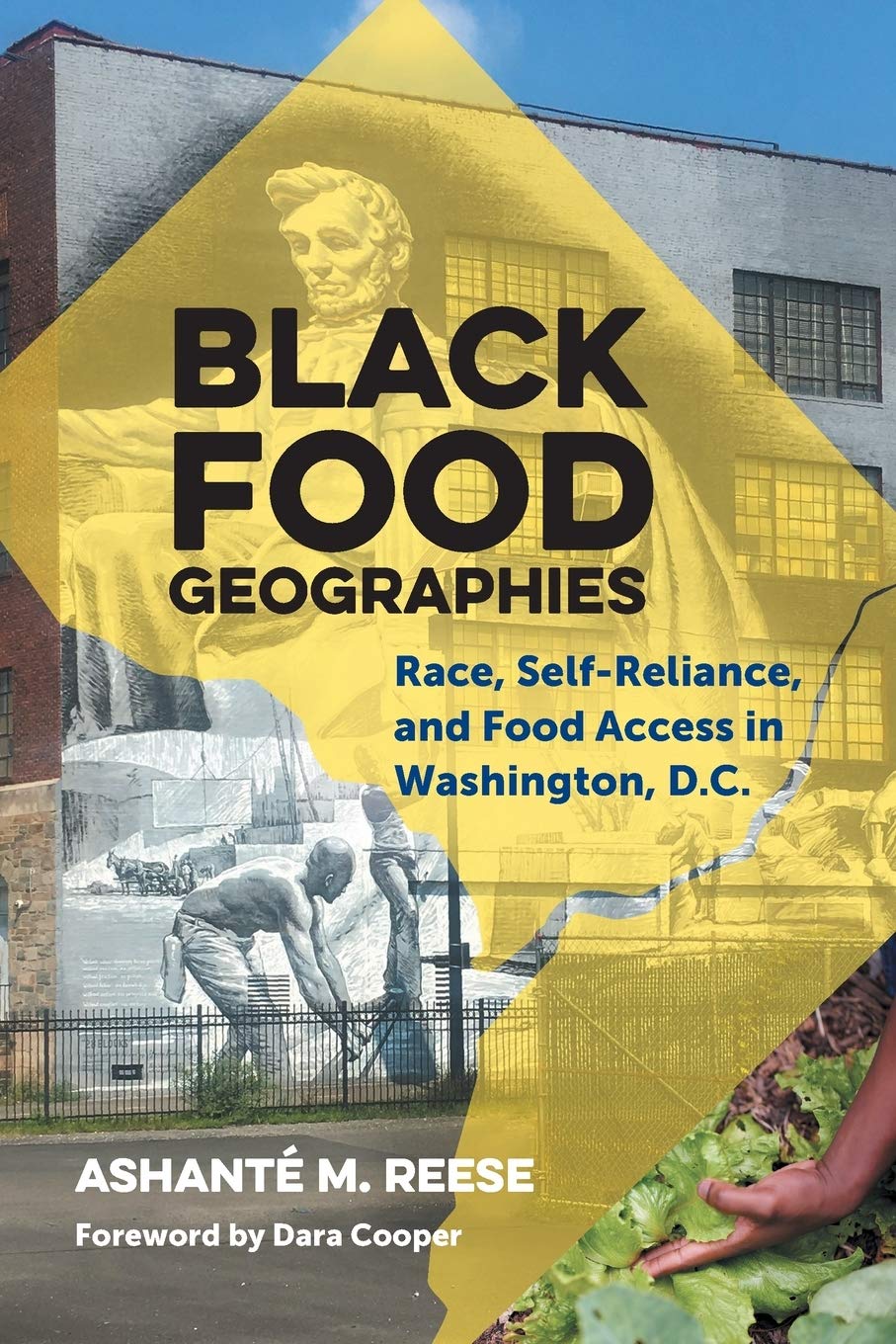
Title
Black Food Geographies: Race, SelfReliance, and Food Access in Washington, D.C.,Used
Sold by Ergodebooks, an authorized reseller.
Returns accepted within 30 days | support@ergodebooks.com
Shipping Information
- Free Standard Shipping — United States only
- Processing Time: 3–5 business days
- Estimated Delivery: 6–10 business days after dispatch
- Double-boxed, fully insured & discreetly packaged
- Tracking number sent via email once dispatched
Returns & Refund
Returns accepted within 30 days of delivery.
Damaged or Defective Item
Free return shipping + replacement or full refund
Wrong Item Received
Free return shipping + replacement or full refund
Change of Mind
Return shipping at customer's expense · 25% restocking fee applies
Payment Option

In this book, Ashante M. Reese makes clear the structural forces that determine food access in urban areas, highlighting Black residents' navigation of and resistance to unequal food distribution systems. Linking these local food issues to the national problem of systemic racism, Reese examines the history of the majorityBlack Deanwood neighborhood of Washington, D.C. Based on extensive ethnographic fieldwork, Reese not only documents racism and residential segregation in the nation's capital but also tracks the ways transnational food corporations have shaped food availability. By connecting community members' stories to the larger issues of racism and gentrification, Reese shows there are hundreds of Deanwoods across the country.Reese's geographies of selfreliance offer an alternative to models that depict Black residents as lacking agency, demonstrating how an ethnographically grounded study can locate and amplify nuances in how Black life unfolds within the context of unequal food access.
⚠️ WARNING (California Proposition 65):
This product may contain chemicals known to the State of California to cause cancer, birth defects, or other reproductive harm.
For more information, please visit www.P65Warnings.ca.gov.
- Q: What is the main topic of 'Black Food Geographies'? A: The book explores the structural forces affecting food access in urban areas, particularly focusing on the experiences of Black residents in Washington, D.C.
- Q: Who is the author of this book? A: The book is authored by Ashanté M. Reese.
- Q: What unique perspective does the author provide? A: Reese links local food issues to systemic racism and examines how transnational food corporations influence food availability.
- Q: How many pages does the book have? A: The book contains 184 pages.
- Q: When was 'Black Food Geographies' published? A: The book was published on April 29, 2019.
- Q: What is the book's binding type? A: The book is available in paperback binding.
- Q: Is this book suitable for academic study? A: Yes, it is suitable for academic study as it is based on extensive ethnographic fieldwork and discusses serious issues of race and food access.
- Q: Does the book discuss gentrification? A: Yes, it connects the issues of racism and gentrification in relation to food access.
- Q: What is the condition of the book? A: The book is in new condition.
- Q: What edition of the book is available? A: The book is available in its first edition.