
Title
Black Unionism in the Industrial South (Volume 11) (Texas A&M Southwestern Studies),Used
Sold by Ergodebooks, an authorized reseller.
Returns accepted within 30 days | support@ergodebooks.com
Shipping Information
- Free Standard Shipping — United States only
- Processing Time: 3–5 business days
- Estimated Delivery: 6–10 business days after dispatch
- Double-boxed, fully insured & discreetly packaged
- Tracking number sent via email once dispatched
Returns & Refund
Returns accepted within 30 days of delivery.
Damaged or Defective Item
Free return shipping + replacement or full refund
Wrong Item Received
Free return shipping + replacement or full refund
Change of Mind
Return shipping at customer's expense · 25% restocking fee applies
Payment Option

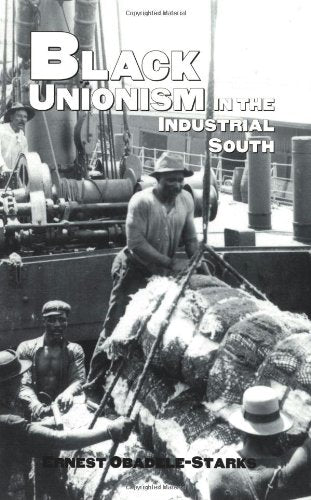
In the early twentieth century, the Upper Texas Gulf Coast was one of the fastest growing industrial areas in the country. The cotton trade had attracted railroad and ship labor to the banks of the Gulf of Mexico, numerous oil refineries sprouted up in response to the Spindletop gusher of 1901, and the shipbuilding and steel trades were also prospering as a result of the oil boom. Such economic promise attracted thousands of black laborers from across the South who hoped to find a good job and a better life. They were instead kept in lowwage jobs, refused union memberships, and restricted in their mobility. Black Unionism in the Industrial South presents the struggles of black workers who fought for equality and unionization in the heyday of Gulf Coast industry. Ernest ObadeleStarks examines the workers' responses to racial and class domination and their creative strategies to reach their goal. Facing public and corporate policy that typically deferred to white workers, blacks banded together to achieve representation in the workplace, form union auxiliaries, charter their own local unions, seal alliances with members of the black middle class, and manipulate the media to benefit their cause. Personal accounts highlight the workers' passion, even when their requests and demands resulted in little more than 'gradual participation, sporadic inclusion, and minimal interracial cooperation.' Although workers supported each other and their cause, activists did debate over the best course of action, whether that was to focus on penetrating the whitedominated unions, creating new black unions, or seeking new employment with sympathetic members of the black middle class. All of these tools were eventually used to mobilize the work force and to earn recognition for the contribution black laborers made to industry and the community. ObadeleStarks eloquently captures these workers' fight and discusses the implications of their struggle on the industrial society of the Upper Texas Gulf Coast today. Students and scholars of American labor history, race relations, and Texas history will find Black Unionism in the Industrial South a valuable and compelling scholarly work.
⚠️ WARNING (California Proposition 65):
This product may contain chemicals known to the State of California to cause cancer, birth defects, or other reproductive harm.
For more information, please visit www.P65Warnings.ca.gov.