
Title
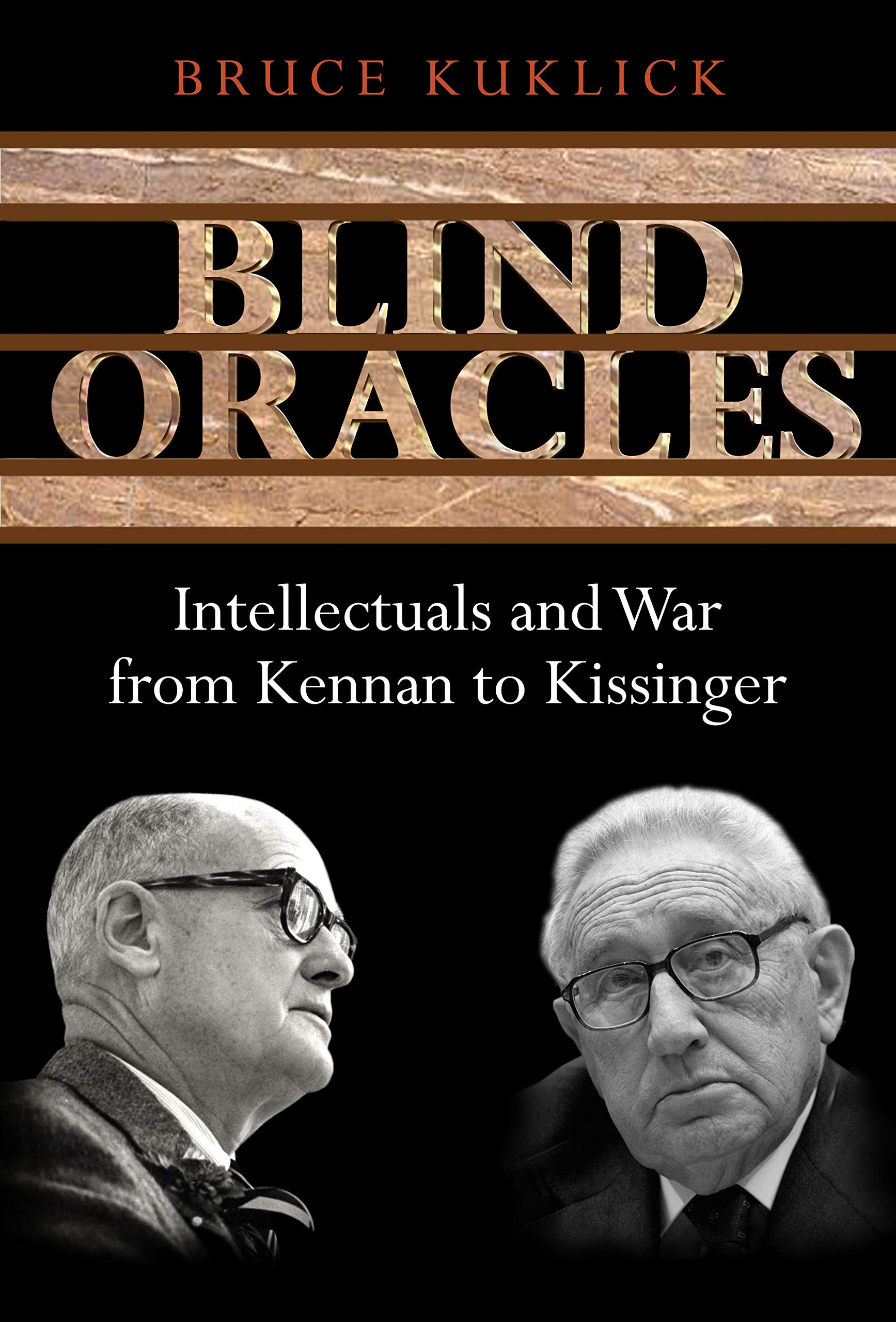
Blind Oracles: Intellectuals and War from Kennan to Kissinger,Used
Sold by Ergodebooks, an authorized reseller.
Returns accepted within 30 days | support@ergodebooks.com
Shipping Information
- Free Standard Shipping — United States only
- Processing Time: 3–5 business days
- Estimated Delivery: 6–10 business days after dispatch
- Double-boxed, fully insured & discreetly packaged
- Tracking number sent via email once dispatched
Returns & Refund
Returns accepted within 30 days of delivery.
Damaged or Defective Item
Free return shipping + replacement or full refund
Wrong Item Received
Free return shipping + replacement or full refund
Change of Mind
Return shipping at customer's expense · 25% restocking fee applies
Payment Option

In this trenchant analysis, historian Bruce Kuklick examines the role of intellectuals in foreign policymaking. He recounts the history of the development of ideas about strategy and foreign policy during a critical period in American history: the era of the nuclear standoff between the United States and the Soviet Union.The book looks at how the country's foremost thinkers advanced their ideas during this time of United States expansionism, a period that culminated in the Vietnam War and dtente with the Soviets. Beginning with George Kennan after World War II, and concluding with Henry Kissinger and the Vietnam War, Kuklick examines the role of both institutional policymakers such as those at The Rand Corporation and Harvard's Kennedy School, and individual thinkers including Paul Nitze, McGeorge Bundy, and Walt Rostow.Kuklick contends that the figures having the most influence on American strategyKissinger, for exampleclearly understood the way politics and the exercise of power affects policymaking. Other brilliant thinkers, on the other hand, often played a minor role, providing, at best, a rationale for policies adopted for political reasons. At a time when the role of the neoconservatives' influence over American foreign policy is a subject of intense debate, this book offers important insight into the function of intellectuals in foreign policymaking.
⚠️ WARNING (California Proposition 65):
This product may contain chemicals known to the State of California to cause cancer, birth defects, or other reproductive harm.
For more information, please visit www.P65Warnings.ca.gov.
- Q: What is the main focus of 'Blind Oracles: Intellectuals and War from Kennan to Kissinger'? A: The book analyzes the role of intellectuals in foreign policymaking during the Cold War, exploring how their ideas shaped U.S. strategy and policy.
- Q: Who is the author of this book? A: The author is Bruce Kuklick, a historian known for his work on American foreign policy.
- Q: What historical period does the book cover? A: It covers the critical period of U.S. foreign policy from the end of World War II through the Vietnam War.
- Q: Is this book suitable for academic study? A: Yes, the book provides a detailed analysis supported by historical context, making it suitable for academic study and research.
- Q: What is the condition of the book being sold? A: The book is listed as a 'Used Book in Good Condition'.
- Q: How many pages does 'Blind Oracles' have? A: The book has 264 pages.
- Q: What type of binding does this book have? A: This book is available in hardcover binding.
- Q: When was 'Blind Oracles' published? A: The book was published on February 26, 2006.
- Q: Does the book include insights from specific intellectuals? A: Yes, it features insights from significant figures such as George Kennan, Henry Kissinger, and others involved in U.S. foreign policy.
- Q: What are the main themes explored in the book? A: The main themes include the influence of intellectuals on policy decisions and the interplay between political power and foreign strategy.