
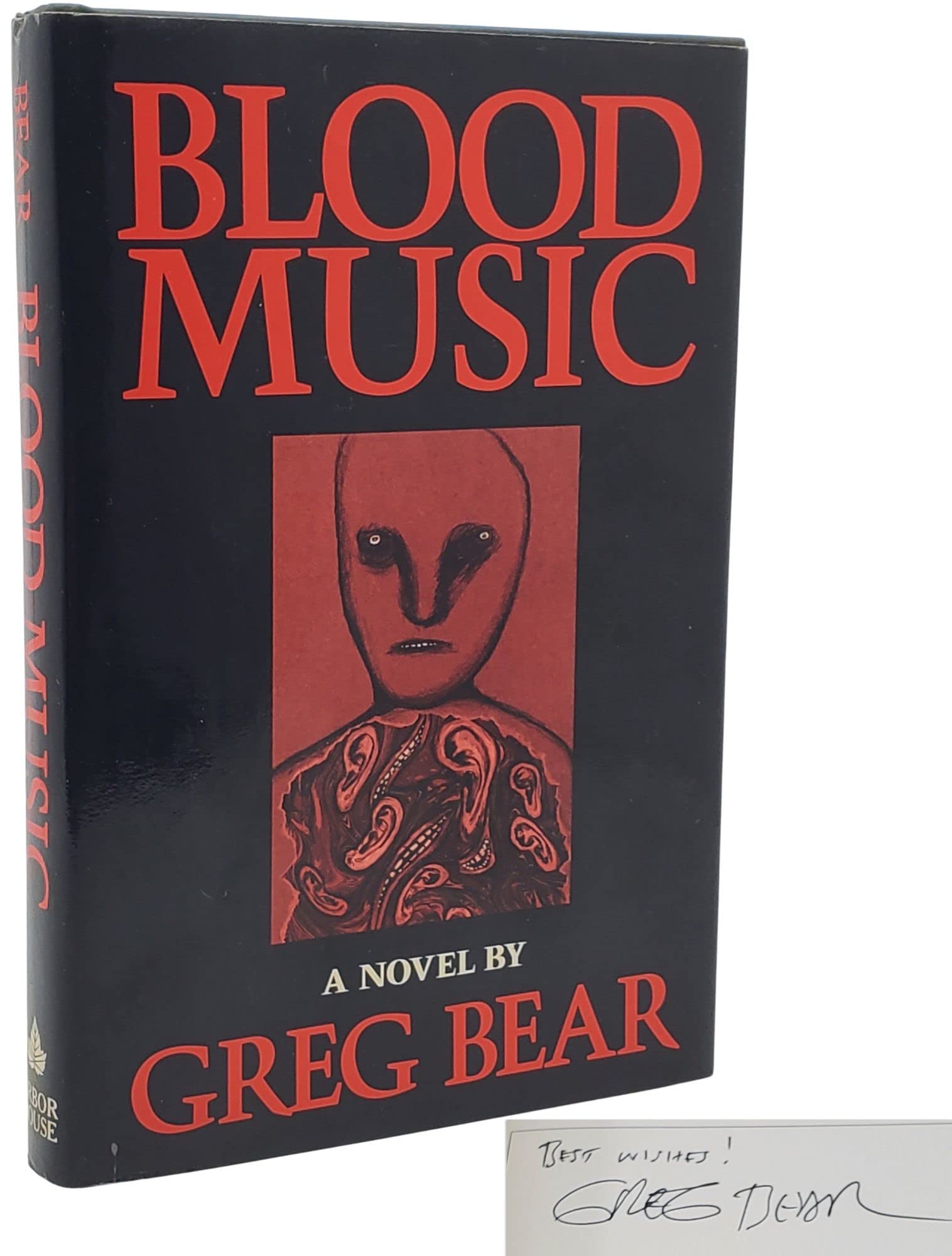
Title
Blood Music,Used
Sold by Ergodebooks, an authorized reseller.
Returns accepted within 30 days | support@ergodebooks.com
Shipping Information
- Free Standard Shipping — United States only
- Processing Time: 3–5 business days
- Estimated Delivery: 6–10 business days after dispatch
- Double-boxed, fully insured & discreetly packaged
- Tracking number sent via email once dispatched
Returns & Refund
Returns accepted within 30 days of delivery.
Damaged or Defective Item
Free return shipping + replacement or full refund
Wrong Item Received
Free return shipping + replacement or full refund
Change of Mind
Return shipping at customer's expense · 25% restocking fee applies
Payment Option

In Order To Save His Biochip Experiments From His Nervous Employers, Eccentric Genius Vergil Ulam Of Genetron Labs Injects Himself With His Cell Cultures, Thereby Beginning A Startling Physical Transformation That Rapidly Spreads Across The Continent
⚠️ WARNING (California Proposition 65):
This product may contain chemicals known to the State of California to cause cancer, birth defects, or other reproductive harm.
For more information, please visit www.P65Warnings.ca.gov.
- Q: How many pages does 'Blood Music' have? A: This book has two hundred sixty-two pages. It's a substantial read that delves into complex themes of science and transformation.
- Q: What type of binding does 'Blood Music' have? A: This book features a hardcover binding. This sturdy format enhances durability and makes it suitable for repeated reading.
- Q: Who is the author of 'Blood Music'? A: The author is Greg Bear. He is known for his contributions to the science fiction genre, exploring themes of technology and humanity.
- Q: What genre does 'Blood Music' belong to? A: It belongs to the contemporary science fiction genre. The story intricately blends elements of science and speculative fiction.
- Q: What is the main plot of 'Blood Music'? A: The plot follows Vergil Ulam, who injects himself with his biochip cell cultures, leading to a startling transformation. This transformation raises questions about identity and humanity.
- Q: Is 'Blood Music' suitable for young readers? A: No, it is not typically suitable for young readers. The book explores complex themes and contains mature content.
- Q: How should I read 'Blood Music' for the best experience? A: To fully appreciate 'Blood Music', read it in a quiet environment. The intricate plot and themes are best understood when you can focus.
- Q: What age group is 'Blood Music' recommended for? A: It is recommended for adults and mature teens. The themes and narrative complexity cater to an older audience.
- Q: How should I care for my copy of 'Blood Music'? A: Keep it in a cool, dry place to maintain its condition. Avoid exposure to direct sunlight to prevent fading of the cover.
- Q: Can I clean the cover of 'Blood Music'? A: Yes, you can gently wipe the cover with a soft, dry cloth. Avoid using water or cleaning products to preserve its finish.
- Q: What if my copy of 'Blood Music' arrives damaged? A: If your copy arrives damaged, contact the seller within the return policy period for a replacement or refund. They should provide support.
- Q: Is there a warranty for 'Blood Music'? A: No, books typically do not come with warranties. However, check the seller's return policy for any guarantees.
- Q: How do I store 'Blood Music' to keep it in good condition? A: Store it upright on a bookshelf. Avoid stacking it under heavy books to prevent damage.
- Q: Does 'Blood Music' have any notable awards? A: Yes, it has received critical acclaim and is recognized within the science fiction community. Greg Bear is a celebrated author in this genre.
- Q: What themes are explored in 'Blood Music'? A: The book explores themes of identity, transformation, and the ethical implications of scientific experimentation. These themes provoke thoughtful discussions.
- Q: Is 'Blood Music' part of a series? A: No, 'Blood Music' is a standalone novel. It encapsulates its story within its own narrative without requiring a sequel.