
Title
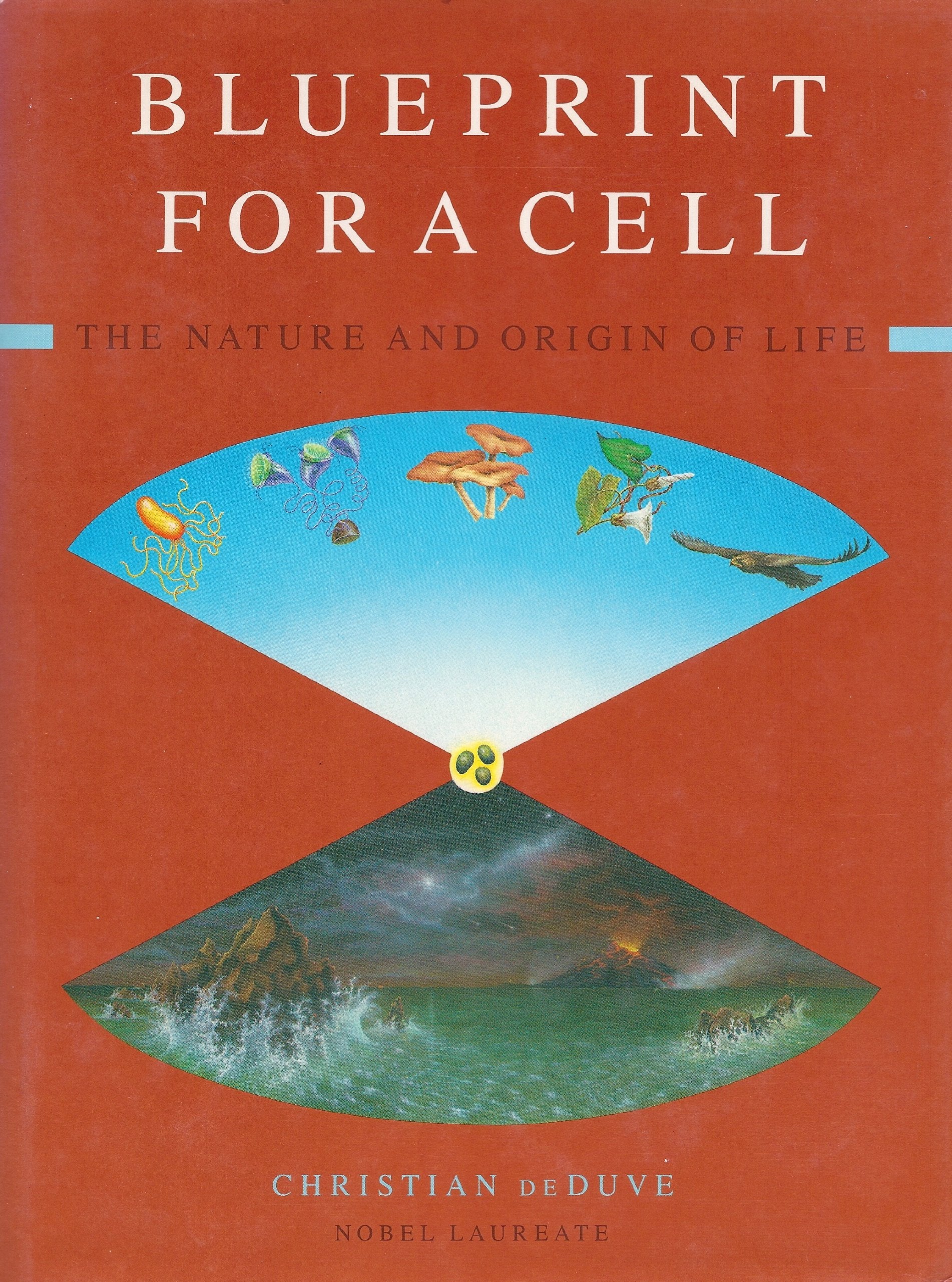
Blueprint For A Cell: The Nature And Origin Of Life,Used
Sold by Ergodebooks, an authorized reseller.
Returns accepted within 30 days | support@ergodebooks.com
Shipping Information
- Free Standard Shipping — United States only
- Processing Time: 3–5 business days
- Estimated Delivery: 6–10 business days after dispatch
- Double-boxed, fully insured & discreetly packaged
- Tracking number sent via email once dispatched
Returns & Refund
Returns accepted within 30 days of delivery.
Damaged or Defective Item
Free return shipping + replacement or full refund
Wrong Item Received
Free return shipping + replacement or full refund
Change of Mind
Return shipping at customer's expense · 25% restocking fee applies
Payment Option

In Narrative Form The Author, Winner Of The Nobel Prize, Delineates The 'Blueprint' Of Life The Pattern Of Chemical Events On Which All Life Depends And Demonstrates Unity In The Diversity Of Life On Earth. De Duve Begins By Defining The Basic Characteristics Of Life (The 'Blueprint') And Explains The Fundamental Chemical Strategies That Allow Cells To Live. Next He Tracks The Evolutionary Stages In The Development Of Cells, Describing His Personal View Of The Very First Cell, The Precursor To All Of Life On Earth. He Then Goes Back To Prebiotic Times And Traces The Chemical And Environmental Processes That Led To The Origin Of Life And, Eventually, To The First Cell. De Duve, In His Final Chapter, Rises Above Scientific Detail To Explore The Philosophical Question Of Whether Life Happened By Chance Or Necessity. In De Duve'S View, Given The Nature Of The Universe, No Miracles Are Needed, And No Luck Either. Life Is An Intrinsic Part Of The Universe An Inevitable Manifestation Of The Combinatorial Properties Of Matter. As De Duve Himself Says, 'In Spite Of The Advances Of Biology, Many Of Us Continue To Be Influenced In Our Thinking By The Writings Of Certain Physicists And Cosmologists And To View The Universe As An 'Unfeeling Immensity' And Life As Something Separate, Not Included In The Fundamental Properties That Cause Elementary Particles To Coalesce Into Atomic Nuclei, Nuclei To Surround Themselves With Electrons, And Atoms And Ions To Join Into A Multitude Of Molecules, Crystals, And Other Structures. This View In The View Of The Author Is Wrong, A Remnant Of Vitalism. Life Is An Intrinsic Part Of The Universe. Wherever And Whenever Conditions Are Favorable, As They Were Here On Earth, And Probably Were, Are, Or Will Be Elsewhere, The Universe Cannot But Blossom Into Life'.
⚠️ WARNING (California Proposition 65):
This product may contain chemicals known to the State of California to cause cancer, birth defects, or other reproductive harm.
For more information, please visit www.P65Warnings.ca.gov.
- Q: What is the page count of this book? A: This book has two hundred seventy-five pages. It offers a comprehensive exploration of the chemical events that constitute life.
- Q: What is the binding type of the book? A: The book is hardcover. This makes it durable and ideal for extensive reading and reference.
- Q: What are the dimensions of this book? A: The book measures seven point twenty-five inches in length, one inch in width, and nine point five inches in height. These dimensions make it a standard-sized hardcover.
- Q: How do I read this book? A: You can read this book by simply opening it and following the narrative. It is designed for general readers interested in biology and philosophy.
- Q: Is this book suitable for beginners in biology? A: Yes, the book is suitable for beginners. It presents complex concepts in an accessible narrative format.
- Q: What age group is this book appropriate for? A: This book is appropriate for young adults and older. It covers advanced topics suitable for readers with an interest in life sciences.
- Q: How should I care for this book? A: To keep the book in good condition, store it upright on a shelf and avoid exposure to moisture. Regularly dust the cover to maintain its appearance.
- Q: Is this book safe for children? A: No, this book is not specifically designed for children. It contains complex scientific themes that may not be suitable for a younger audience.
- Q: Can I write in this book? A: Yes, you can write in this book if you wish to take notes. However, consider using a pencil or a non-bleed pen to avoid damaging the pages.
- Q: What if the book arrives damaged? A: If the book arrives damaged, you should contact the seller for a return or exchange. Ensure to keep the original packaging for any claims.
- Q: What is the return policy for this book? A: The return policy varies by seller, but typically you can return the book within a specified period if it is in its original condition.
- Q: Is this book part of a series? A: No, this book is not part of a series. It stands alone as a work discussing the nature and origin of life.
- Q: What is the author's background? A: The author, Christian De Duve, is a Nobel Prize-winning scientist known for his work in biology and biochemistry, providing credibility to the subject matter.
- Q: Does this book include illustrations or diagrams? A: No, this book does not primarily include illustrations or diagrams. It focuses on narrative text to convey its themes.
- Q: Is this book referenced in academic studies? A: Yes, this book is often referenced in academic studies related to biology and philosophy due to its insightful analysis of life's origins.
- Q: What topics does this book cover? A: The book covers the characteristics of life, chemical strategies of cells, and the philosophical implications of life's existence. It merges science with philosophy.