
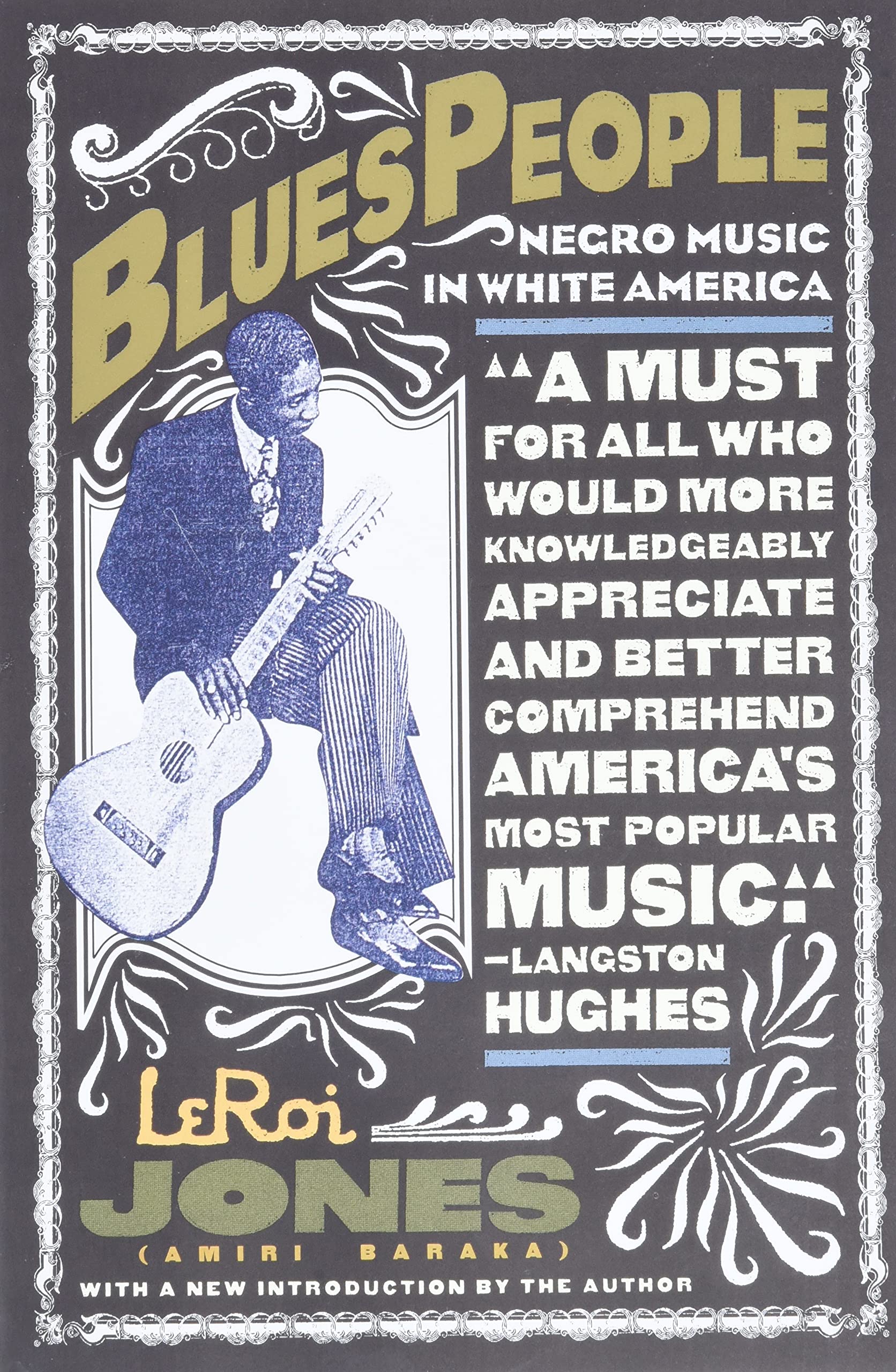
Title


Blues People: Negro Music In White America
Sold by Ergodebooks, an authorized reseller.
Returns accepted within 30 days | support@ergodebooks.com
Shipping Information
- Free Standard Shipping — United States only
- Processing Time: 3–5 business days
- Estimated Delivery: 6–10 business days after dispatch
- Double-boxed, fully insured & discreetly packaged
- Tracking number sent via email once dispatched
Returns & Refund
Returns accepted within 30 days of delivery.
Damaged or Defective Item
Free return shipping + replacement or full refund
Wrong Item Received
Free return shipping + replacement or full refund
Change of Mind
Return shipping at customer's expense · 25% restocking fee applies
Payment Option

A Must For All Who Would More Knowledgeably Appreciate And Better Comprehend America'S Most Popular Music. Langston HughesThe Path The Slave Took To 'Citizenship' Is What I Want To Look At. And I Make My Analogy Through The Slave Citizen'S Musicthrough The Music That Is Most Closely Associated With Him: Blues And A Later, But Parallel Development, Jazz... [If] The Negro Represents, Or Is Symbolic Of, Something In And About The Nature Of American Culture, This Certainly Should Be Revealed By His Characteristic Music.So Says Amiri Baraka (Previously Known As Leroi Jones) In The Introduction To Blues People, His Classic Work On The Place Of Jazz And Blues In American Social, Musical, Economic, And Cultural History. From The Music Of African Slaves In The United States Through The Music Scene Of The 1960'S, Baraka Traces The Influence Of What He Calls Negro Music On White Americanot Only In The Context Of Music And Pop Culture But Also In Terms Of The Values And Perspectives Passed On Through The Music. In Tracing The Music, He Brilliantly Illuminates The Influence Of African Americans On American Culture And History.
⚠️ WARNING (California Proposition 65):
This product may contain chemicals known to the State of California to cause cancer, birth defects, or other reproductive harm.
For more information, please visit www.P65Warnings.ca.gov.
- Q: What is the page count of 'Blues People: Negro Music in White America'? A: The book contains two hundred fifty-six pages. It provides an in-depth exploration of jazz and blues in American culture.
- Q: What are the dimensions of this book? A: The book measures five point five one inches in length, zero point six four inches in width, and eight point two seven inches in height.
- Q: What binding type does this book have? A: This book is available in paperback binding. This makes it lightweight and easy to handle.
- Q: Who is the author of 'Blues People'? A: The author is Amiri Baraka, who was previously known as LeRoi Jones. His insights critically examine the role of Negro music in American culture.
- Q: What genre does 'Blues People' belong to? A: This book falls under the category of ethnomusicology. It explores the intersection of music and culture in America.
- Q: How can I best understand the themes in 'Blues People'? A: Reading this book requires a basic understanding of American music history. It is suitable for readers interested in cultural studies and music.
- Q: Is 'Blues People' suitable for music enthusiasts? A: Yes, this book is ideal for music enthusiasts. It offers a deep dive into the historical significance of blues and jazz.
- Q: How does this book address race and music? A: The book examines how Negro music influences white America. It discusses cultural values through the lens of music.
- Q: What is the recommended reading level for this book? A: This book is best suited for adult readers and advanced students. It contains complex themes and historical analysis.
- Q: How should I store 'Blues People' to keep it in good condition? A: Store this book in a dry, cool place. Avoid exposing it to direct sunlight to prevent fading.
- Q: Can I clean the cover of this paperback book? A: Yes, you can wipe the cover with a damp cloth. Ensure that no moisture seeps into the pages.
- Q: What should I do if the book arrives damaged? A: If your copy arrives damaged, contact the seller for a return or exchange. Most sellers have return policies for such issues.
- Q: Is there a warranty for 'Blues People'? A: Typically, books do not come with a warranty. However, check with the retailer for their specific return policies.
- Q: How can I find more about the author's background? A: Research Amiri Baraka's biography online or look for interviews. His life and work are closely tied to the themes in this book.
- Q: What makes this book a classic in American music literature? A: It's considered a classic due to its thorough analysis of the impact of African American music on American culture.