
Title
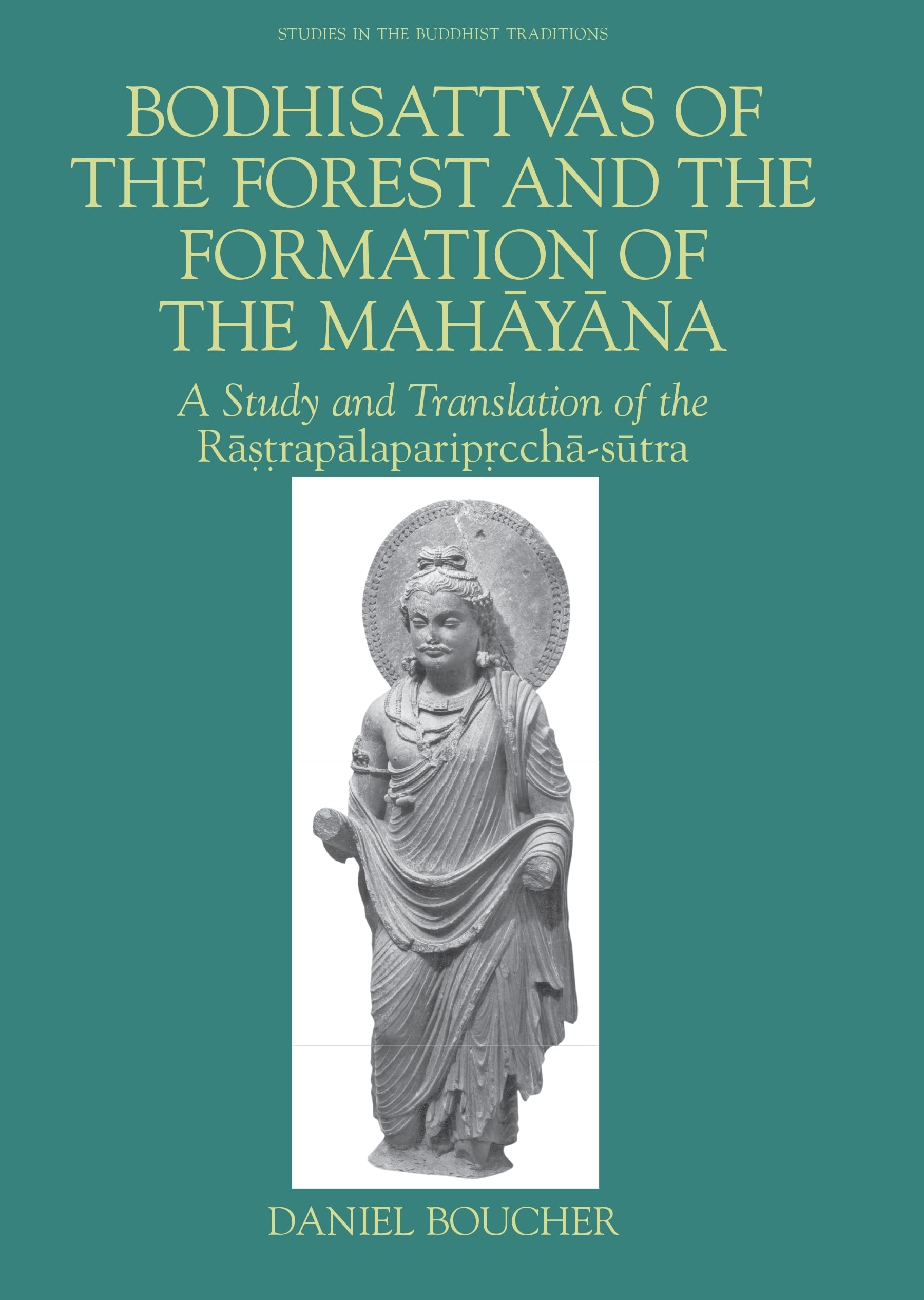
Bodhisattvas of the Forest and the Formation of the Mahayana: A Study and Translation of the Rastrapalapariprcchasutra (Studies,Used
Sold by Ergodebooks, an authorized reseller.
Returns accepted within 30 days | support@ergodebooks.com
Shipping Information
- Free Standard Shipping — United States only
- Processing Time: 3–5 business days
- Estimated Delivery: 6–10 business days after dispatch
- Double-boxed, fully insured & discreetly packaged
- Tracking number sent via email once dispatched
Returns & Refund
Returns accepted within 30 days of delivery.
Damaged or Defective Item
Free return shipping + replacement or full refund
Wrong Item Received
Free return shipping + replacement or full refund
Change of Mind
Return shipping at customer's expense · 25% restocking fee applies
Payment Option

Bodhisattvas of the Forest delves into the socioreligious milieu of the authors, editors, and propagators of the Rastrapalapariprcchasutra (Questions of Rastrapala), a Buddhist text circulating in India during the first half of the first millennium C.E. In this meticulously researched study, Daniel Boucher first reflects upon the problems that plague historians of Mahayana Buddhism, whose previous efforts to comprehend the tradition have often ignored the social dynamics that motivated some of the innovations of this new literature. Following that is a careful analysis of several motifs found in the Indian text and an examination of the value of the earliest Chinese translation for charting the sutras evolution.The first part of the study looks at the relationship between the bodily glorification of the Buddha and the ascetic careerspanning thousands of lifetimesthat produced it within the socioeconomic world of early medieval Buddhist monasticism. The authors of the Rastrapala sharply criticize their monastic contemporaries for rejecting the rigorous lifestyle of the first Buddhist communities, an ideal that, for the sutras authors, selfconsciously imitates the disciplines and sacrifices of the Buddhas own bodhisattva career, the very career that led to his acquisition of bodily perfection. Thus, Boucher reveals the ways in which the authors of the Rastrapala authors coopted this topos concerning the bodily perfection of the Buddha from the Mainstream tradition to subvert their coreligionists whose behavior they regarded as representing a degenerate version of that tradition.In Part 2 Boucher focuses on the thirdcentury Chinese translation of the sutra attributed to Dharmaraksa and traces the changes in the translation to the late tenth century. The significance of this translation, Boucher explains, is to be found in the ways it differs from all other witnesses. These differences, which are significant, almost certainly reveal an earlier shape of the sutra before later editors were inspired to alter dramatically the texts tone and rhetoric. The early Chinese translations, though invaluable in revealing developments in the Indian milieu that led to changes in the text, present particular challenges to the interpreter. It takes an understanding of not only their abstruse idiom, but also the process by which they were rendered from an undetermined Indian language into a Chinese cultural uh_product. One of the signal contributions of this study is Bouchers skill at identifying the traces left by the process and ability to uncover clues about the nature of the source text as well as the world of the principal recipients.Bodhisattvas of the Forest concludes with an annotated translation of the Rastrapalapariprcchasutra based on a new reading of its earliest extant Sanskrit manuscript. The translation takes note of important variants in Chinese and Tibetan versions to correct the many corruptions of the Sanskrit manuscript.
⚠️ WARNING (California Proposition 65):
This product may contain chemicals known to the State of California to cause cancer, birth defects, or other reproductive harm.
For more information, please visit www.P65Warnings.ca.gov.