
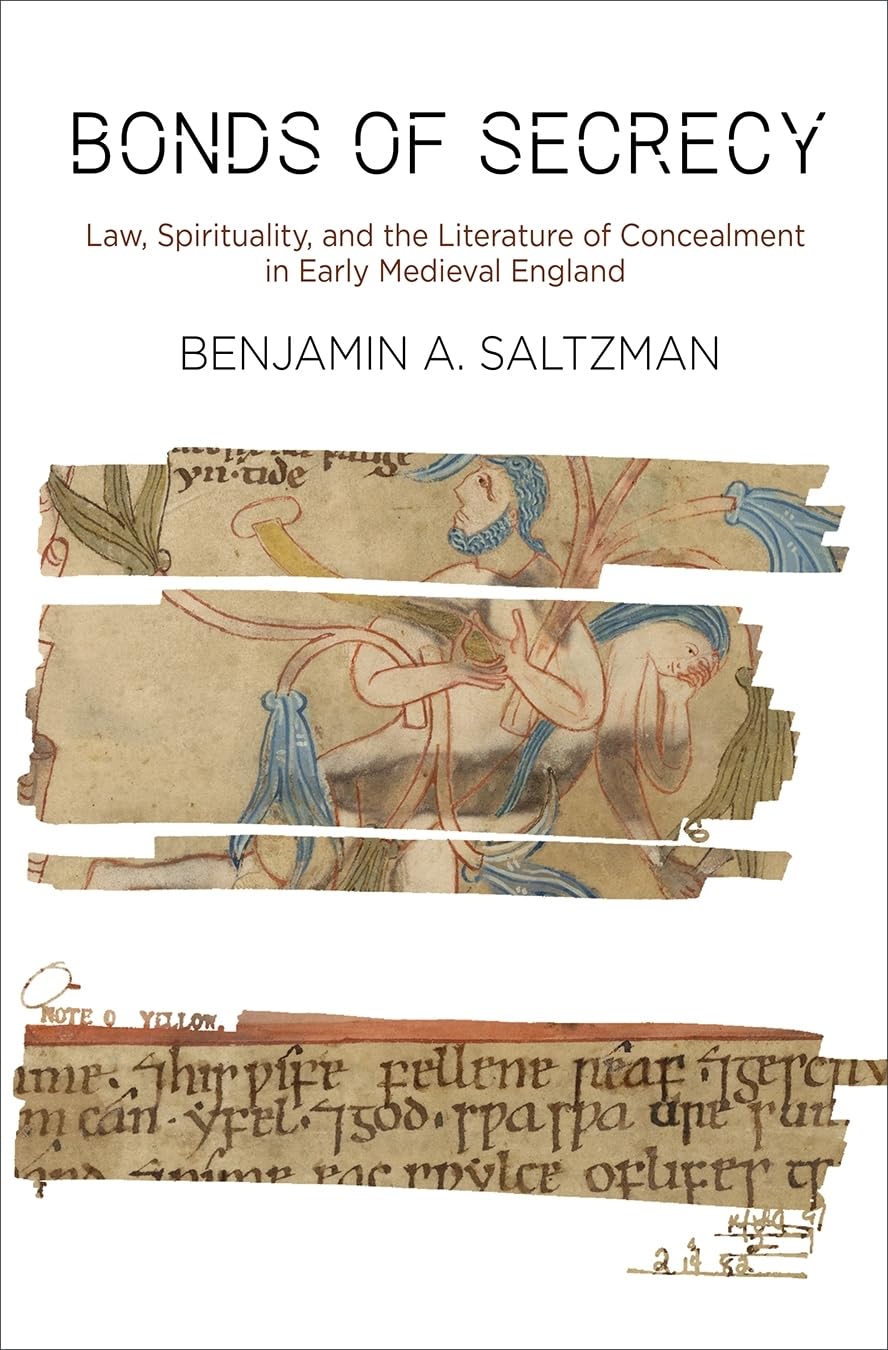
Title
Bonds Of Secrecy: Law, Spirituality, And The Literature Of Concealment In Early Medieval England (The Middle Ages Series),Used
Sold by Ergodebooks, an authorized reseller.
Returns accepted within 30 days | support@ergodebooks.com
Shipping Information
- Free Standard Shipping — United States only
- Processing Time: 3–5 business days
- Estimated Delivery: 6–10 business days after dispatch
- Double-boxed, fully insured & discreetly packaged
- Tracking number sent via email once dispatched
Returns & Refund
Returns accepted within 30 days of delivery.
Damaged or Defective Item
Free return shipping + replacement or full refund
Wrong Item Received
Free return shipping + replacement or full refund
Change of Mind
Return shipping at customer's expense · 25% restocking fee applies
Payment Option

What did it mean to keep a secret in early medieval England? It was a period during which the experience of secrecy was intensely bound to the belief that God knew all human secrets, yet the secrets of God remained unknowable to human beings. In Bonds of Secrecy, Benjamin A. Saltzman argues that this doubleedged conception of secrecy and divinity profoundly affected the way believers acted and thought as subjects under the law, as the devout within monasteries, and as readers before books. One crucial way it did so was by forming an ethical relationship between the self and the world that was fundamentally different from its modern reflex. Whereas today the bearers of secrets might be judged for the consequences of their reticence or disclosure, Saltzman observes, in the early Middle Ages a person attempting to conceal a secret was judged for believing he or she could conceal it from God. In other words, to attempt to hide from God was to become ensnared in a serious sin, but to hide from the world while deliberately and humbly submitting to God's constant observation was often a hallmark of spiritual virtue.Looking to law codes and religious architecture, hagiographies and riddles, Bonds of Secrecy shows how legal and monastic institutions harnessed the pervasive and complex belief in God's omniscience to produce an intense culture of scrutiny and a radical ethics of secrecy founded on the individual's belief that nothing could be hidden from God. According to Saltzman, this ethics of secrecy not only informed early medieval notions of mental activity and ideas about the mind but also profoundly shaped the practices of literary interpretation in ways that can inform our own contemporary approaches to reading texts from the past.
⚠️ WARNING (California Proposition 65):
This product may contain chemicals known to the State of California to cause cancer, birth defects, or other reproductive harm.
For more information, please visit www.P65Warnings.ca.gov.