

Title

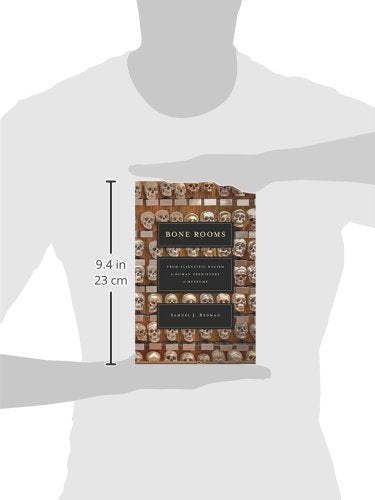
Bone Rooms: From Scientific Racism To Human Prehistory In Museums,New
Sold by Ergodebooks, an authorized reseller.
Returns accepted within 30 days | support@ergodebooks.com
Shipping Information
- Free Standard Shipping — United States only
- Processing Time: 3–5 business days
- Estimated Delivery: 6–10 business days after dispatch
- Double-boxed, fully insured & discreetly packaged
- Tracking number sent via email once dispatched
Returns & Refund
Returns accepted within 30 days of delivery.
Damaged or Defective Item
Free return shipping + replacement or full refund
Wrong Item Received
Free return shipping + replacement or full refund
Change of Mind
Return shipping at customer's expense · 25% restocking fee applies
Payment Option

A Smithsonian Top History Book Of The Yeara Nature Book Of The Yearhow Did Our Museums Become Great Storehouses Of Human Remains? What Have We Learned From The Skulls And Bones Of Unburied Dead? Bone Rooms Chases Answers To These Questions Through Shifting Ideas About Race, Anatomy, Anthropology, And Archaeology And Helps Explain Recent Ethical Standards For The Collection And Display Of Human Dead.Ann Fabian, Author Of The Skull Collectorsin 1864 A Us Army Doctor Dug Up The Remains Of A Dakota Man Who Had Been Killed In Minnesota. Carefully Recording His Observations, He Sent The Skeleton To A Museum In Washington, Dc, That Was Collecting Human Remains For Research. In The Bone Rooms Of This Museum And Others Like It, A Scientific Revolution Was Unfolding That Would Change Our Understanding Of The Human Body, Race, And Prehistory.In Bone Rooms Samuel Redman Unearths The Story Of How Human Remains Became Highly Soughtafter Artifacts For Both Scientific Research And Public Display. Seeking Evidence To Support New Theories Of Human Evolution And Racial Classification, Collectors Embarked On A Global Competition To Recover The Best Specimens Of Skeletons, Mummies, And Fossils. The Smithsonian Institution Built The Largest Collection Of Human Remains In The United States, Edging Out Stiff Competition From Natural History And Medical Museums Springing Up In Cities And On University Campuses Across America. When The San Diego Museum Of Man Opened In 1915, It Mounted The Largest Exhibition Of Human Skeletons Ever Presented To The Public.The Study Of Human Remains Yielded Discoveries That Increasingly Discredited Racial Theory; As A Consequence, Interest In Human Origins And Evolutionignited By Ideas Emerging In The Budding Field Of Anthropologydisplaced Race As The Main Motive For Building Bone Rooms. Today, Debates About The Ethics Of These Collections Continue, But The Terms Of Engagement Were Largely Set By The Surge Of Collecting That Was Already Waning By World War Ii.
⚠️ WARNING (California Proposition 65):
This product may contain chemicals known to the State of California to cause cancer, birth defects, or other reproductive harm.
For more information, please visit www.P65Warnings.ca.gov.
- Q: How many pages does the book have? A: This book has four hundred eight pages. It provides an in-depth exploration of museums and the ethical implications of human remains.
- Q: What is the binding type of this book? A: The book is a hardcover edition. This binding type ensures durability and a premium feel for readers.
- Q: What are the dimensions of this book? A: The dimensions of the book are five point five one inches in length, one point two two inches in width, and eight point five inches in height. These sizes make it easy to handle and store.
- Q: Who is the author of the book? A: The author is Samuel J. Redman. He explores the complex history of human remains in museums through this work.
- Q: What is the main theme of the book? A: The main theme revolves around the ethical collection and display of human remains in museums. It investigates the historical context of scientific racism and anthropology.
- Q: Is this book suitable for academic study? A: Yes, this book is suitable for academic study. It provides valuable insights into anthropology, race, and museum ethics, making it a useful resource for students and scholars.
- Q: How should I care for this book? A: To care for this book, store it upright in a dry place. Avoid exposure to direct sunlight to prevent fading.
- Q: Is this book safe for young readers? A: No, this book is not specifically aimed at young readers. It deals with complex themes of ethics and history that may not be suitable for children.
- Q: Can I display this book on a shelf? A: Yes, this book can be displayed on a shelf. Its hardcover design and visually appealing cover make it an attractive addition to any collection.
- Q: What topics are covered in the book? A: The book covers topics such as scientific racism, human prehistory, and the ethical implications of museum collections. It provides a comprehensive overview of the history of human remains in museums.
- Q: Is there a specific audience for this book? A: Yes, the book targets an audience interested in history, anthropology, and museum studies. It appeals to both general readers and those in academic fields.
- Q: What should I do if my book arrives damaged? A: If your book arrives damaged, contact the seller or retailer immediately for a return or replacement. Most sellers have customer service policies to handle such issues.
- Q: Does this book include references or a bibliography? A: Yes, the book includes references and a bibliography. This allows readers to explore the sources and further reading on the topics discussed.
- Q: Is this book a good resource for understanding museum ethics? A: Yes, the book is an excellent resource for understanding museum ethics. It delves into the historical context and contemporary debates surrounding human remains in collections.
- Q: What makes this book a top history book of the year? A: This book is recognized as a top history book due to its thorough research and insightful analysis of the ethical considerations in museum practices.