If you have any questions, you are always welcome to contact us. We'll get back to you as soon as possible, withing 24 hours on weekdays.
Customer service
All questions about your order, return and delivery must be sent to our customer service team by e-mail at yourstore@yourdomain.com
Sale & Press
If you are interested in selling our products, need more information about our brand or wish to make a collaboration, please contact us at press@yourdomain.com
Help
If you have any questions, you are always welcome to contact us. We'll get back to you as soon as possible, withing 24 hours on weekdays.
Customer service
All questions about your order, return and delivery must be sent to our customer service team by e-mail at yourstore@yourdomain.com
Sale & Press
If you are interested in selling our products, need more information about our brand or wish to make a collaboration, please contact us at press@yourdomain.com
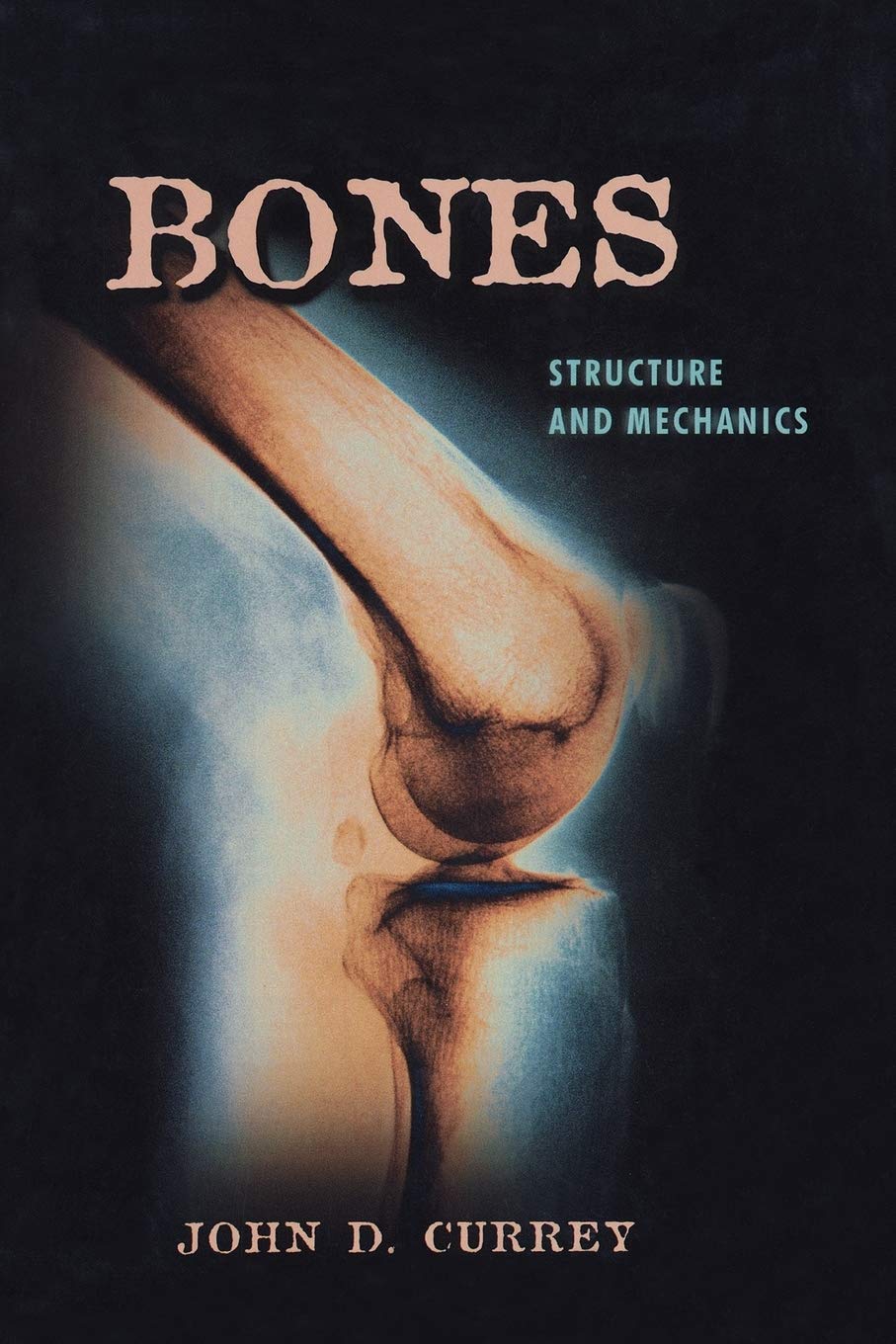
This is a comprehensive and accessible overview of what is known about the structure and mechanics of bone, bones, and teeth. In it, John Currey incorporates critical new concepts and findings from the two decades of research since the publication of his highly regarded The Mechanical Adaptations of Bones. Crucially, Currey shows how bone structure and bone's mechanical properties are intimately bound up with each other and how the mechanical properties of the material interact with the structure of whole bones to produce an adapted structure.For bone tissue, the book discusses stiffness, strength, viscoelasticity, fatigue, and fracture mechanics properties. For whole bones, subjects dealt with include buckling, the optimum hollowness of long bones, impact fracture, and properties of cancellous bone. The effects of mineralization on stiffness and toughness and the role of microcracking in the fracture process receive particular attention. As a zoologist, Currey views bone and bones as solutions to the design problems that vertebrates have faced during their evolution and throughout the book considers what bones have been adapted to do. He covers the full range of bones and bony tissues, as well as dentin and enamel, and uses both human and nonhuman examples.Copiously illustrated, engagingly written, and assuming little in the way of prior knowledge or mathematical background, Bones is both an ideal introduction to the field and also a reference sure to be frequently consulted by practicing researchers.
⚠️ WARNING (California Proposition 65):
This product may contain chemicals known to the State of California to cause cancer,
birth defects, or other reproductive harm.
For MAP (Minimum Advertised Price) violations and Intellectual Property (IP) or Trademark concerns, please contact:
support@ergodebooks.com
⚠️ California Proposition 65 Warning: Some products sold on this website may expose you to chemicals known to the State of California to cause cancer, birth defects, or other reproductive harm. For more information, visit www.P65Warnings.ca.gov.