
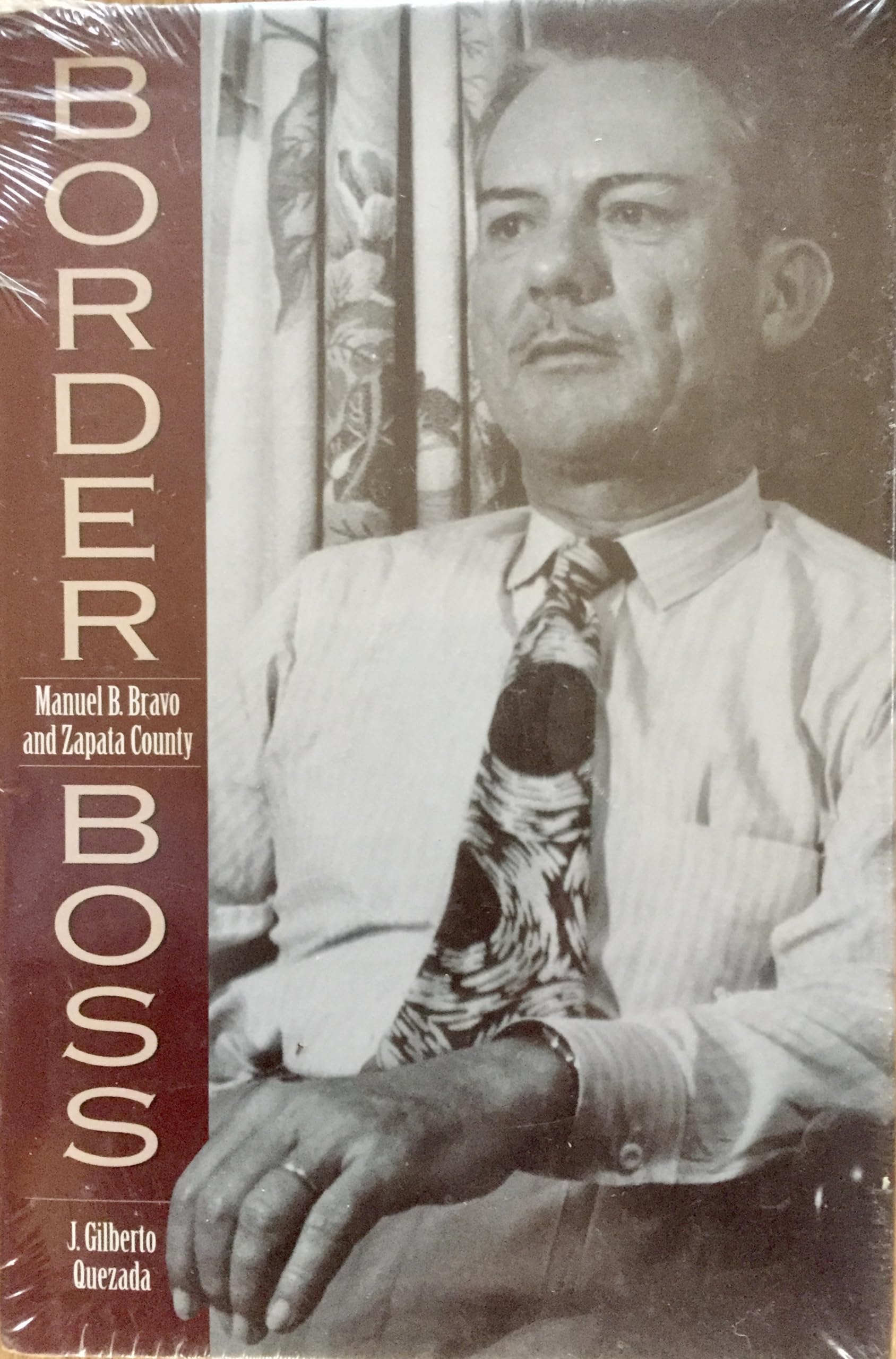
Title
Border Boss: Manuel B. Bravo and Zapata County (Volume 1) (CansecoKeck History Series),Used
Sold by Ergodebooks, an authorized reseller.
Returns accepted within 30 days | support@ergodebooks.com
Shipping Information
- Free Standard Shipping — United States only
- Processing Time: 3–5 business days
- Estimated Delivery: 6–10 business days after dispatch
- Double-boxed, fully insured & discreetly packaged
- Tracking number sent via email once dispatched
Returns & Refund
Returns accepted within 30 days of delivery.
Damaged or Defective Item
Free return shipping + replacement or full refund
Wrong Item Received
Free return shipping + replacement or full refund
Change of Mind
Return shipping at customer's expense · 25% restocking fee applies
Payment Option

On January 1, 1937, Manuel B. Bravo was sworn in as county judge of Zapata County, a post he would hold for twenty years. In Border Boss: Manuel B. Bravo and Zapata County, J. Gilberto Quezada delineates Bravos political career in the Democratic Party and examines his role in some of the important issues of his day, especially Falcon Dam. During Bravos years in office, he worked and corresponded with many Texas and national politicians, including James Allred, Lloyd Bentsen, Kika de la Garza, Ralph Yarborough, and, most prominently, Lyndon Johnson. The association between Bravo and Johnson began with the special Senate election of 1941 and is reflected in the more than fifty letters between the two in Bravo's personal papers. In Johnson's 1948 Senate runoff against Coke Stevenson, voting irregularities were alleged in Zapata County when the election returns from Precinct No. 3 were reported missing. Quezada analyzes the Bravo papers for any evidence that Bravo and Johnson had arranged the disappearance and offers possible alternative explanations. From the 1930s to the 1950s Zapata County was one of six South Texas counties where the Tejano majority dominated local politics and held most public offices. Bravo became known as one of the "Mexican bosses" of South Texas, but Quezada draws a more nuanced picture of bossism than has been presented previously, analyzing the role of influential leading families but looking as well at the degree of economic integration into the state and nation as factors in how bossism developed.Those interested in MexicanAmerican studies and politics and bossism in South Texas will appreciate the window onto South Texas politics and Tejano culture this biography gives.
⚠️ WARNING (California Proposition 65):
This product may contain chemicals known to the State of California to cause cancer, birth defects, or other reproductive harm.
For more information, please visit www.P65Warnings.ca.gov.