
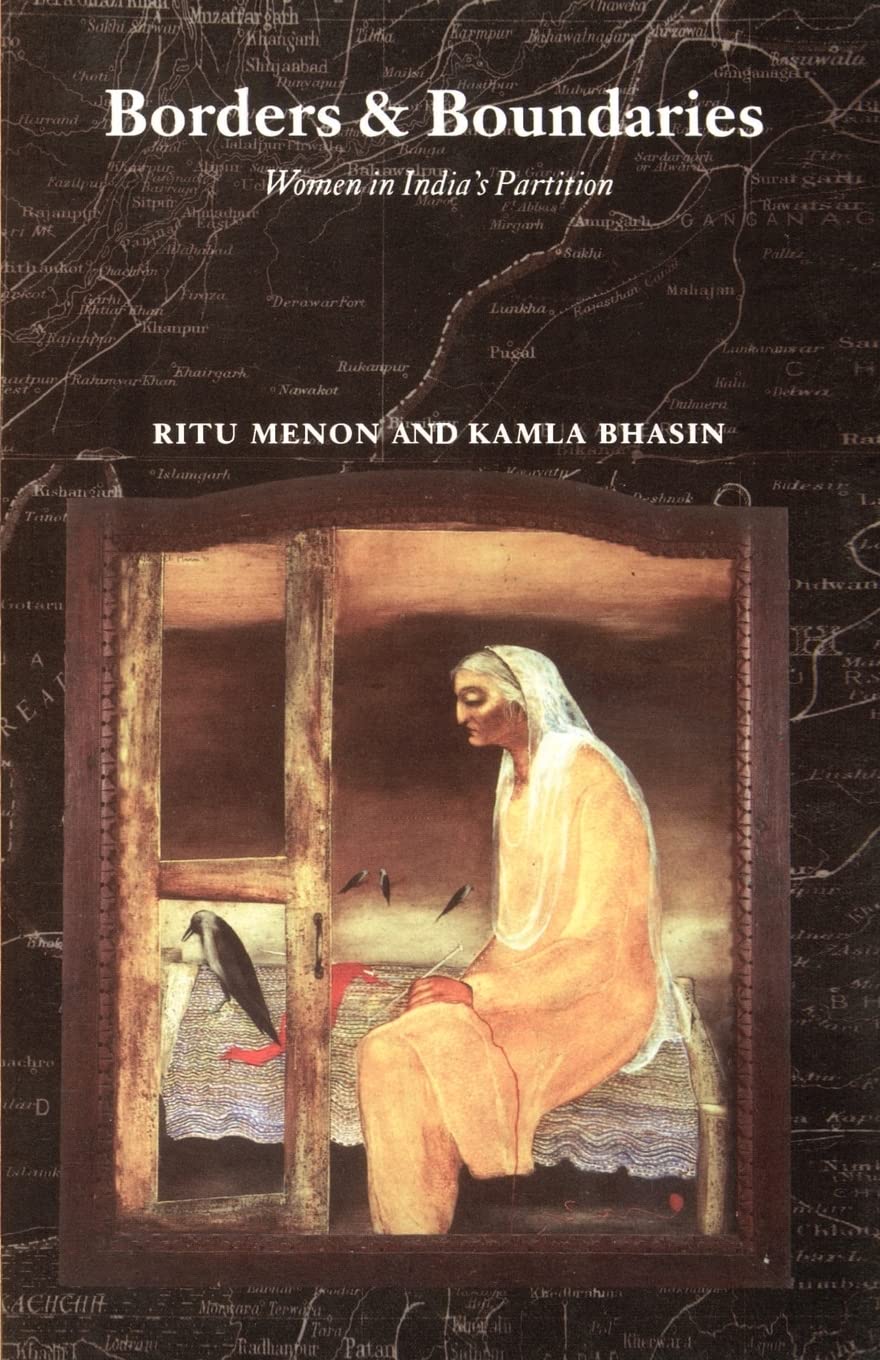
Title
Borders And Boundaries: How Women Experienced The Partition Of India
Sold by Ergodebooks, an authorized reseller.
Returns accepted within 30 days | support@ergodebooks.com
Shipping Information
- Free Standard Shipping — United States only
- Processing Time: 3–5 business days
- Estimated Delivery: 6–10 business days after dispatch
- Double-boxed, fully insured & discreetly packaged
- Tracking number sent via email once dispatched
Returns & Refund
Returns accepted within 30 days of delivery.
Damaged or Defective Item
Free return shipping + replacement or full refund
Wrong Item Received
Free return shipping + replacement or full refund
Change of Mind
Return shipping at customer's expense · 25% restocking fee applies
Payment Option

As An Event Of Shattering Consequence, The Partition Of India Remains Significant Today. While Partition Sounds Smooth On Paper, The Reality Was Horrific. More Than Eight Million People Migrated And One Million Died In The Process. The Forced Migration, Violence Between Hindus And Muslims, And Mass Widowhood Were Unprecedented And Welldocumented. What Was Less Obvious But Equally Real Was That Millions Of People Had To Realign Their Identities, Uncertain About Who They Thought They Were. The Rending Of The Social And Emotional Fabric That Took Place In 1947 Is Still Far From Mended.While There Are Plenty Of Official Accounts Of Partition, There Are Few Social Histories And No Feminist Histories. Borders And Boundaries Changes That, Providing Firsthand Accounts And Memoirs, Juxtaposed Alongside Official Government Accounts. The Authors Make Women Not Only Visible But Central. They Explore What Country, Nation, And Religious Identity Meant For Women, And They Address The Question Of The Nationstate And The Gendering Of Citizenship.In The Largest Ever Peacetime Mass Migration Of People, Violence Against Women Became The Norm. Thousands Of Women Committed Suicide Or Were Done To Death By Their Own Kinsmen. Nearly 100,000 Women Were Abducted During The Migration. A Young Woman Might Have Been Separated From Her Family When A Convoy Was Ambushed, Abducted By People Of Another Religion, Forced To Convert, And Forced Into Marriage Or Cohabitation. After Bearing A Child, She Would Be Offered The Opportunity To Return Only If She Left Her Child Behind And If She Could Face Shame In Her Natal Community. These Stories Do Not Paint Their Subjects As Victims. Theirs Are The Stories Of Battles Over Gender, The Body, Sexuality, And Nationalismstories Of Women Fighting For Identity.
⚠️ WARNING (California Proposition 65):
This product may contain chemicals known to the State of California to cause cancer, birth defects, or other reproductive harm.
For more information, please visit www.P65Warnings.ca.gov.
- Q: How many pages does the book have? A: The book contains two hundred eighty-eight pages. It provides an in-depth exploration of women's experiences during the Partition of India.
- Q: What is the binding type of this book? A: The book is available in paperback binding. This makes it lightweight and easy to carry, perfect for reading on the go.
- Q: What are the dimensions of the book? A: The book measures five point five one inches in length, zero point seven one inches in width, and eight point five inches in height. These dimensions make it a standard-sized paperback.
- Q: Who is the author of this book? A: The author is Ritu Menon. She is known for her work on feminist history and social issues in India.
- Q: What is the main theme of the book? A: The main theme explores the impact of the Partition on women's identities. It juxtaposes personal accounts with official narratives.
- Q: Is this book suitable for academic studies? A: Yes, the book is suitable for academic studies. It provides unique insights into women's experiences and social histories during the Partition.
- Q: How should I care for this book? A: To care for this book, keep it in a dry place away from direct sunlight. Avoid bending the spine to preserve its condition.
- Q: Can this book be used in classrooms? A: Yes, this book can be used in classrooms. It offers valuable perspectives on gender and nationalism, making it suitable for discussions.
- Q: Is this book a suitable gift for history enthusiasts? A: Yes, it is a great gift for history enthusiasts. The book's unique focus on women's narratives during a significant historical event adds depth.
- Q: What should I do if my book arrives damaged? A: If your book arrives damaged, contact the seller for a return or exchange. Most sellers have a clear return policy for damaged items.
- Q: Does this book include illustrations? A: Yes, the book includes black and white illustrations. These visuals enhance the storytelling and provide context to the narratives.
- Q: Is this book part of a series? A: No, this book is not part of a series. It stands alone as a comprehensive study of women's experiences during the Partition.
- Q: What is the publication date of this book? A: The publication date is not specified in the details provided. However, it is published by Rutgers University Press.
- Q: Are there any notable features of this book? A: Yes, the book is noted for its firsthand accounts and intersection of social history with feminist perspectives. It provides a unique narrative.
- Q: What age group is this book appropriate for? A: The book is suitable for mature readers, likely ages sixteen and up. It discusses complex themes related to identity and trauma.