
Title
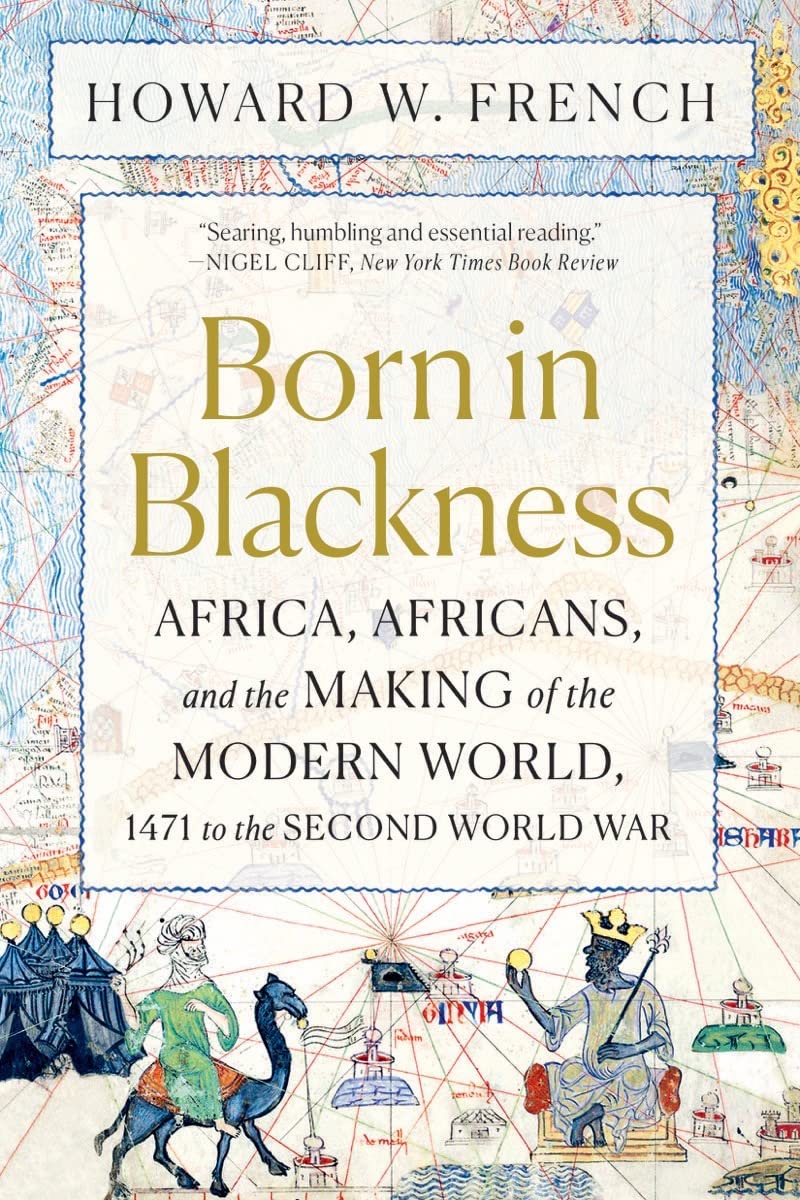
Born in Blackness: Africa, Africans, and the Making of the Modern World, 1471 to the Second World War,Used
Sold by Ergodebooks, an authorized reseller.
Returns accepted within 30 days | support@ergodebooks.com
Shipping Information
- Free Standard Shipping — United States only
- Processing Time: 3–5 business days
- Estimated Delivery: 6–10 business days after dispatch
- Double-boxed, fully insured & discreetly packaged
- Tracking number sent via email once dispatched
Returns & Refund
Returns accepted within 30 days of delivery.
Damaged or Defective Item
Free return shipping + replacement or full refund
Wrong Item Received
Free return shipping + replacement or full refund
Change of Mind
Return shipping at customer's expense · 25% restocking fee applies
Payment Option

Revealing the central yet intentionally obliterated role of Africa in the creation of modernity, Born in Blackness vitally reframes our understanding of world history.Traditional accounts of the making of the modern world afford a place of primacy to European history. Some credit the fifteenthcentury Age of Discovery and the maritime connection it established between West and East; others the accidental unearthing of the New World. Still others point to the development of the scientific method, or the spread of JudeoChristian beliefs; and so on, ad infinitum. The history of Africa, by contrast, has long been relegated to the remote outskirts of our global story. What if, instead, we put Africa and Africans at the very center of our thinking about the origins of modernity?In a sweeping narrative spanning more than six centuries, Howard W. French does just that, for Born in Blackness vitally reframes the story of medieval and emerging Africa, demonstrating how the economic ascendancy of Europe, the anchoring of democracy in the West, and the fulfillment of socalled Enlightenment ideals all grew out of Europes dehumanizing engagement with the dark continent. In fact, French reveals, the first impetus for the Age of Discovery was notas we are so often told, even todayEuropes yearning for ties with Asia, but rather its centuriesold desire to forge a trade in gold with legendarily rich Black societies sequestered away in the heart of West Africa.Creating a historical narrative that begins with the commencement of commercial relations between Portugal and Africa in the fifteenth century and ends with the onset of World War II, Born in Blackness interweaves precise historical detail with poignant, personal reportage. In so doing, it dramatically retrieves the lives of major African historical figures, from the unimaginably rich medieval emperors who traded with the Near East and beyond, to the Kongo sovereigns who heroically battled seventeenthcentury European powers, to the exslaves who liberated Haitians from bondage and profoundly altered the course of American history.While French cogently demonstrates the centrality of Africa to the rise of the modern world, Born in Blackness becomes, at the same time, a far more significant narrative, one that reveals a longconcealed history of trivialization and, more often, elision in depictions of African history throughout the last five hundred years. As French shows, the achievements of sovereign African nations and their nowfarflung peoples have time and again been etiolated and deliberately erased from modern history. As the West ascended, their storiessiloed and piecemealwere swept into secluded corners, thus setting the stage for the hagiographic rise of the West theories that have endured to this day.Capacious and compelling (Laurent Dubois), Born in Blackness is epic history on the grand scale. In the lofty tradition of bold, revisionist narratives, it reframes the story of gold and tobacco, sugar and cottonand of the greatest commodity of them all, the twelve million people who were brought in chains from Africa to the New World, whose reclaimed lives shed a harsh light on our present world. 20 blackandwhite images and 4 maps
⚠️ WARNING (California Proposition 65):
This product may contain chemicals known to the State of California to cause cancer, birth defects, or other reproductive harm.
For more information, please visit www.P65Warnings.ca.gov.
- Q: How many pages does the book have? A: The book has five hundred forty-four pages. It provides a comprehensive exploration of Africa's role in modern history.
- Q: What is the binding type of this book? A: This book is available in paperback binding. This makes it flexible and easy to handle.
- Q: What are the dimensions of the book? A: The book measures five point five one inches in length, one inch in width, and eight point three one inches in height. These dimensions make it a manageable size for reading.
- Q: What age group is this book suitable for? A: This book is suitable for adults and young adults. It contains complex themes and historical analysis that may not be appropriate for younger readers.
- Q: How should I read this book? A: You can read this book at your own pace. It's recommended to take time to reflect on the historical contexts presented by the author.
- Q: Is this book suitable for academic study? A: Yes, this book is suitable for academic study. It offers a detailed examination of Africa's influence on the modern world, making it a valuable resource.
- Q: How do I care for this book? A: To care for this book, keep it in a dry place and avoid exposing it to direct sunlight. This will help preserve its condition over time.
- Q: Can I clean this book if it gets dirty? A: Yes, you can clean this book gently with a dry cloth. Avoid using any liquids that may damage the pages.
- Q: Does this book contain images or maps? A: Yes, the book contains twenty black-and-white images and four maps. These visual aids enhance the historical narratives presented.
- Q: What topics does this book cover? A: The book covers the history of Africa from fourteen seventy-one to the Second World War. It emphasizes Africa's central role in shaping modernity.
- Q: How does this book compare to other historical narratives? A: This book offers a revisionist perspective compared to traditional historical narratives. It highlights Africa's crucial contributions often overlooked in mainstream history.
- Q: Is this book a good choice for someone interested in African history? A: Yes, this book is an excellent choice for anyone interested in African history. It provides a deep dive into the often omitted contributions of Africa to global development.
- Q: What should I do if the book arrives damaged? A: If the book arrives damaged, you should contact the seller for a return or exchange. Most sellers have policies in place for such issues.
- Q: Can I return this book if I don’t like it? A: Yes, you can return the book if you are not satisfied, provided you follow the seller’s return policy. Check the guidelines for details.
- Q: What if I have questions about the content of the book? A: If you have questions about the content, consider joining a discussion group or looking for online forums focused on historical literature. Engaging with others can enhance your understanding.
- Q: Is there a warranty for this book? A: Typically, books do not come with a warranty. However, check with the retailer for specific policies related to damage or defects.