
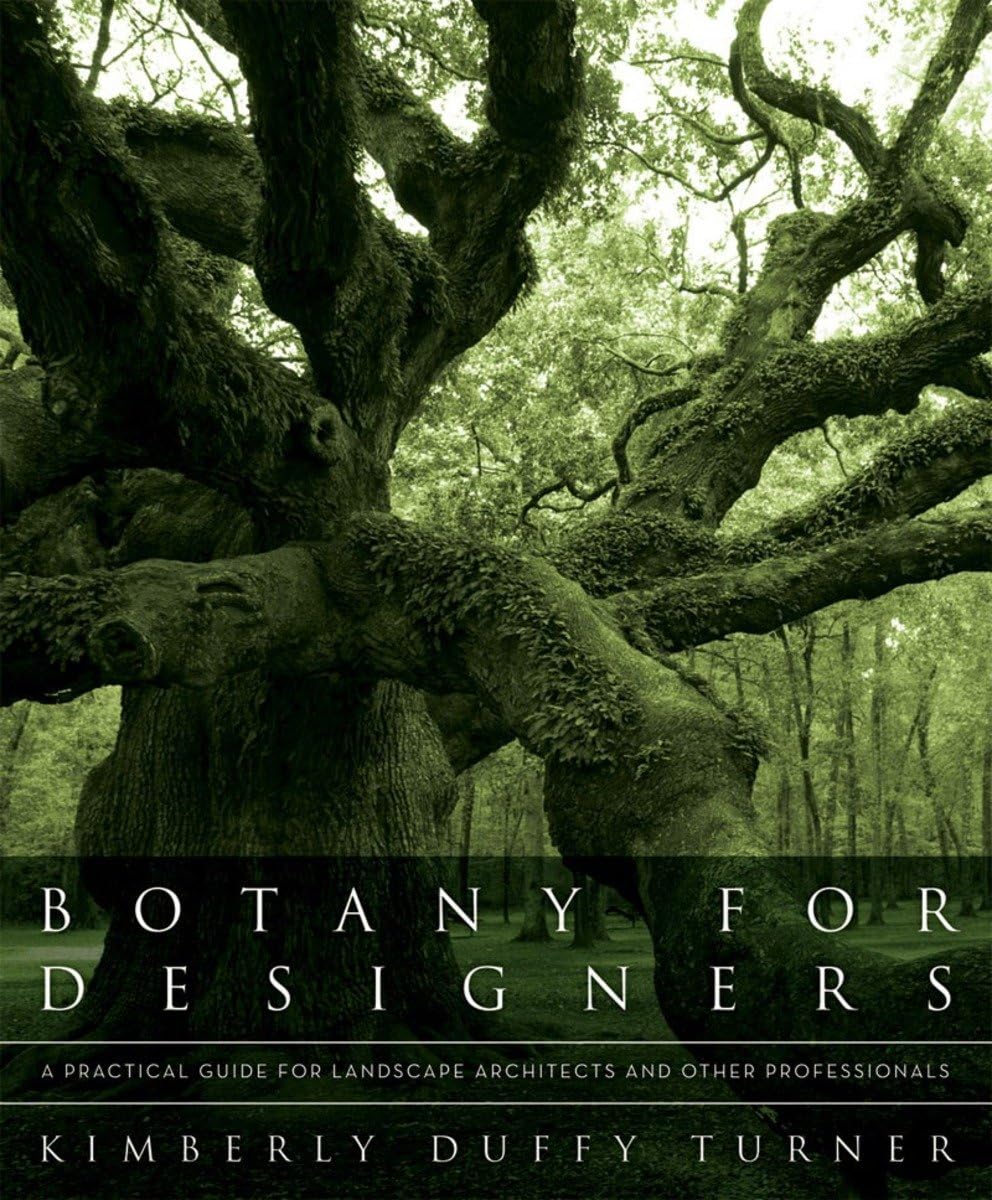
Title
Botany For Designers: A Practical Guide For Landscape Architects And Other Professionals
Sold by Ergodebooks, an authorized reseller.
Returns accepted within 30 days | support@ergodebooks.com
Shipping Information
- Free Standard Shipping — United States only
- Processing Time: 3–5 business days
- Estimated Delivery: 6–10 business days after dispatch
- Double-boxed, fully insured & discreetly packaged
- Tracking number sent via email once dispatched
Returns & Refund
Returns accepted within 30 days of delivery.
Damaged or Defective Item
Free return shipping + replacement or full refund
Wrong Item Received
Free return shipping + replacement or full refund
Change of Mind
Return shipping at customer's expense · 25% restocking fee applies
Payment Option

Botany 101 For Professionals Who Want A Summary Of Planting Design Fundamentals. Plants Are Among The Most Important Materials For Effective Landscape Design. Yet The Fundamentals Of Plant Biology And Growth; Their Morphology, Color, And Functional Assets; And Details Such As Planting, Pruning Techniques, And Maintenance Practices Are Surprisingly Absent From Our Education And Training, Which Tend To Focus On Other Core Principles Like Drainage, Grading, And Spatial Relationships.What Do You Need To Know About How Plants Grow And Function? How Can You Determine Appropriate Plants For A Particular Site? How Can You Use Their Distinct Design Features Effectively? What Are The Real Design Considerations To Keep In Mind?This Booka Botany 101 Course For Professionals And Students Alikewalks You Through All The Answers, Equipping You With The Ability To Be Not Just An Informed Landscape Designer But Also An Effective Planting Designer.Kimberly Duffy Turner, A Landscape Architect And Horticulturalist, Explains The Essentials Of Planting Design, Exploring Form And Function And Showing How Various Characteristics Of Plants And Treesshape, Pigment, Leaf Veination, Texture, Fragrance, Sound, Height, And Morecan Be Used To Achieve Effective Siteappropriate Designs. Specifying Appropriate Plant Material And Examining Stock At The Nurserydrawing Up A Planting Schedule Of The Species Or Cultivar, Sizes, And Quantitiesand Evaluating Modes Of Transplantation (When To Ask For Bare Root, Balled And Burlapped, Or Containerized) Are Other Key Onthejob Concepts Covered.A Chapter On Green Design Outlines Some Of The Sustainable Trends In Botany: The Role Of Leed Certification In Landscape Design; Mitigating Environmental Problems With Plants And Open Space; The Emergence Of Green Roofs And Vertical Gardens; Biomimicry; And Sensitive Material Selection, Like Composite Wood Products And Plantderived, Soybased Paints. Both A Handy Appendix Of Common Latin And Greek Terms Used In Horticulture And A Comprehensive List Of Plant Palettes Are Included.With More Than 150 Color Photographs And Schematic Drawings Illustrating Key Strategies, Botany For Designers Is The Professionals Goto Guide, Showing You How An Appreciation Of Plant Fundamentals Can Lead To More Inspired, Welldesigned Landscapes. 175 Fullcolor Photographs
⚠️ WARNING (California Proposition 65):
This product may contain chemicals known to the State of California to cause cancer, birth defects, or other reproductive harm.
For more information, please visit www.P65Warnings.ca.gov.
- Q: How many pages does the book have? A: The book contains two hundred eight pages. It provides a thorough exploration of botany principles applicable for landscape design.
- Q: What is the binding type of this book? A: This book has a hardcover binding. This makes it durable and suitable for frequent use by professionals.
- Q: What are the dimensions of the book? A: The book measures seven point six inches in length, nine point six one inches in height, and zero point nine one inches in width. These dimensions make it portable while still including comprehensive information.
- Q: How do I apply the plant design concepts from this book? A: You can apply the concepts by selecting plants based on their growth characteristics and site suitability. The book explains practical techniques for planning and executing planting designs.
- Q: Is this book suitable for beginners in landscape design? A: Yes, this book is suitable for beginners. It covers fundamental botany concepts in an accessible way, making it a helpful resource for new landscape designers.
- Q: Can this book help me determine the right plants for my garden? A: Yes, the book provides guidance on selecting appropriate plants for different sites. It discusses plant characteristics and design considerations essential for effective landscaping.
- Q: How should I store this book to keep it in good condition? A: Store the book in a dry, cool place away from direct sunlight. This will help preserve the integrity of the cover and pages over time.
- Q: Does the book provide care instructions for plants? A: Yes, it includes maintenance practices such as planting and pruning techniques. These instructions are essential for ensuring the health of the selected plants.
- Q: What if the book arrives damaged? A: If the book arrives damaged, you should contact the seller for a return or replacement. Most sellers have a clear policy for handling damaged items.
- Q: Is there a warranty for this book? A: Typically, books do not come with a warranty. However, you can check with the retailer for their specific return and exchange policies.
- Q: How does this book compare to other botany books? A: This book stands out due to its practical focus on landscape architecture. Unlike many academic texts, it emphasizes real-world applications in design.
- Q: Who is the author of this book? A: The author is Kimberly Duffy Turner. She is a landscape architect and horticulturalist with expertise in planting design.
- Q: Are there illustrations in the book? A: Yes, there are over one hundred fifty color photographs and schematic drawings. These visuals help clarify key strategies for effective design.
- Q: What topics are covered in the book? A: The book covers planting design fundamentals, plant biology, maintenance practices, and sustainable design trends in landscaping.
- Q: Can I use this book for landscape architecture courses? A: Yes, this book can be used as a supplementary resource for landscape architecture courses. It provides essential information for understanding plant selection and design.