
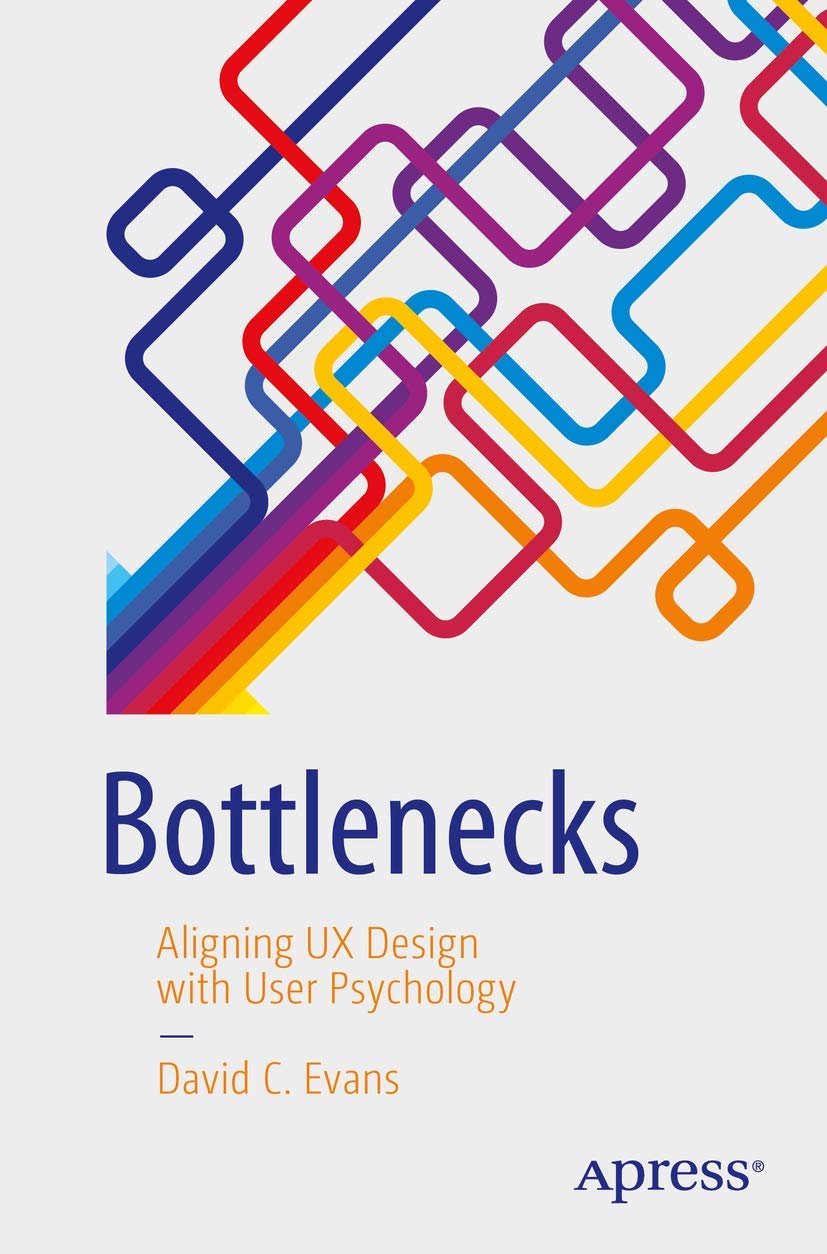
Title
Bottlenecks: Aligning Ux Design With User Psychology
Sold by Ergodebooks, an authorized reseller.
Returns accepted within 30 days | support@ergodebooks.com
Shipping Information
- Free Standard Shipping — United States only
- Processing Time: 3–5 business days
- Estimated Delivery: 6–10 business days after dispatch
- Double-boxed, fully insured & discreetly packaged
- Tracking number sent via email once dispatched
Returns & Refund
Returns accepted within 30 days of delivery.
Damaged or Defective Item
Free return shipping + replacement or full refund
Wrong Item Received
Free return shipping + replacement or full refund
Change of Mind
Return shipping at customer's expense · 25% restocking fee applies
Payment Option

Learn The Psychological Constrictions Of Attention, Perception, Memory, Disposition, Motivation, And Social Influence That Determine Whether Customers Will Be Receptive To Your Digital Innovations.Bottlenecks: Aligning Ux Design With User Psychology Fills A Need For Entrepreneurs, Designers, And Marketing Professionals In The Application Of Foundational Psychology To Userexperience Design. The First Generation Of Books On The Topic Focused On Web Pages And Cognitive Psychology. This Book Covers Apps, Social Media, Incar Infotainment, And Multiplayer Video Games, And It Explores The Crucial Roles Played By Behaviorism, Development, Personality, And Social Psychology. Author David Evans Is An Experimental Psychology Ph.D. And Senior Manager Of Consumer Research At Microsoft Who Recounts Highstakes Case Studies In Which Behavioral Theory Aligned Digital Designs With The Bottlenecks In Human Nature To The Benefit Of Users And Businesses Alike.Innova Tors In Design And Students Of Psychology Will Learn:The Psychological Processes Determining Users Perception Of, Engagement With, And Recommendation Of Digital Innovationsexamples Of Interfaces Before And After Simple Psychological Alignments That Vastly Enhanced Their Effectivenessstrategies For Marketing And Product Development In An Age Of Social Media And Behavioral Targetinghypotheses For Research That Both Academics And Enterprises Can Perform To Better Meet Users Needswho This Book Is For Designers And Entrepreneurs Will Use This Book To Give Their Innovations An Edge On What Are Increasingly Competitive Platforms Such As Apps, Bots, Incar Apps, Augmented Reality Content. Usability Researchers And Market Researchers Will Leverage It To Enhance Their Consulting And Reporting. Students And Lecturers In Psychology Departments Will Want It To Help Land Employment In The Private Sector.Praisebottlenecks Is A Tight And Eminently Actionable Read For Business Leaders In Startups And Enterprises Alike. Evans Gives Us A Rich Sense Of Key Psychological Processes And Even Richer Examples Of Them In Action. Nir Eyal, Author Of Hooked: How To Build Habitforming Products Clients Frequently Ask Our Ux Researchers And Designers For Deeper Truths About Why Certain Designs Work And Others Fail. Bottlenecks Offers Practical Explanations And Evidence Based On The Idea That Human Cognition Did Not Begin With The Digital Age. John Dirks, Ux Director And Partner, Blink Uxbottlenecks Brings Together Two Very Important Aspects Of User Experience Design: Understanding Users And Translating This Into Business Impact. A Mustread For Anyone Who Wants To Learn Both. Josh Lamar, Sr. Ux Lead, Microsoft Outlook
⚠️ WARNING (California Proposition 65):
This product may contain chemicals known to the State of California to cause cancer, birth defects, or other reproductive harm.
For more information, please visit www.P65Warnings.ca.gov.
- Q: What is the page count of this book? A: This book has two hundred eighty-one pages. It provides a comprehensive overview of aligning UX design with user psychology.
- Q: What are the dimensions of this book? A: The book measures six point one inches in length, zero point six four inches in width, and nine point two five inches in height. Its compact size makes it easy to handle.
- Q: What binding type does this book have? A: This book is available in paperback binding. This allows for a flexible and lightweight reading experience.
- Q: Who is the author of this book? A: The author of this book is David C. Evans. He has a Ph.D. in experimental psychology and has extensive experience in consumer research.
- Q: What is the main focus of this book? A: The main focus of this book is on the psychological aspects of user experience design. It examines how psychology impacts the reception of digital innovations.
- Q: How can this book help UX designers? A: This book provides valuable insights into user psychology that can enhance design strategies. Designers can apply these principles to create more effective digital interfaces.
- Q: Is this book suitable for beginners in UX design? A: Yes, this book is suitable for beginners as well as experienced professionals in UX design. It offers foundational concepts as well as advanced strategies.
- Q: What practical applications does this book cover? A: This book covers practical applications in various digital platforms, including apps, social media, and video games. It provides real-world case studies to illustrate these concepts.
- Q: How does this book address marketing strategies? A: This book includes strategies for marketing in an age of behavioral targeting and social media. It emphasizes the importance of understanding user psychology for effective marketing.
- Q: What audience is this book intended for? A: This book is intended for UX designers, entrepreneurs, usability researchers, and psychology students. It serves as a resource for anyone involved in digital design.
- Q: What kind of case studies are included? A: The book includes high-stakes case studies that showcase how psychological theory aligns with digital designs. These examples demonstrate successful outcomes for both users and businesses.
- Q: Does the book provide hypotheses for research? A: Yes, the book outlines hypotheses for research that can be performed by both academics and enterprises. This helps in better understanding user needs.
- Q: How does the book relate psychology to digital design? A: The book explores the intersection of psychology and digital design by highlighting how cognitive processes influence user engagement and satisfaction.
- Q: Are there any endorsements from industry leaders? A: Yes, the book has received praise from industry leaders like Nir Eyal and John Dirks for its actionable insights and practical explanations.
- Q: Can this book help with usability research? A: Yes, usability researchers can leverage the insights from this book to enhance their consulting and reporting. It provides a deeper understanding of user behavior.
- Q: What psychological processes does the book cover? A: The book covers psychological processes such as attention, perception, memory, and social influence. Understanding these can help improve user experience design.