If you have any questions, you are always welcome to contact us. We'll get back to you as soon as possible, withing 24 hours on weekdays.
Customer service
All questions about your order, return and delivery must be sent to our customer service team by e-mail at yourstore@yourdomain.com
Sale & Press
If you are interested in selling our products, need more information about our brand or wish to make a collaboration, please contact us at press@yourdomain.com
Help
If you have any questions, you are always welcome to contact us. We'll get back to you as soon as possible, withing 24 hours on weekdays.
Customer service
All questions about your order, return and delivery must be sent to our customer service team by e-mail at yourstore@yourdomain.com
Sale & Press
If you are interested in selling our products, need more information about our brand or wish to make a collaboration, please contact us at press@yourdomain.com
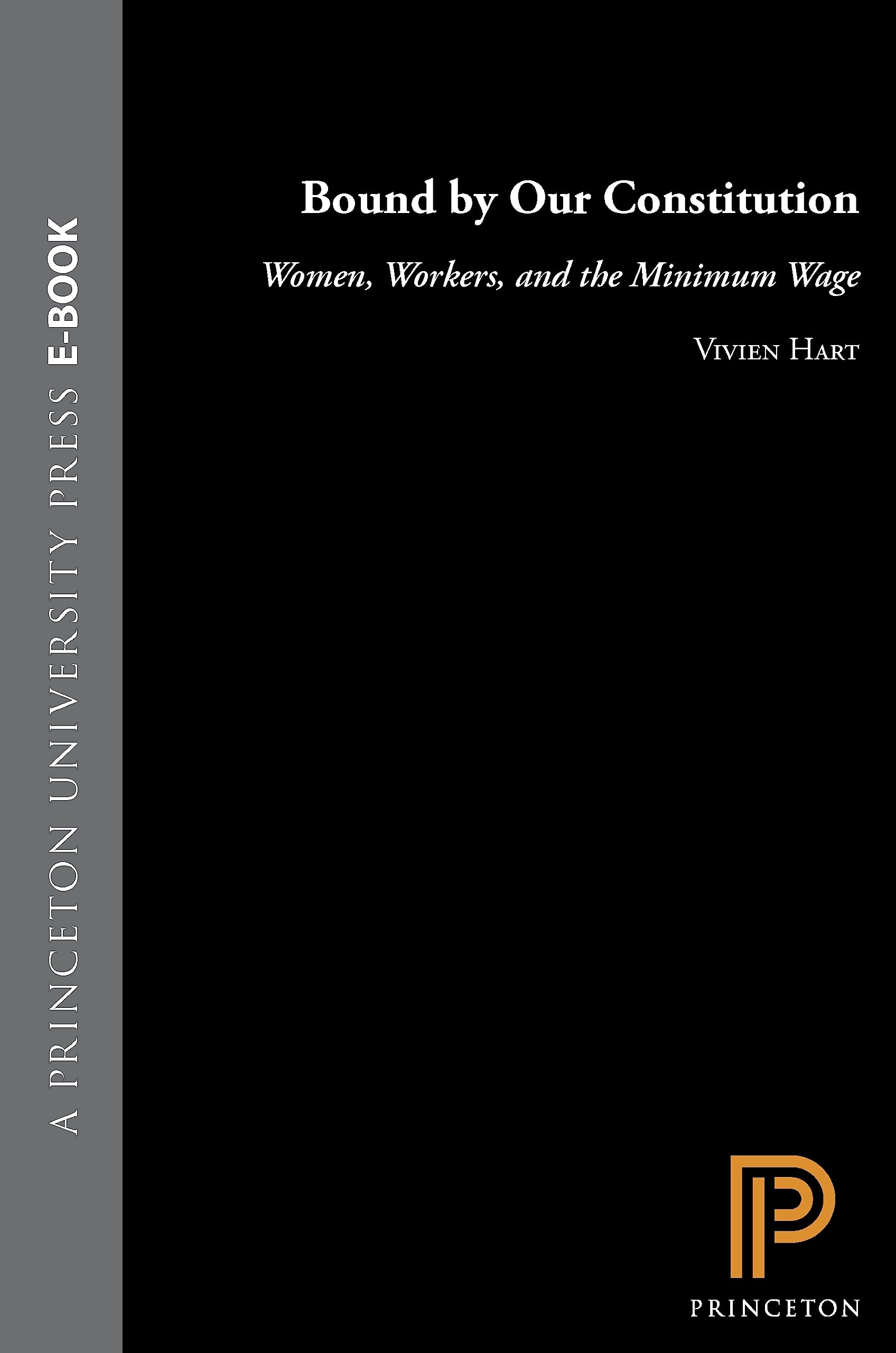
What difference does a written constitution make to public policy? How have women workers fared in a nation bound by constitutional principles, compared with those not covered by formal, written guarantees of fair procedure or equitable outcome? To investigate these questions, Vivien Hart traces the evolution of minimum wage policies in the United States and Britain from their common origins in women's politics around 1900 to their divergent outcomes in our day. She argues, contrary to common wisdom, that the advantage has been with the American constitutional system rather than the British.Basing her analysis on primary research, Hart reconstructs legal strategies and policy decisions that revolved around the recognition of women as workers and the public definition of gender roles. Contrasting seismic shifts and expansion in American minimum wage policy with indifference and eventual abolition in Britain, she challenges preconceptions about the constraints of American constitutionalism versus British flexibility. Though constitutional requirements did block and frustrate women's attempts to gain fair wages, they also, as Hart demonstrates, created a terrain in the United States for principled debate about women, work, and the stateand a momentum for public policyunparalleled in Britain. Hart's book should be of interest to policy, labor, women's, and legal historians, to political scientists, and to students of gender issues, law, and social policy.
⚠️ WARNING (California Proposition 65):
This product may contain chemicals known to the State of California to cause cancer,
birth defects, or other reproductive harm.
For MAP (Minimum Advertised Price) violations and Intellectual Property (IP) or Trademark concerns, please contact:
support@ergodebooks.com
⚠️ California Proposition 65 Warning: Some products sold on this website may expose you to chemicals known to the State of California to cause cancer, birth defects, or other reproductive harm. For more information, visit www.P65Warnings.ca.gov.