
Title
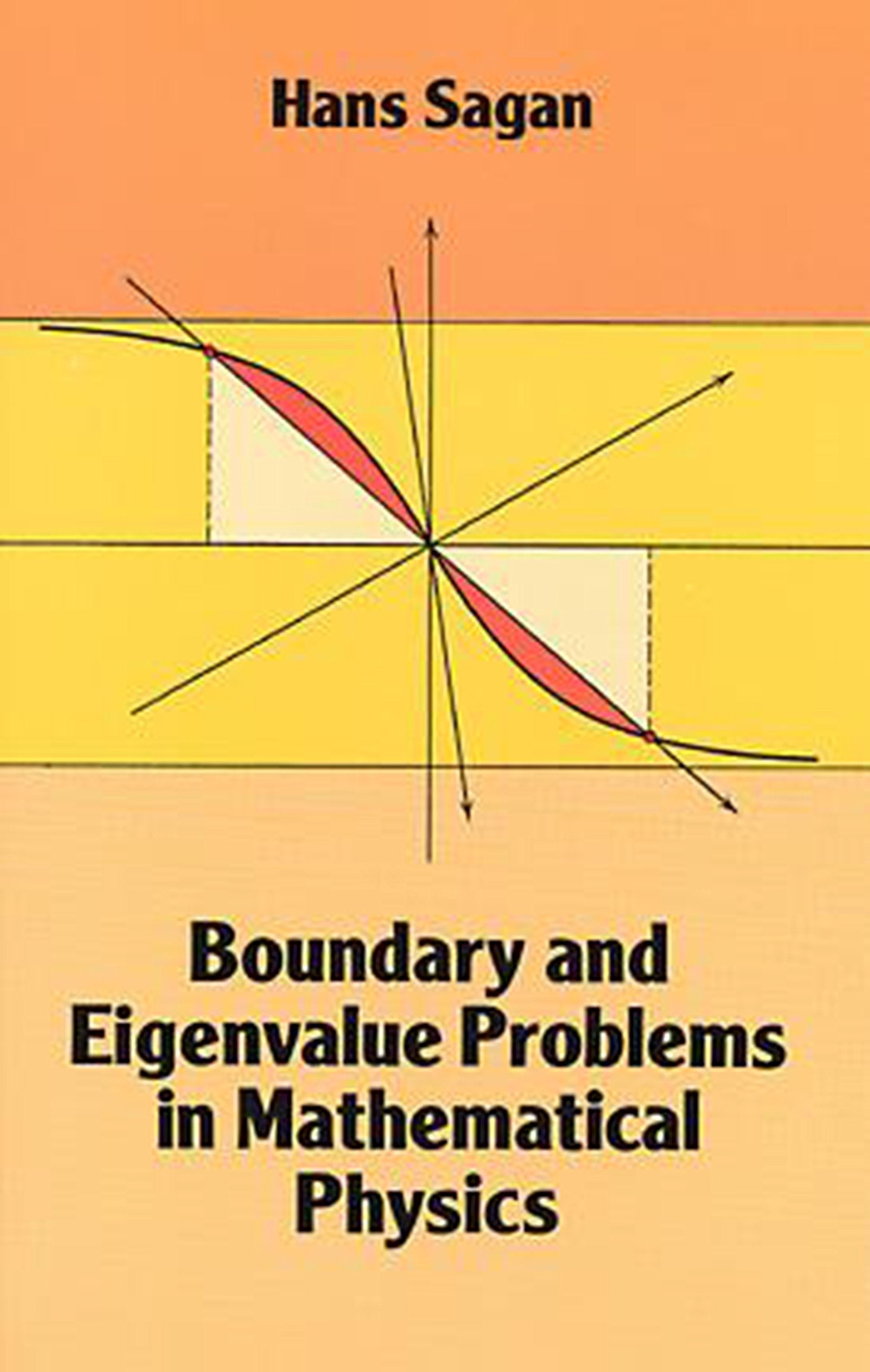
Boundary and Eigenvalue Problems in Mathematical Physics (Dover Books on Physics),Used
Sold by Ergodebooks, an authorized reseller.
Returns accepted within 30 days | support@ergodebooks.com
Shipping Information
- Free Standard Shipping — United States only
- Processing Time: 3–5 business days
- Estimated Delivery: 6–10 business days after dispatch
- Double-boxed, fully insured & discreetly packaged
- Tracking number sent via email once dispatched
Returns & Refund
Returns accepted within 30 days of delivery.
Damaged or Defective Item
Free return shipping + replacement or full refund
Wrong Item Received
Free return shipping + replacement or full refund
Change of Mind
Return shipping at customer's expense · 25% restocking fee applies
Payment Option

This wellknown text uses a limited number of basic concepts and techniques Hamilton's principle, the theory of the first variation and Bernoulli's separation method to develop complete solutions to linear boundary value problems associated with second order partial differential equations such as the problems of the vibrating string, the vibrating membrane, and heat conduction. It is directed to advanced undergraduate and beginning graduate students in mathematics, applied mathematics, physics, and engineering who have completed a course in advanced calculus.In the first three chapters, Professor Sagan introduces Hamilton's principle and the theory of the first variation; he then discusses the representation of the vibrating string, the vibrating membrane and heat conduction (without convection) by partial differential equations. Bernoulli's separation method and infinite series solutions of homogeneous boundary value problems are introduced as a means for solving these problems.The next three chapters take up Fourier series, selfadjoint boundary value problems, Legendre polynomials, and Bessel functions. The concluding three chapters address the characterization of eigenvalues by a variational principle; spherical harmonics, and the solution of the Schroedinger equation for the hydrogen atom; and the nonhomogeneous boundary value problem. Professor Sagan concludes most sections of this excellent text with selected problems (solutions provided for evennumbered problems) to reinforce the reader's grasp of the theories and techniques presented.
⚠️ WARNING (California Proposition 65):
This product may contain chemicals known to the State of California to cause cancer, birth defects, or other reproductive harm.
For more information, please visit www.P65Warnings.ca.gov.
- Q: What topics are covered in 'Boundary and Eigenvalue Problems in Mathematical Physics'? A: This book covers essential topics such as Hamilton's principle, first variation theory, Bernoulli's separation method, Fourier series, self-adjoint boundary value problems, Legendre polynomials, Bessel functions, and eigenvalues associated with variational principles.
- Q: Who is the target audience for this textbook? A: The textbook is directed towards advanced undergraduate and beginning graduate students in mathematics, applied mathematics, physics, and engineering, especially those who have completed a course in advanced calculus.
- Q: What is the binding type of this book? A: The book is available in paperback binding.
- Q: How many pages does 'Boundary and Eigenvalue Problems in Mathematical Physics' have? A: The book contains 399 pages.
- Q: When was this book published? A: This textbook was published on October 1, 1989.
- Q: Is there a solution provided for the problems presented in the book? A: Yes, the book provides solutions for even-numbered problems to help reinforce the reader's understanding of the theories and techniques discussed.
- Q: What makes this book a reliable resource for students? A: The book is well-regarded for its clear explanations, systematic approach to complex problems, and the inclusion of fundamental concepts necessary for understanding linear boundary value problems associated with second order partial differential equations.
- Q: Are there specific mathematical methods emphasized in the book? A: Yes, the book emphasizes Hamilton's principle and Bernoulli's separation method as key techniques for solving boundary value problems.
- Q: Does the book include any historical context or background on the topics? A: While the primary focus is on mathematical concepts and techniques, the text may provide context through the discussion of historical methods and their applications in physics.
- Q: Is this book suitable for self-study? A: Yes, 'Boundary and Eigenvalue Problems in Mathematical Physics' is suitable for self-study, especially for students with a solid foundation in advanced calculus who wish to deepen their understanding of mathematical physics.