If you have any questions, you are always welcome to contact us. We'll get back to you as soon as possible, withing 24 hours on weekdays.
Customer service
All questions about your order, return and delivery must be sent to our customer service team by e-mail at yourstore@yourdomain.com
Sale & Press
If you are interested in selling our products, need more information about our brand or wish to make a collaboration, please contact us at press@yourdomain.com
Help
If you have any questions, you are always welcome to contact us. We'll get back to you as soon as possible, withing 24 hours on weekdays.
Customer service
All questions about your order, return and delivery must be sent to our customer service team by e-mail at yourstore@yourdomain.com
Sale & Press
If you are interested in selling our products, need more information about our brand or wish to make a collaboration, please contact us at press@yourdomain.com
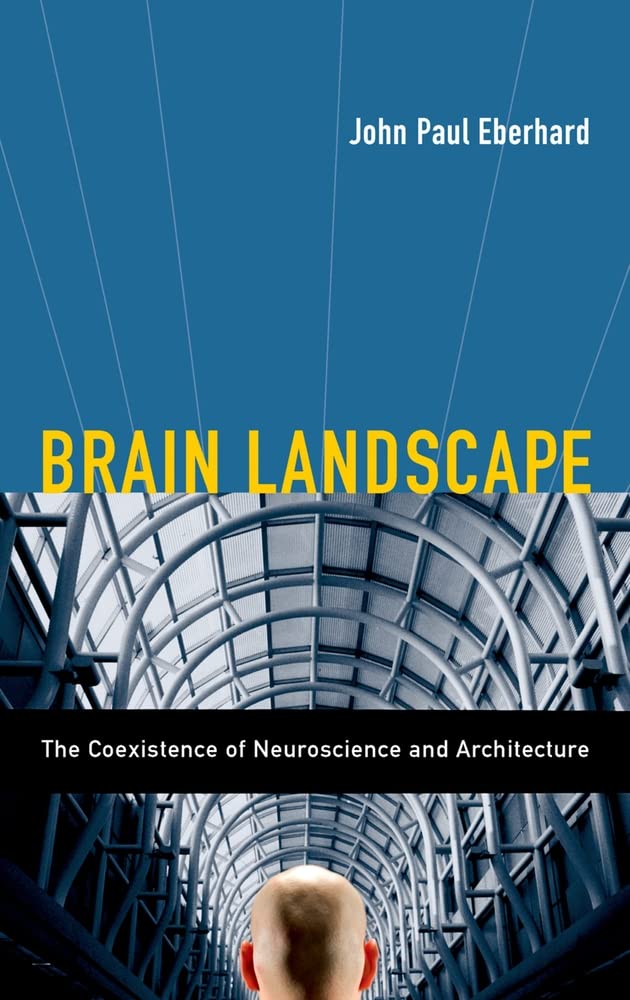
Brain Landscape: The Coexistence of Neuroscience and Architecture is the first book to serve as an intellectual bridge between architectural practice and neuroscience research. John P. Eberhard, founding President of the nonprofit Academy of Neuroscience for Architecture, argues that increased funding, and the ability to think beyond the norm, will lead to a better understanding of how scientific research can change how we design, illuminate, and build spaces. Inversely, he posits that by better understanding the effects that buildings and places have on us, and our mental state, the better we may be able to understand how the human brain works. This book is devoted to describing architectural design criteria for schools, offices, laboratories, memorials, churches, and facilities for the aging, and then posing hypotheses about human experiences in such settings.
⚠️ WARNING (California Proposition 65):
This product may contain chemicals known to the State of California to cause cancer,
birth defects, or other reproductive harm.
For MAP (Minimum Advertised Price) violations and Intellectual Property (IP) or Trademark concerns, please contact:
support@ergodebooks.com
⚠️ California Proposition 65 Warning: Some products sold on this website may expose you to chemicals known to the State of California to cause cancer, birth defects, or other reproductive harm. For more information, visit www.P65Warnings.ca.gov.