
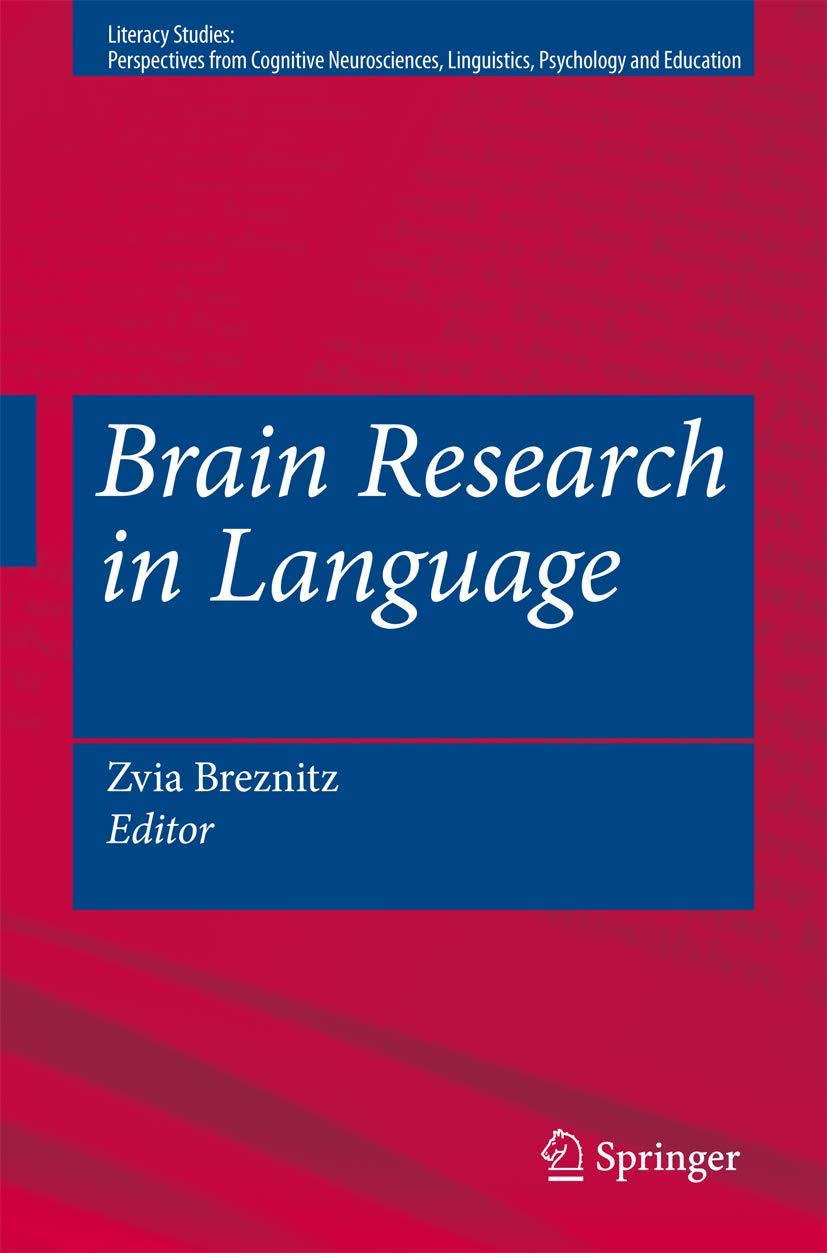
Title
Brain Research In Language (Literacy Studies, 1)
Sold by Ergodebooks, an authorized reseller.
Returns accepted within 30 days | support@ergodebooks.com
Shipping Information
- Free Standard Shipping — United States only
- Processing Time: 3–5 business days
- Estimated Delivery: 6–10 business days after dispatch
- Double-boxed, fully insured & discreetly packaged
- Tracking number sent via email once dispatched
Returns & Refund
Returns accepted within 30 days of delivery.
Damaged or Defective Item
Free return shipping + replacement or full refund
Wrong Item Received
Free return shipping + replacement or full refund
Change of Mind
Return shipping at customer's expense · 25% restocking fee applies
Payment Option

Brain Research in Language addresses important neurological issues involved in reading. The reading process is a highly composite cognitive task, which relies on brain systems that were originally devoted to other functions. The majority of studies in this area have implemented behavioral methodologies, which provide information concerning the entire cognitive sequence at the conclusion of processing only, in the readers output. However, these measures cannot specify all of the covert component operations that contribute to reading, nor can they determine the relative processing times required by the individual stages. Furthermore, they cannot determine which processes occur serially, which occur in parallel and which overlap in time (Brandeis & Lehmann, 1994; Johnson, 1995). Recent advancements in the field of neuroscience and cognitive development, however, have added a new dimension with regard to the research into the universal and domain specific aspects of reading with the advent of innovative neurophysiological measurement techniques. The most common are electroencephalography (EEG) and functional magnetic resonance imaging (fMRI). These two methods provide researchers with the opportunity to examine, indepth, the neural correlates of the reading processing with precise temporal and spatial resolutions, respectively. This book presents data obtained from various studies employing behavioral, electrophysiological and imaging methodologies in different languages focusing on the regular reading process and the dyslexic population.Educators and researchers within neuroscience, literacy, and special education will benefit from Brain Research in Language.
⚠️ WARNING (California Proposition 65):
This product may contain chemicals known to the State of California to cause cancer, birth defects, or other reproductive harm.
For more information, please visit www.P65Warnings.ca.gov.