If you have any questions, you are always welcome to contact us. We'll get back to you as soon as possible, withing 24 hours on weekdays.
Customer service
All questions about your order, return and delivery must be sent to our customer service team by e-mail at yourstore@yourdomain.com
Sale & Press
If you are interested in selling our products, need more information about our brand or wish to make a collaboration, please contact us at press@yourdomain.com
Help
If you have any questions, you are always welcome to contact us. We'll get back to you as soon as possible, withing 24 hours on weekdays.
Customer service
All questions about your order, return and delivery must be sent to our customer service team by e-mail at yourstore@yourdomain.com
Sale & Press
If you are interested in selling our products, need more information about our brand or wish to make a collaboration, please contact us at press@yourdomain.com
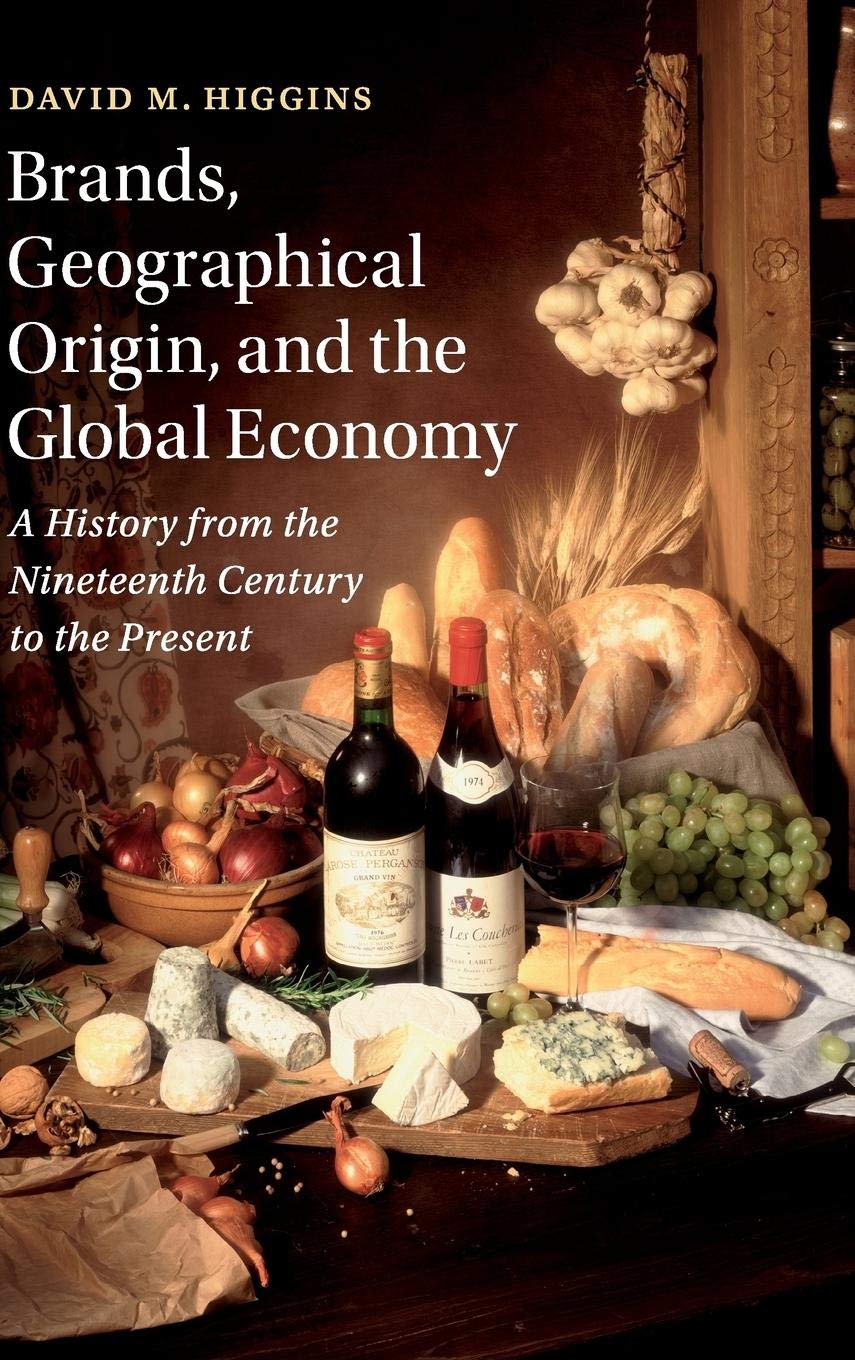
Indications of geographic origin for foodstuffs and manufactures have become an important source of brand value since the beginnings of globalization during the late nineteenth century. In this work, David M. Higgins explores the early nineteenthcentury business campaigns to secure national and international protection of geographic brands. He shows how these efforts culminated in the introduction of legal protocols which protect such brands, including, 'Champagne', 'Sheffield', 'Swiss made' watches and 'Made in the USA'. Higgins explores the major themes surrounding these indications, tying in the history of global marketing and the relevant laws on intellectual property. He also questions the effectiveness of European Union policy to promote 'regional' and 'local' foods and why such initiatives brought the EU in conflict with North America, especially the US He extends the study with a reflection on contemporary issues affecting globalization, intellectual property, less developed countries, and supply chains.
⚠️ WARNING (California Proposition 65):
This product may contain chemicals known to the State of California to cause cancer,
birth defects, or other reproductive harm.
For MAP (Minimum Advertised Price) violations and Intellectual Property (IP) or Trademark concerns, please contact:
support@ergodebooks.com
⚠️ California Proposition 65 Warning: Some products sold on this website may expose you to chemicals known to the State of California to cause cancer, birth defects, or other reproductive harm. For more information, visit www.P65Warnings.ca.gov.