If you have any questions, you are always welcome to contact us. We'll get back to you as soon as possible, withing 24 hours on weekdays.
Customer service
All questions about your order, return and delivery must be sent to our customer service team by e-mail at yourstore@yourdomain.com
Sale & Press
If you are interested in selling our products, need more information about our brand or wish to make a collaboration, please contact us at press@yourdomain.com
Help
If you have any questions, you are always welcome to contact us. We'll get back to you as soon as possible, withing 24 hours on weekdays.
Customer service
All questions about your order, return and delivery must be sent to our customer service team by e-mail at yourstore@yourdomain.com
Sale & Press
If you are interested in selling our products, need more information about our brand or wish to make a collaboration, please contact us at press@yourdomain.com
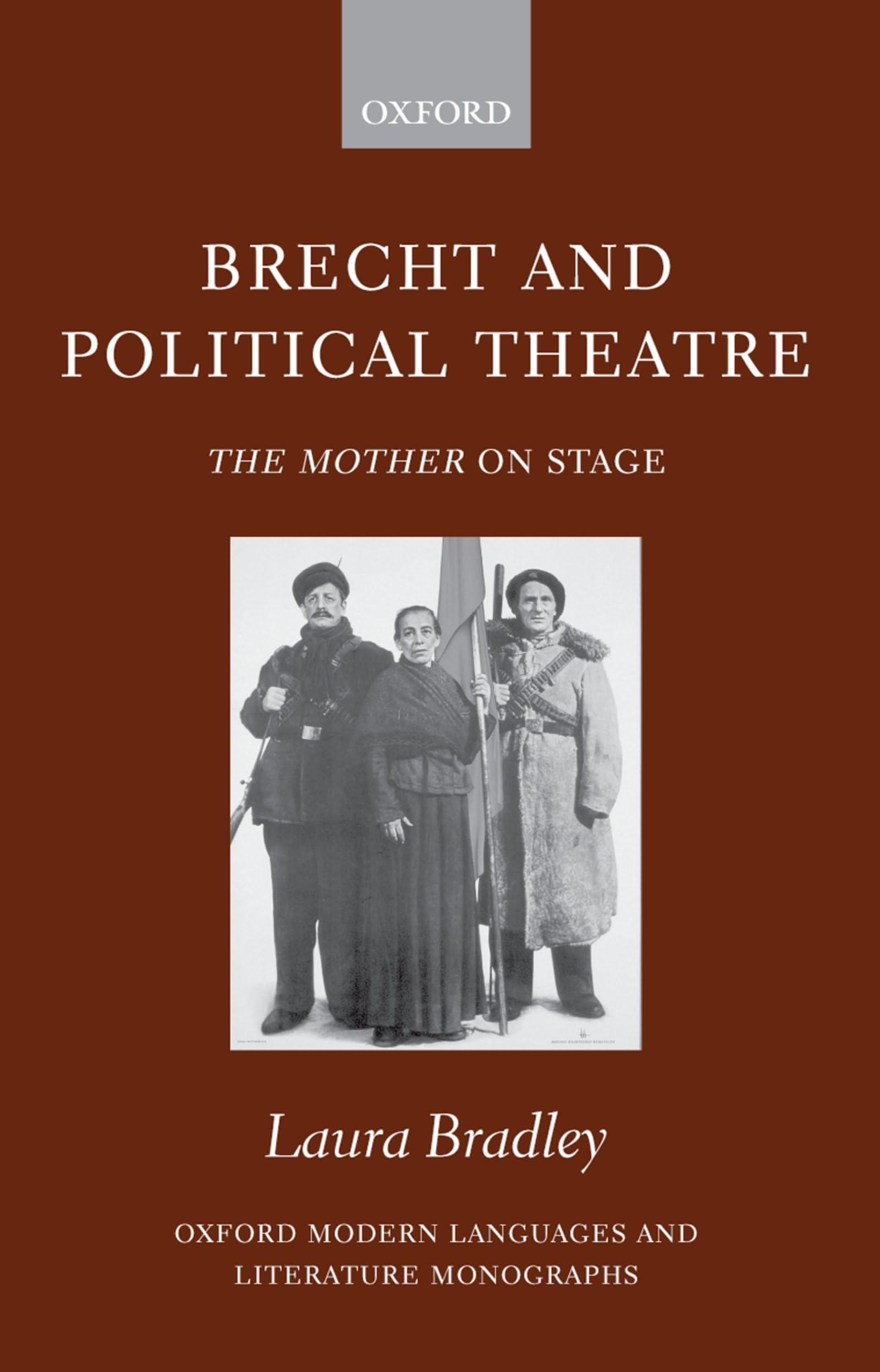
This production history of The Mother provides substantial new insights into Bertolt Brecht's theatre and drama, his impact on political theatre, and the relationship between text, performance, and politicocultural context. As the only play which Brecht staged in the Weimar Republic, during his exile, and in the GDR, The Mother offers a unique opportunity to compare his theatrical practice in contrasting settings and at different points in his career. Through detailed analysis of original archival evidence, Bradley shows how Brecht became far more sensitive to his spectators' political views and cultural expectations, even making major tactical concessions in his 1951 production at the Berliner Ensemble. These compromises indicate that his "mature" staging should not be regarded as definitive, for it was tailored to a unique and delicate situation.The Mother has appealed strongly to politically committed theatre practitioners both in and beyond Germany. By exploiting the text's generic hybridity and the interplay between Brecht's "epic" and "dramatic" elements, directors have interpreted it in radically different ways. So although Brecht's 1951 production stagnated into an affirmative GDR heritage piece, postBrechtian directors have used The Mother to promote their own political and theatrical concerns, from antiauthoritarian theatre to reflections on the legacies of state Socialism. Their ideological and theatrical subversion have helped Brecht's text to outlive the political system that it came to uphold.
⚠️ WARNING (California Proposition 65):
This product may contain chemicals known to the State of California to cause cancer,
birth defects, or other reproductive harm.
For MAP (Minimum Advertised Price) violations and Intellectual Property (IP) or Trademark concerns, please contact:
support@ergodebooks.com
⚠️ California Proposition 65 Warning: Some products sold on this website may expose you to chemicals known to the State of California to cause cancer, birth defects, or other reproductive harm. For more information, visit www.P65Warnings.ca.gov.