
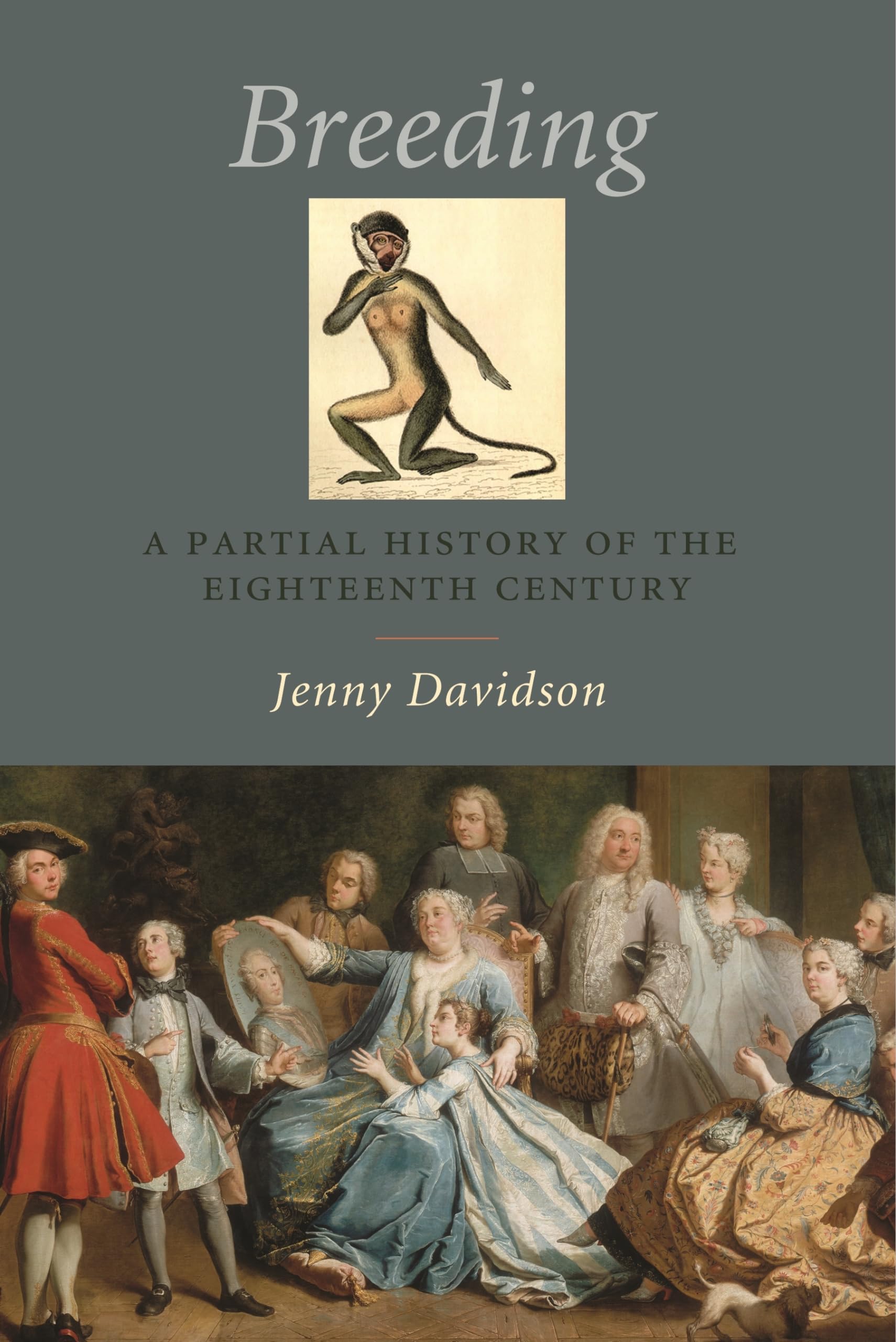
Title
Breeding: A Partial History Of The Eighteenth Century
Sold by Ergodebooks, an authorized reseller.
Returns accepted within 30 days | support@ergodebooks.com
Shipping Information
- Free Standard Shipping — United States only
- Processing Time: 3–5 business days
- Estimated Delivery: 6–10 business days after dispatch
- Double-boxed, fully insured & discreetly packaged
- Tracking number sent via email once dispatched
Returns & Refund
Returns accepted within 30 days of delivery.
Damaged or Defective Item
Free return shipping + replacement or full refund
Wrong Item Received
Free return shipping + replacement or full refund
Change of Mind
Return shipping at customer's expense · 25% restocking fee applies
Payment Option

The Enlightenment Commitment To Reason Naturally Gave Rise To A Belief In The Perfectibility Of Man. Influenced By John Locke And Jeanjacques Rousseau, Many Eighteenthcentury Writers Argued That The Proper Education And Upbringingbreedingcould Make Any Man A Member Of The Cultural Elite.Yet Even In This Egalitarian Environment, The Concept Of Breeding Remained Tied To Theories Of Blood Lineage, Caste Distinction, And Biological Difference. Turning To The Works Of Locke, Rousseau, Swift, Defoe, And Other Giants Of The British Enlightenment, Jenny Davidson Revives The Debates That Raged Over The Husbandry Of Human Nature And Highlights Their Critical Impact On The Development Of Eugenics, The Emergence Of Fears About Biological Determinism, And The History Of The Language Itself. Combining Rich Historical Research With A Keen Sense Of Story, She Links Explanations For The Physical Resemblance Between Parents And Children To Larger Arguments About Culture And Society And Shows How The Threads Of This Compelling Conversation Reveal The Character Of A Century. A Remarkable Intellectual History, Breeding Not Only Recasts The Fundamental Concerns Of The Enlightenment But Also Uncovers The Seeds Of Thought That Bloomed Into Contemporary Notions Of Human Perfectibility.
⚠️ WARNING (California Proposition 65):
This product may contain chemicals known to the State of California to cause cancer, birth defects, or other reproductive harm.
For more information, please visit www.P65Warnings.ca.gov.
- Q: How many pages does this book have? A: This book has three hundred twelve pages. It provides an in-depth exploration of the themes related to breeding during the Enlightenment.
- Q: What is the binding type of this book? A: The binding type is hardcover. This ensures durability and longevity, making it suitable for repeated reading.
- Q: What are the dimensions of the book? A: The dimensions are six point twenty-six inches in length, zero point ninety-two inches in width, and nine point thirty-three inches in height. These measurements make it a portable and easy-to-handle book.
- Q: Who is the author of this book? A: The author is Jenny Davidson. She provides a critical examination of breeding and its implications during the eighteenth century.
- Q: What genre does this book belong to? A: This book belongs to the Criticism and Theory genre. It discusses philosophical ideas and historical developments related to human nature.
- Q: Is this book suitable for academic study? A: Yes, this book is suitable for academic study. It delves into critical theories and historical context, making it a valuable resource for students and scholars.
- Q: How should I store this book? A: Store it in a cool, dry place away from direct sunlight. This will help preserve the hardcover and prevent fading of the text.
- Q: Can this book be read by beginners in philosophy? A: Yes, beginners can read this book. While it is dense with ideas, Davidson presents complex concepts in a way that is accessible for newcomers.
- Q: What is the main theme of this book? A: The main theme revolves around the Enlightenment ideas of breeding and human perfectibility. It critiques historical notions of lineage and cultural elitism.
- Q: Does this book include references to other authors? A: Yes, the book references influential authors like John Locke and Jean-Jacques Rousseau. Their ideas are pivotal to the discussions within the text.
- Q: How do I clean the book cover? A: Use a soft, dry cloth to gently wipe the cover. Avoid using any liquid cleaners, as they can damage the hardcover.
- Q: Is this book appropriate for a general audience? A: Yes, it is appropriate for a general audience interested in history and philosophy. The engaging narrative style appeals to a wide range of readers.
- Q: What should I do if the book arrives damaged? A: If the book arrives damaged, contact the seller for a return or exchange. Make sure to keep all packaging materials for the return process.
- Q: Does this book touch on modern implications of its themes? A: Yes, it discusses modern implications of breeding and eugenics, linking historical debates to contemporary issues in society.
- Q: What type of research does the author use in this book? A: The author combines rich historical research with narrative storytelling. This approach illuminates complex philosophical debates in an engaging manner.