
Title
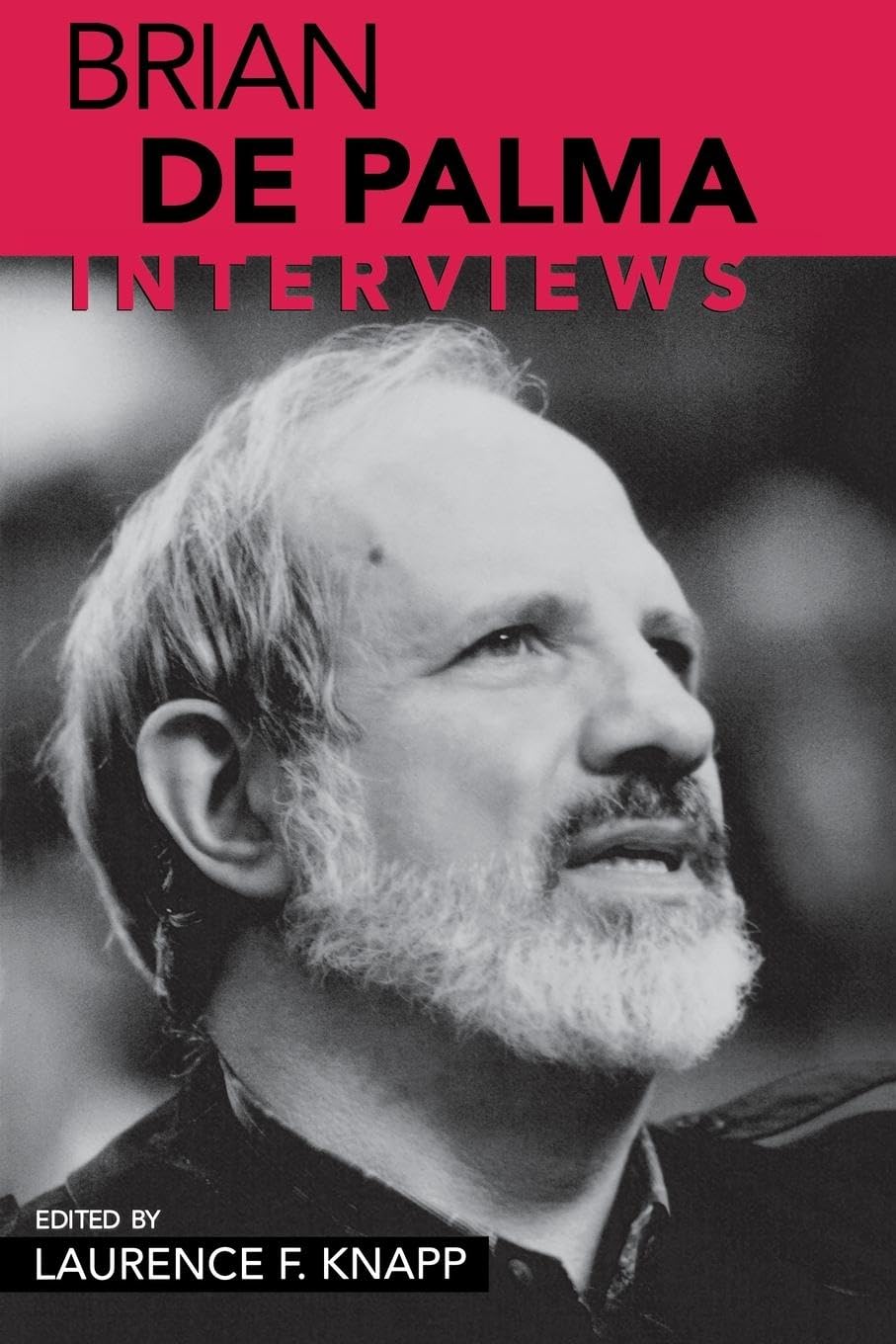
Brian De Palma: Interviews (Conversations with Filmmakers Series),Used
Sold by Ergodebooks, an authorized reseller.
Returns accepted within 30 days | support@ergodebooks.com
Shipping Information
- Free Standard Shipping — United States only
- Processing Time: 3–5 business days
- Estimated Delivery: 6–10 business days after dispatch
- Double-boxed, fully insured & discreetly packaged
- Tracking number sent via email once dispatched
Returns & Refund
Returns accepted within 30 days of delivery.
Damaged or Defective Item
Free return shipping + replacement or full refund
Wrong Item Received
Free return shipping + replacement or full refund
Change of Mind
Return shipping at customer's expense · 25% restocking fee applies
Payment Option

Brian De Palma (b. 1940) isn't your average Hollywood director.For years he reigned as the master of the macabre, the man who massacred the class of '76 in Carrie and stalked Angie Dickinson in Dressed to Kill. By the mid1980s De Palma found himself assaulting his audience and critics, daring them to watch a chainsaw enter a man's skull in Scarface and a power drill disembowel a defenseless woman in Body Double.What drove De Palma to such extremes? In the late 1960s, he wanted to be the next JeanLuc Godard and revolutionize American cinema. Instead, he found himself ostracized when Warner Bros. removed him from Get to Know Your Rabbit, his first Hollywood feature. De Palma sought the refuge of Alfred Hitchcock until the late 1970s (Sisters, Obsession), when his surreal approach to horror became a genre unto itself (Carrie, The Fury, Dressed to Kill). Ironically, just as De Palma achieved the success that his fellow Movie Brats George Lucas, Martin Scorsese, and Steven Spielberg had enjoyed since the mid1970s, he could not hide his resentment toward Hollywood. After battling with the MPAA in the 1980s, he gradually became part of the mainstream with the success of The Untouchables and Mission: Impossible, although he never suppressed his desire to make audiences aware of his cameraeye and his dark, penetrating worldview.Brian De Palma: Interviews follows De Palma's fortunes as he makes the difficult transition from underground filmmaker to celebrity auteur. In profiles and q & a interviews, he emerges as a fascinating figure of excess and ambivalence. De Palma is not afraid to share his opinions about censorship, violence, feminism, American culture, and the fate of cinema in the twentyfirst century.
⚠️ WARNING (California Proposition 65):
This product may contain chemicals known to the State of California to cause cancer, birth defects, or other reproductive harm.
For more information, please visit www.P65Warnings.ca.gov.
- Q: How many pages does the book have? A: This book contains one hundred ninety-seven pages. It provides an in-depth look into the life and career of Brian De Palma.
- Q: What are the dimensions of the book? A: The book measures five point five one inches in length, zero point seven five inches in width, and nine point two five inches in height.
- Q: What type of binding does this book have? A: This book is published in paperback binding. This makes it lightweight and easy to handle.
- Q: Who is the author of this book? A: The author of this book is Laurence F. Knapp. He provides insights into De Palma's unique filmmaking style.
- Q: What is the genre of 'Brian De Palma: Interviews'? A: This book falls under the genre of film studies, specifically focusing on individual directors. It explores the works and thoughts of Brian De Palma.
- Q: How do I read this book? A: You can read this book like any standard paperback. It is suitable for anyone interested in film and De Palma's work.
- Q: Is this book suitable for students? A: Yes, this book is suitable for students studying film or cinema. It provides valuable insights into the director's approach and influences.
- Q: What themes does this book cover? A: This book covers themes such as censorship, violence, and feminism in cinema. It showcases De Palma's perspectives on these important topics.
- Q: How should I care for this book? A: To keep this book in good condition, store it in a dry place and avoid exposure to direct sunlight. Handle it gently to prevent wear.
- Q: Can I return the book if I'm not satisfied? A: Yes, you can return the book if you are not satisfied. Check the retailer's return policy for specific details.
- Q: What if the book arrives damaged? A: If the book arrives damaged, you should contact the seller immediately for a replacement or refund. Provide them with details of the damage.
- Q: Is this book appropriate for children? A: No, this book contains mature themes and discussions that may not be suitable for children. It is intended for adult readers.
- Q: Does this book discuss De Palma's early career? A: Yes, the book discusses De Palma's early career and his transition from underground filmmaker to mainstream director.
- Q: What insights into American culture does the book provide? A: The book provides critical insights into American culture, focusing on how De Palma's films reflect societal issues and cinematic evolution.
- Q: Is this book a good resource for film enthusiasts? A: Yes, this book is an excellent resource for film enthusiasts. It offers deep dives into De Palma's filmmaking philosophy and techniques.
- Q: What is the publication date of this book? A: The publication date is not specified in the provided details. However, it is published by University Press of Mississippi.