
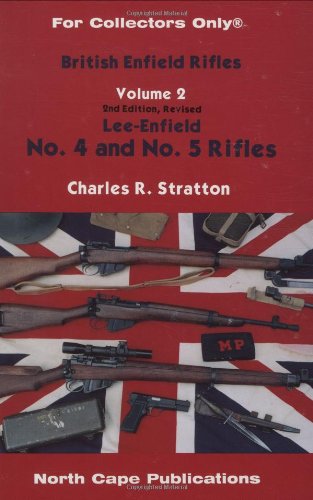
Title
British Enfield Rifles, Leeenfield No. 4 And No. 5 Rifles, Vol. 2 (For Collectors Only)
Sold by Ergodebooks, an authorized reseller.
Returns accepted within 30 days | support@ergodebooks.com
Shipping Information
- Free Standard Shipping — United States only
- Processing Time: 3–5 business days
- Estimated Delivery: 6–10 business days after dispatch
- Double-boxed, fully insured & discreetly packaged
- Tracking number sent via email once dispatched
Returns & Refund
Returns accepted within 30 days of delivery.
Damaged or Defective Item
Free return shipping + replacement or full refund
Wrong Item Received
Free return shipping + replacement or full refund
Change of Mind
Return shipping at customer's expense · 25% restocking fee applies
Payment Option

At The Start Of World War Ii, Great Britain Was Badly Under Armed. The Disastrous Campaigns In France In 1940 Which Resulted In The Massive Evacuation Under Fire Of British And Allied Troops From The Beaches Of Dunkirk And Calais Further Depleted Her Inventory Of Arms. Massive Shipments Of Military Arms From The U.S. Government And Sporting Arms From Private American Citizens Helped To Ease The Situation Somewhat, But It Was The Amazing Production Program That The British Had Put Into Effect As Early As September 1939 That Saved The British Army.In The First Few Years Of The War, The Tired Old Leeenfield Mk I And Mk Iii Carried The Brunt Of Infantry Fighting. Most Of These Rifles Had Been Built Before 1918 And Were Wearing Out Quickly. In The 1920S, The British Army Had Begun Development Of A New, Easiertomanufacture Version Of The Bolt Action Leeenfield. The Result Was The Mk V With Its Receiver Sight And Stiffer Barrel. Some 20,000 Were Produced For Trials But Then The Labor Governments Of The Late 1920S And Early 1930S Saw No Reason To Continue The Development Of Armaments. Hadn'T The League Of Nations Promised To Settle All Future International Disputes?But In 1939, As Hitler'S Germany Was Crushing Poland, A Crash Development Program Was Instituted To Put The Mk V Enfield Into Production Was Begun To Make Up For Lost Years. By 1941, The New Rifle By Now Rechristened The No. 4 Enfield Was Pouring Out Of Factories Around The Country. Production Was Begun Also In Canada And In The United States.The New Rifle Was Equipped With An Improved Receiver Rear Sight That Brought The Aperture Nearer The Eye And Improved The Solider'S Marksmanship. The Heavy Nose Cap Was Gone, Replaced By A Lighter Band With Protective Ears To Guard The Front Sight. The Long Pattern 1914 Bayonet Had Been Replaced By A Short Spike Useful For Guarding Prisoners And Little Else An Implicit Recognition That The Static, Trenchoriented Warfare Was Gone Forever, Replaced By Maneuver Warfare Spearheaded By Mobile Columns Of Armor And Infantry. A New, Stiffer Barrel Was Installed To Improve The Rifle'S Accuracy. Otherwise, It Remained Remarkably Similar To Its Earlier Incarnations.The No. 4 Enfield Was Produced In A Wide Number Of Variations, Most Having To Do With Ways To Cut Production Costs And Time. The Rifles Poured Out Of The Factories And Were Shipped To The Soldiers In The Front Lines And Training Camps As Fast They Could Be Made. The No. 4 Provided Excellent Service In The British Tommy'S Hands From The Arctic Circle To The North African Desert To The Steamy Jungles Of Burma.As The Rifle Production Program Began, The British Army, Impressed By The Havoc Wrought Against The Red Army By Finnish Snipers In The Winter War Of 193940, Also Began Development Of A New Sniper Rifle. The Private Firearms Firm Of Holland And Holland, Famous For The Sporting Rifles And Shotguns, Developed A Sturdy Mounting System For The 32 Telescopic Sight And The No. 4 Mk I (T) Was Born. This Rifle In The Hands Of British Snipers In The Regular Army And In Such Special Warfare Units As The Secret Air Service And The Commandos, Inflicted Casualties And Havoc On Axis Troops Far Beyond Their Number.In 1944, It Became Clear That A Smaller, Lighter Rifle Was Needed For Combat In The Heavy Jungles Of Southeast Asia. A Team Of Enfield Engineers Stripped The No. 4 Rifle To Its Essentials, Shortened The Barrel And Developed A Flashhider To Shield The Soldier From The Heavy Muzzle Concussion And Flash, And Added A Padded Butt Plate. The No. 5 Rifle Popularly Known As The British Enfield Jungle Carbine Served Well During The Remainder Of World War Ii And Through The Communist Insurgencies That Plagued Southeast Asia During The Early Cold War Years.The British Enfield, Vol 2., The No. 4 And 5 Rifles, Continues Charles R. Stratton'S Excellent Series On British Rifles Of The 20Th Century. The No. 4 And No. 5 Rifles Are Dissected Wit
⚠️ WARNING (California Proposition 65):
This product may contain chemicals known to the State of California to cause cancer, birth defects, or other reproductive harm.
For more information, please visit www.P65Warnings.ca.gov.
- Q: How many pages does this book have? A: This book has one hundred ninety-two pages. It provides a comprehensive look at the Lee-Enfield No. 4 and No. 5 rifles.
- Q: What are the dimensions of this book? A: The dimensions of this book are eight point five inches in length, five point five one inches in width, and zero point five one inches in height. These dimensions make it a manageable size for reading.
- Q: What type of binding does this book have? A: This book has a paperback binding. This makes it lightweight and easy to handle for collectors and readers.
- Q: Who is the author of this book? A: The author of this book is Charles R. Stratton. He specializes in writings about military technology and firearms.
- Q: What genre does this book belong to? A: This book belongs to the military technology genre. It provides historical insights and technical details about British rifles.
- Q: How should I read this book? A: You can simply read this book like any other paperback. It is suitable for anyone interested in military history or firearms.
- Q: Is this book suitable for beginners in firearms knowledge? A: Yes, this book is suitable for beginners. It offers detailed explanations that can help new enthusiasts understand British rifles.
- Q: Can I use this book for research purposes? A: Yes, this book can be used for research. It contains detailed historical information and technical specifications valuable for academic study.
- Q: How do I keep this book in good condition? A: To keep this book in good condition, store it in a cool, dry place away from direct sunlight. Avoid bending the pages and use a bookmark.
- Q: Is this book safe for children to read? A: Yes, this book is safe for older children interested in history or military technology. However, parental guidance is recommended for younger readers.
- Q: What if the book arrives damaged? A: If the book arrives damaged, you should contact the seller for a replacement. Most sellers have a return or exchange policy for damaged items.
- Q: Does this book provide detailed specifications of the rifles? A: Yes, this book provides detailed specifications of the Lee-Enfield No. 4 and No. 5 rifles. It covers various models and their features comprehensively.
- Q: Can this book help me identify different Lee-Enfield models? A: Yes, this book can help you identify different Lee-Enfield models. It includes descriptions and comparisons of various rifles.
- Q: Will this book enhance my knowledge of military technology? A: Yes, this book will enhance your knowledge of military technology, specifically regarding British firearms used during World War II.
- Q: Is this book valuable for collectors? A: Yes, this book is valuable for collectors. It is part of a series on British rifles and provides in-depth information that collectors seek.