If you have any questions, you are always welcome to contact us. We'll get back to you as soon as possible, withing 24 hours on weekdays.
Customer service
All questions about your order, return and delivery must be sent to our customer service team by e-mail at yourstore@yourdomain.com
Sale & Press
If you are interested in selling our products, need more information about our brand or wish to make a collaboration, please contact us at press@yourdomain.com
Help
If you have any questions, you are always welcome to contact us. We'll get back to you as soon as possible, withing 24 hours on weekdays.
Customer service
All questions about your order, return and delivery must be sent to our customer service team by e-mail at yourstore@yourdomain.com
Sale & Press
If you are interested in selling our products, need more information about our brand or wish to make a collaboration, please contact us at press@yourdomain.com
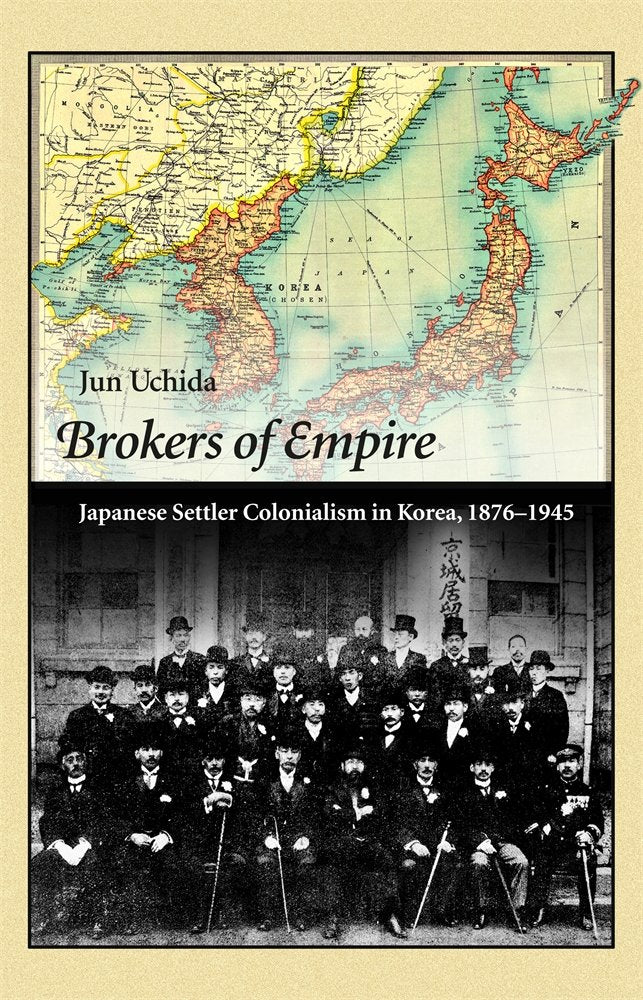
WINNER OF 2012 JOHN K. FAIRBANK PRIZE, AMERICAN HISTORICAL ASSOCIATION WINNER OF 2012 PACIFIC COAST BRANCH BOOK AWARD, PACIFIC COAST BRANCH OF THE AMERICAN HISTORICAL ASSOCIATION Between 1876 and 1945, thousands of Japanese civiliansmerchants, traders, prostitutes, journalists, teachers, and adventurersleft their homeland for a new life on the Korean peninsula. Although most migrants were guided primarily by personal profit and only secondarily by national interest, their mundane lives and the state's ambitions were inextricably entwined in the rise of imperial Japan. Despite having formed one of the largest colonial communities in the twentieth century, these settlers and their empirebuilding activities have all but vanished from the public memory of Japan's presence in Korea.Drawing on previously unused materials in multilanguage archives, Jun Uchida looks behind the official organs of state and military control to focus on the obscured history of these settlers, especially the first generation of "pioneers" between the 1910s and 1930s who actively mediated the colonial management of Korea as its grassroots movers and shakers. By uncovering the downplayed but dynamic role played by settler leaders who operated among multiple partiesbetween the settler community and the GovernmentGeneral, between Japanese colonizer and Korean colonized, between colony and metropolethis study examines how these "brokers of empire" advanced their commercial and political interests while contributing to the expansionist project of imperial Japan.
⚠️ WARNING (California Proposition 65):
This product may contain chemicals known to the State of California to cause cancer,
birth defects, or other reproductive harm.
For MAP (Minimum Advertised Price) violations and Intellectual Property (IP) or Trademark concerns, please contact:
support@ergodebooks.com
⚠️ California Proposition 65 Warning: Some products sold on this website may expose you to chemicals known to the State of California to cause cancer, birth defects, or other reproductive harm. For more information, visit www.P65Warnings.ca.gov.