
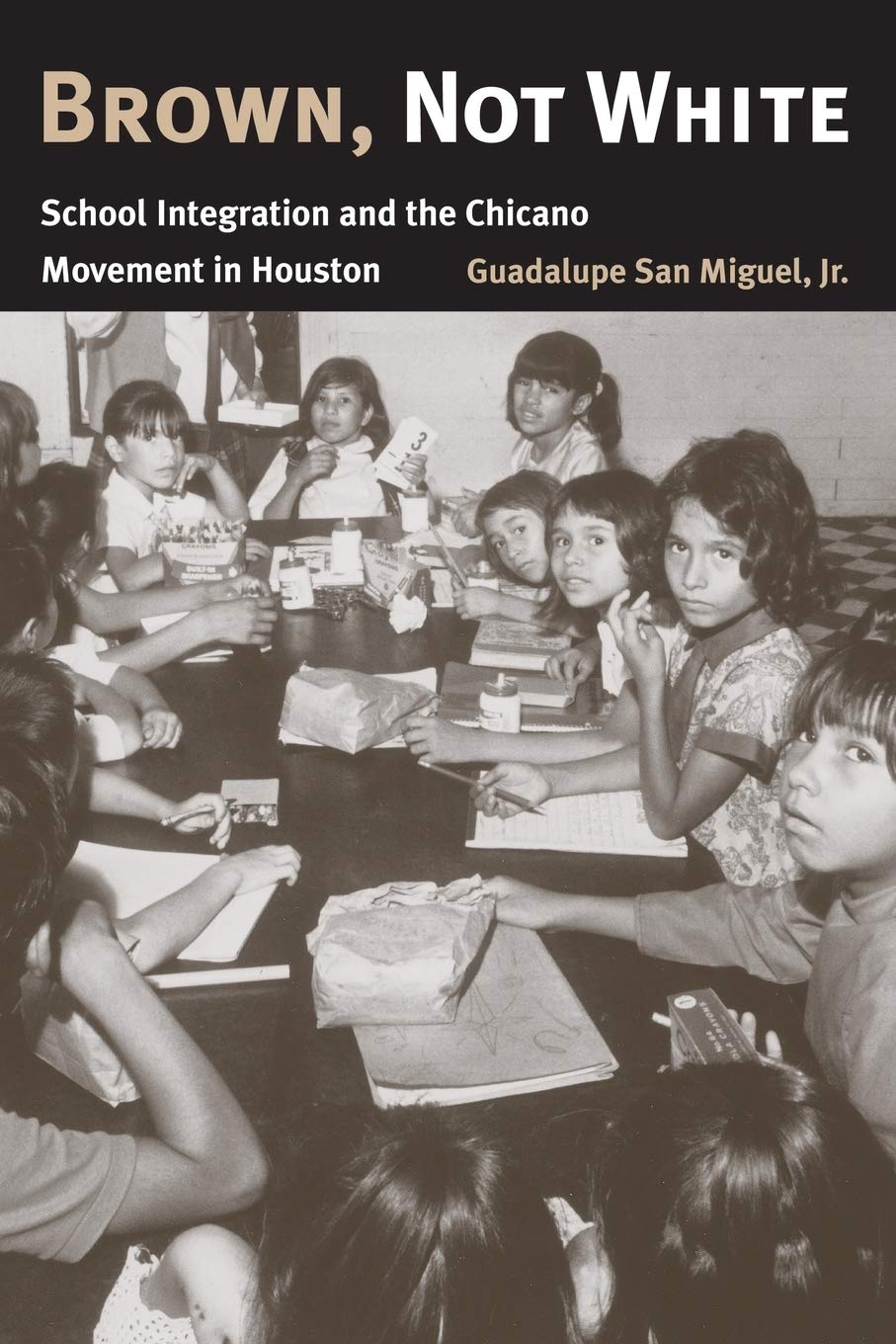
Title
Brown, Not White: School Integration And The Chicano Movement In Houston
Sold by Ergodebooks, an authorized reseller.
Returns accepted within 30 days | support@ergodebooks.com
Shipping Information
- Free Standard Shipping — United States only
- Processing Time: 3–5 business days
- Estimated Delivery: 6–10 business days after dispatch
- Double-boxed, fully insured & discreetly packaged
- Tracking number sent via email once dispatched
Returns & Refund
Returns accepted within 30 days of delivery.
Damaged or Defective Item
Free return shipping + replacement or full refund
Wrong Item Received
Free return shipping + replacement or full refund
Change of Mind
Return shipping at customer's expense · 25% restocking fee applies
Payment Option

Strikes, Boycotts, Rallies, Negotiations, And Litigation Marked The Efforts Of Mexicanorigin Community Members To Achieve Educational Opportunity And Oppose Discrimination In Houston Schools In The Early 1970S. These Responses Were Sparked By The Effort Of The Houston Independent School District To Circumvent A Court Order For Desegregation By Classifying Mexican American Children As White And Integrating Them With African American Childrenleaving Anglos In Segregated Schools. Gaining Legal Recognition For Mexican Americans As A Minority Group Became The Only Means For Fighting This Kind Of Discrimination.The Struggle For Legal Recognition Not Only Reflected An Upsurge In Organizing Within The Community But Also Generated A Shift In Consciousness And Identity. In Brown, Not White Guadalupe San Miguel, Jr., Astutely Traces The Evolution Of The Community'S Political Activism In Education During The Chicano Movement Era Of The Early 1970S.San Miguel Also Identifies The Important Implications Of This Struggle For Mexican Americans And For Public Education. First, He Demonstrates, The Political Mobilization In Houston Underscored The Emergence Of A New Type Of Grassroots Ethnic Leadership Committed To Community Empowerment And To Inclusiveness Of Diverse Ideological Interests Within The Minority Community. Second, It Signaled A Shift In The Activist Community'S Identity From The Assimilationist Mexican American Generation To The Rising Chicano Movement With Its Nationalist Ideology. Finally, It Introduced Mexican American Interests Into Educational Policy Making In General And Into The National Desegregation Struggles In Particular.This Important Study Will Engage Those Interested In Public School Policy, As Well As Scholars Of Mexican American History And The History Of Desegregation In America.
⚠️ WARNING (California Proposition 65):
This product may contain chemicals known to the State of California to cause cancer, birth defects, or other reproductive harm.
For more information, please visit www.P65Warnings.ca.gov.
- Q: What is the page count of the book? A: This book has two hundred ninety-eight pages. It provides an in-depth look at the Chicano Movement and its impact on education.
- Q: What are the dimensions of 'Brown, Not White'? A: The book measures six point sixteen inches in length, zero point sixty-eight inches in width, and nine point twenty-seven inches in height.
- Q: What type of binding does this book have? A: This book is available in paperback binding. Paperback is a common choice for readers who prefer a lightweight and flexible format.
- Q: Who is the author of 'Brown, Not White'? A: The author is Guadalupe San Miguel Jr. He is known for his scholarly work on Mexican American history and education.
- Q: What topics does this book cover? A: The book discusses school integration, the Chicano Movement, and the struggle for educational opportunities for Mexican Americans.
- Q: Is this book suitable for students? A: Yes, this book is suitable for students interested in public school policy and Mexican American history. It provides valuable insights for academic research.
- Q: How can I use this book for research? A: You can use this book as a primary source for studying the Chicano Movement and its implications for educational policy. It includes detailed historical accounts.
- Q: Is there a specific age group this book is intended for? A: While there’s no specific age designation, it is best suited for high school students and above due to its complex themes and historical context.
- Q: How should I store this book to keep it in good condition? A: Store the book in a cool, dry place away from direct sunlight to prevent fading. Keep it upright on a shelf to avoid bending the spine.
- Q: Are there any special care instructions for this book? A: To care for this paperback book, avoid exposing it to moisture. If it gets dirty, gently wipe the cover with a dry cloth.
- Q: What if my book arrives damaged? A: If your book arrives damaged, you should contact the seller for a return or exchange. Most sellers have policies in place for such issues.
- Q: Does this book come with a warranty? A: No, this book does not come with a warranty. However, check the return policy of the seller for any purchase guarantees.
- Q: Can I find similar books on the topic? A: Yes, there are many books on the Chicano Movement and educational policy. Look for titles by other authors specializing in Mexican American history.
- Q: Is this book appropriate for a general audience? A: Yes, this book is appropriate for a general audience interested in social justice and educational history. It offers a comprehensive perspective on important events.
- Q: What makes this book unique? A: This book uniquely highlights the intersection of race and education during the Chicano Movement, emphasizing grassroots activism and community identity.