
Title
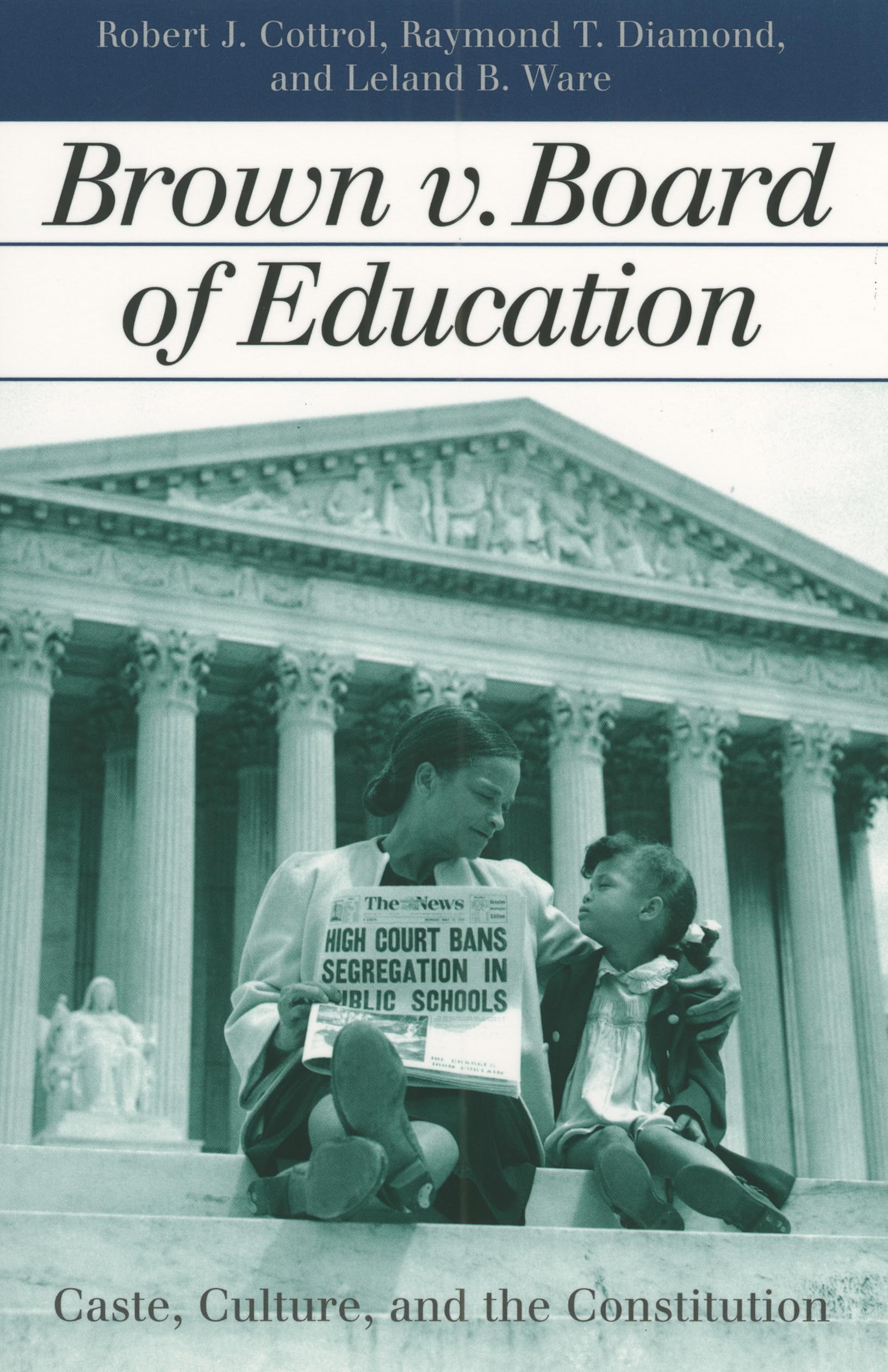
Brown V. Board Of Education: Caste, Culture, And The Constitution (Landmark Law Cases And American Society),New
Sold by Ergodebooks, an authorized reseller.
Returns accepted within 30 days | support@ergodebooks.com
Shipping Information
- Free Standard Shipping — United States only
- Processing Time: 3–5 business days
- Estimated Delivery: 6–10 business days after dispatch
- Double-boxed, fully insured & discreetly packaged
- Tracking number sent via email once dispatched
Returns & Refund
Returns accepted within 30 days of delivery.
Damaged or Defective Item
Free return shipping + replacement or full refund
Wrong Item Received
Free return shipping + replacement or full refund
Change of Mind
Return shipping at customer's expense · 25% restocking fee applies
Payment Option

Before 1954, Both Law And Custom Mandated Strict Racial Segregation Throughout Much Of The Nation. That Began To Change With Brown V. Board Of Education, The Landmark Decision That Overturned The Pernicious 'Separate But Equal' Doctrine. In Declaring That Legally Mandated School Segregation Was Unconstitutional, The Supreme Court Played A Critical Role In Helping To Dismantle America'S Own Version Of Apartheid, Jim Crow.This New Study Of Brownthe Title For A Group Of Cases Drawn From Kansas, Virginia, South Carolina, Delaware, And The District Of Columbiaoffers An Insightful And Original Overview Designed Expressly For Students And General Readers. It Is Concise, Uptodate, Highly Readable, And Very Teachable.The Authors, All Recognized Authorities On Legal History And Civil Rights Law, Do An Admirable Job Of Examining The Fight For Legal Equality In Its Broad Cultural And Historical Context. They Convincingly Show That Brown Cannot Be Understood Apart From The History Of Caste And Exclusion In American Society. That History Antedated The Very Founding Of The Country And Was Supported By The Nation'S Highest Institutions, Including The Supreme Court Whose Decision In Plessy V. Ferguson (1896) Supported The Notion Of 'Separate But Equal.'Their Book Traces The Lengthy Court Litigations, Highlighting The Pivotal Role Of The National Association For The Advancement Of Colored People And Including Incisive Portraits Of Key Players, Including Coplaintiff Oliver Brown, Newly Appointed Chief Justice Earl Warren, Naacp Lawyer And Future Supreme Court Justice Thurgood Marshall, And Justice Felix Frankfurter, Who Recognized The Crucial Importance Of A Unanimous Court Decision And Helped Produce It. The Authors Simply But Powerfully Narrate The Obstacles These Individuals Faced And The Opportunities They Grasped And Clearly Show That There Was Much More At Stake Than Educational Rights. Brown Not Only Changed The National Equation Of Race And Casteit Also Changed Our View Of The Court'S Role In American Life.The Dramatic Story Of The Road To And From Brown, Despite The Retrenchments Of Recent Years, Needs To Be Heard Anew. As We Prepare To Commemorate The Decision'S Fiftieth Anniversary In May 2004, This Book Invites Readers To Walk That Road Again And Appreciate The Lasting Importance Of What Is Indisputably A Landmark Case.
⚠️ WARNING (California Proposition 65):
This product may contain chemicals known to the State of California to cause cancer, birth defects, or other reproductive harm.
For more information, please visit www.P65Warnings.ca.gov.
- Q: What is the page count of this book? A: This book has three hundred four pages. It provides a thorough examination of the landmark case and its implications.
- Q: What are the dimensions of this book? A: The book measures five point five one inches in length, one inch in width, and eight point five inches in height. These dimensions make it easy to handle and read.
- Q: What type of binding does the book have? A: This book has a paperback binding. This makes it flexible and suitable for casual reading.
- Q: Who is the author of this book? A: The author of this book is Robert J. Cottrol. He is recognized for his expertise in legal history and civil rights law.
- Q: What is the main topic of this book? A: The main topic of the book is the landmark decision of Brown v. Board of Education. It discusses the cultural and historical context of legal equality.
- Q: Is this book suitable for students? A: Yes, this book is suitable for students and general readers. It is concise, up-to-date, and highly readable.
- Q: How does this book explore the case's historical context? A: The book examines the history of caste and exclusion in American society. It connects the Brown case to broader societal issues.
- Q: What makes this book teachable? A: The book is designed to be teachable due to its clear narrative and insightful analysis. It breaks down complex legal concepts for easier understanding.
- Q: Is there a focus on key figures in the case? A: Yes, the book features key players like Oliver Brown and Thurgood Marshall. Their contributions are highlighted throughout the narrative.
- Q: What themes does this book cover? A: The book covers themes of legal equality, racial segregation, and the role of the Supreme Court. It addresses significant societal changes.
- Q: How can I care for this used book? A: To care for this used book, store it in a cool, dry place and avoid exposure to direct sunlight. This will help maintain its condition.
- Q: Is this book safe for young readers? A: Yes, the book is appropriate for young readers with an interest in American history and civil rights. It is educational and informative.
- Q: What is the significance of the Brown case? A: The Brown case is significant as it declared school segregation unconstitutional. It played a crucial role in the Civil Rights Movement.
- Q: Can I find this book in libraries? A: Yes, this book is commonly available in libraries. It is a key resource for those studying American legal history.
- Q: What features does this book include? A: The book includes insightful analysis and historical context. These features contribute to its educational value.
- Q: What can I expect from the writing style? A: The writing style is clear and engaging. It is designed for both students and general readers, making complex topics accessible.