
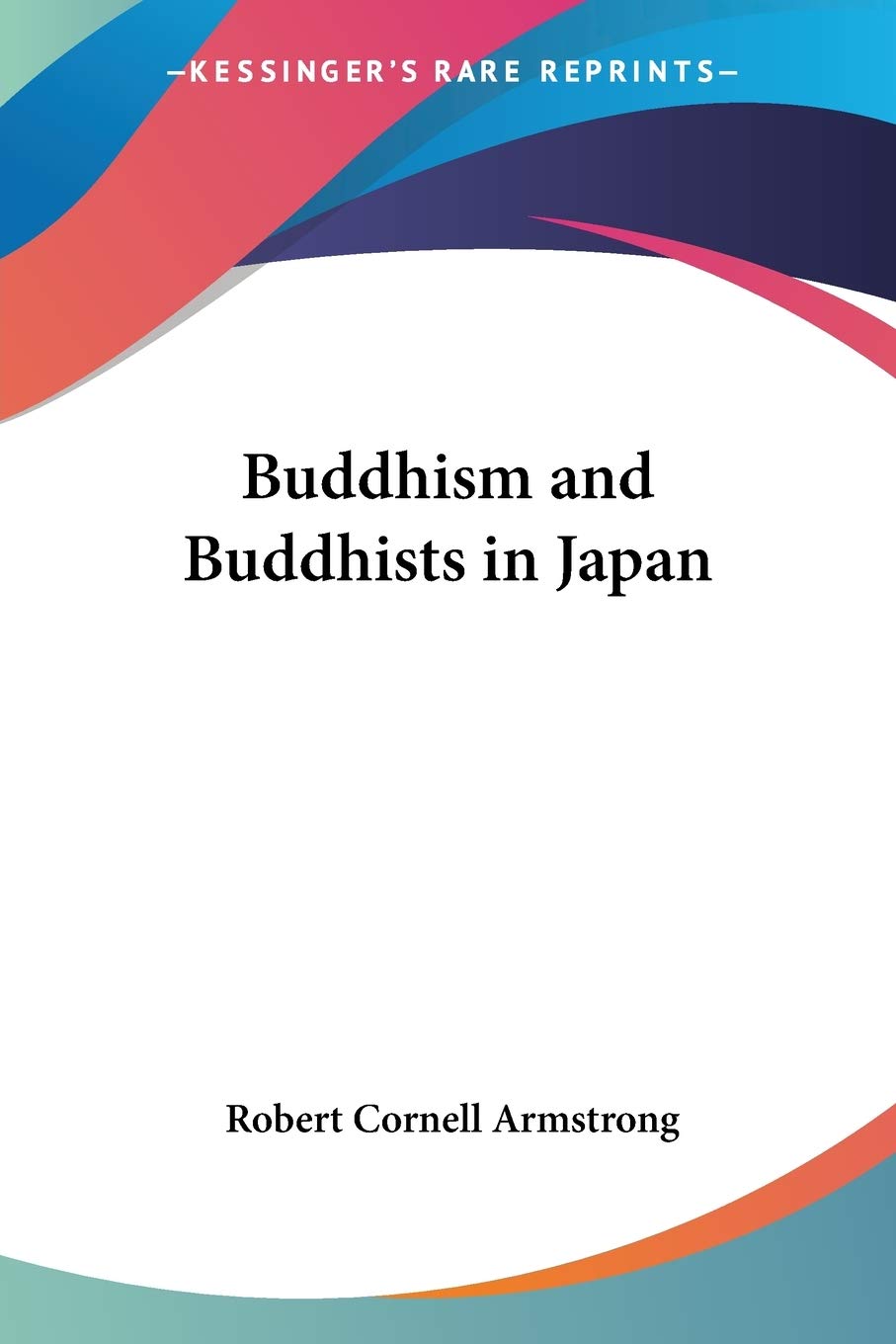
Title
Buddhism and Buddhists in Japan,Used
Sold by Ergodebooks, an authorized reseller.
Returns accepted within 30 days | support@ergodebooks.com
Shipping Information
- Free Standard Shipping — United States only
- Processing Time: 3–5 business days
- Estimated Delivery: 6–10 business days after dispatch
- Double-boxed, fully insured & discreetly packaged
- Tracking number sent via email once dispatched
Returns & Refund
Returns accepted within 30 days of delivery.
Damaged or Defective Item
Free return shipping + replacement or full refund
Wrong Item Received
Free return shipping + replacement or full refund
Change of Mind
Return shipping at customer's expense · 25% restocking fee applies
Payment Option

Buddhism and Buddhists in Japan is a comprehensive book written by Robert Cornell Armstrong that explores the history, philosophy, and practice of Buddhism in Japan. The book covers the origins of Buddhism in India and its spread to Japan, including the introduction of different schools of Buddhism and the development of Japanese Zen Buddhism. The author also delves into the role of Buddhism in Japanese society, including its influence on art, culture, and politics. He discusses the various rituals, practices, and beliefs of Japanese Buddhists, such as meditation, chanting, and the veneration of ancestors.Armstrong also examines the challenges and changes that Buddhism has faced in Japan over the centuries, including the impact of modernization and the decline in religious participation. He provides a balanced and insightful analysis of the strengths and weaknesses of Buddhism in Japan and its relevance in contemporary society.Overall, Buddhism and Buddhists in Japan is an informative and engaging book that offers a fascinating glimpse into the history and culture of Japan through the lens of Buddhism. It is a mustread for anyone interested in Japanese religion, culture, and history.This scarce antiquarian book is a facsimile reprint of the old original and may contain some imperfections such as library marks and notations. Because we believe this work is culturally important, we have made it available as part of our commitment for protecting, preserving, and promoting the world's literature in affordable, high quality, modern editions, that are true to their original work.
⚠️ WARNING (California Proposition 65):
This product may contain chemicals known to the State of California to cause cancer, birth defects, or other reproductive harm.
For more information, please visit www.P65Warnings.ca.gov.
- Q: How many pages does the book have? A: One hundred fifty-six pages. This book provides an in-depth exploration of Buddhism in Japan, making it a substantial read.
- Q: What is the binding type of this book? A: The binding type is paperback. This makes it lightweight and easy to handle, suitable for casual reading.
- Q: What are the dimensions of the book? A: The dimensions are six inches by nine inches and point three-six inches thick. This size is convenient for both reading and storing.
- Q: Who is the author of the book? A: The author is Robert Cornell Armstrong. He offers a thorough analysis of Buddhism's impact on Japanese society.
- Q: What category does this book fall under? A: This book falls under the History category. It provides insights into the historical context of Buddhism in Japan.
- Q: Is this book suitable for beginners in Buddhism? A: Yes, it is suitable for beginners. The author presents complex ideas in an accessible manner, making it easy to understand.
- Q: Can I use this book for academic purposes? A: Yes, this book is appropriate for academic use. It includes well-researched content that can serve as a reference for studies.
- Q: Is this book suitable for children? A: No, it is not specifically aimed at children. The themes and discussions may be more suitable for older readers.
- Q: How can I read this book effectively? A: You can read it by taking notes on key concepts. Engaging with the text actively helps in understanding the complexities of Buddhism.
- Q: How should I store the book to keep it safe? A: Store the book in a dry, cool place. Avoid direct sunlight to prevent fading and warping of the pages.
- Q: What is the return policy for this book? A: The return policy allows returns within thirty days. Ensure the book is in its original condition for a full refund.
- Q: How do I clean the book if it gets dirty? A: To clean the book, gently wipe the cover with a dry cloth. Avoid using water or cleaning solutions directly on the pages.
- Q: What if the book arrives damaged? A: If the book arrives damaged, you can return it for a replacement or refund. Contact customer service for assistance.
- Q: Are there similar books on Buddhism in Japan? A: Yes, there are similar books available. Look for titles that focus on Japanese culture or Buddhist philosophy for related topics.
- Q: Is this book part of a larger series? A: No, this book is a standalone title. It provides a comprehensive look at Buddhism without being part of a series.
- Q: What challenges does Buddhism face in modern Japan? A: Buddhism faces challenges such as modernization and declining participation. The book discusses these issues in detail.