
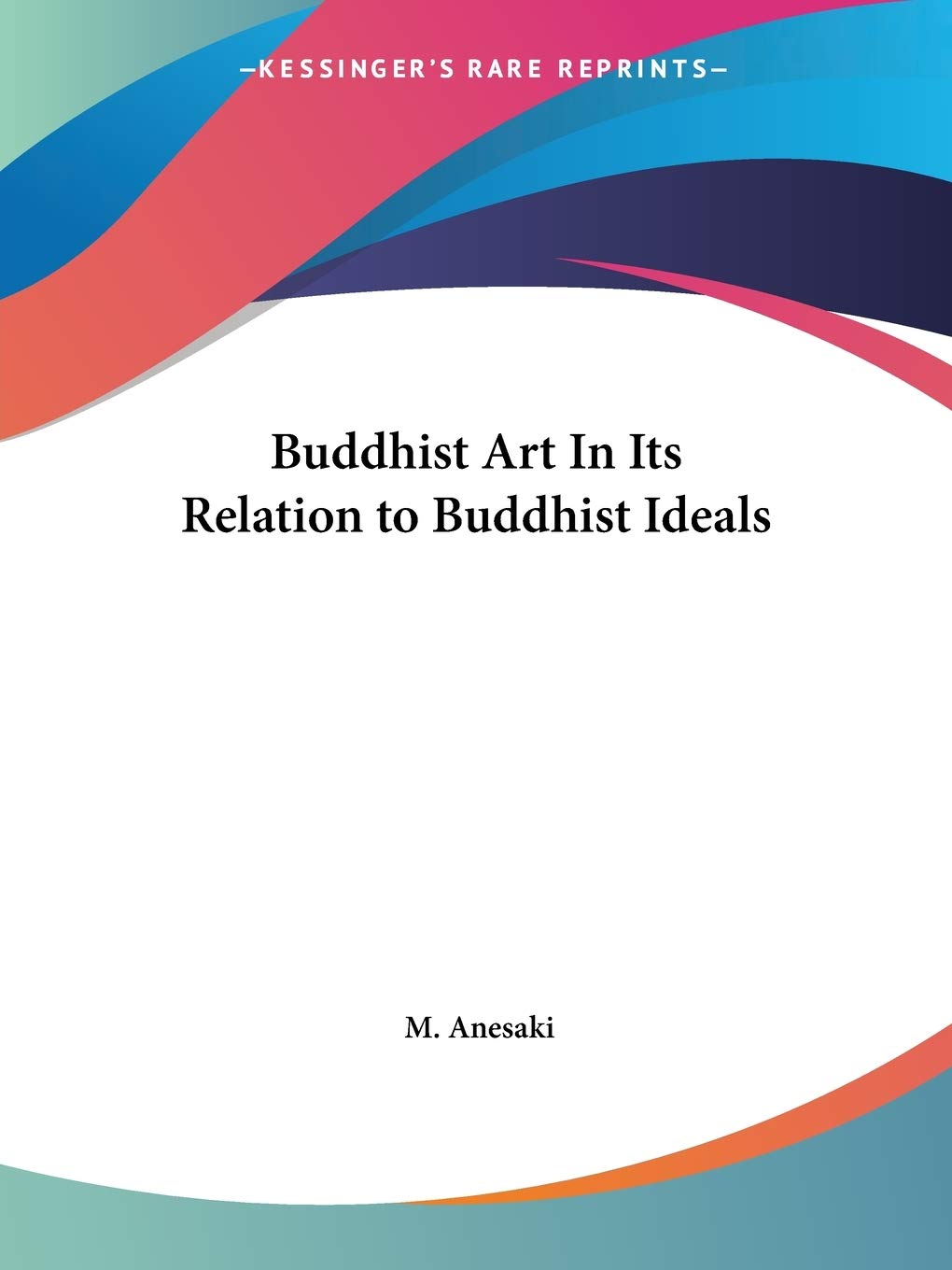
Title
Buddhist Art In Its Relation to Buddhist Ideals,Used
Sold by Ergodebooks, an authorized reseller.
Returns accepted within 30 days | support@ergodebooks.com
Shipping Information
- Free Standard Shipping — United States only
- Processing Time: 3–5 business days
- Estimated Delivery: 6–10 business days after dispatch
- Double-boxed, fully insured & discreetly packaged
- Tracking number sent via email once dispatched
Returns & Refund
Returns accepted within 30 days of delivery.
Damaged or Defective Item
Free return shipping + replacement or full refund
Wrong Item Received
Free return shipping + replacement or full refund
Change of Mind
Return shipping at customer's expense · 25% restocking fee applies
Payment Option

""Buddhist Art In Its Relation to Buddhist Ideals"" is a book written by M. Anesaki that explores the relationship between Buddhist art and the ideals of Buddhism. The book delves into the history and evolution of Buddhist art, examining how it has been influenced by Buddhist beliefs and practices. It also explores the various forms of Buddhist art, including sculpture, painting, and architecture, and how they have been used to convey Buddhist teachings and principles. The author provides a detailed analysis of the symbolism and iconography used in Buddhist art, and how it reflects the core beliefs of the religion. The book also examines the role of Buddhist art in spreading the religion, both in Asia and around the world. Overall, ""Buddhist Art In Its Relation to Buddhist Ideals"" provides a comprehensive and insightful look at the intersection of art and religion in Buddhism.1915. With special reference to Buddhism in Japan. This work contains four lectures given at the Museum of Fine Arts in Boston. The object of the lectures was to elucidate the ideals which inspired Buddhist artists, and to give some account of the legends which they illustrated. The author has dwelt very largely on Japanese Buddhism, not only because it is a subject with which he is intimate, but also because he believes Japanese Buddhism is representative, more than Indian and Chinese, of a continuous development both in doctrine and in art. Handsomely illustrated.This scarce antiquarian book is a facsimile reprint of the old original and may contain some imperfections such as library marks and notations. Because we believe this work is culturally important, we have made it available as part of our commitment for protecting, preserving, and promoting the world's literature in affordable, high quality, modern editions, that are true to their original work.
⚠️ WARNING (California Proposition 65):
This product may contain chemicals known to the State of California to cause cancer, birth defects, or other reproductive harm.
For more information, please visit www.P65Warnings.ca.gov.