
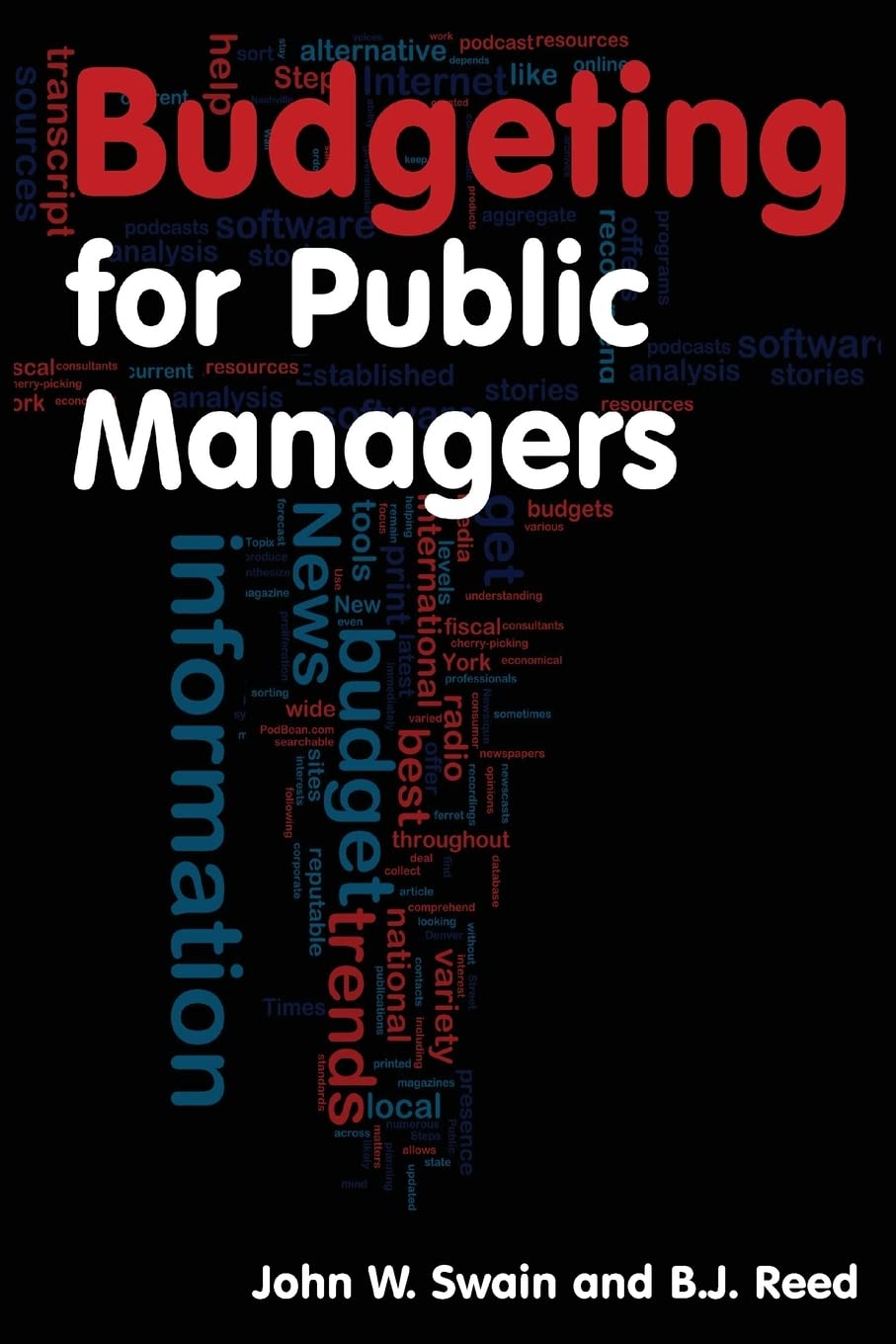
Title


Budgeting For Public Managers
Sold by Ergodebooks, an authorized reseller.
Returns accepted within 30 days | support@ergodebooks.com
Shipping Information
- Free Standard Shipping — United States only
- Processing Time: 3–5 business days
- Estimated Delivery: 6–10 business days after dispatch
- Double-boxed, fully insured & discreetly packaged
- Tracking number sent via email once dispatched
Returns & Refund
Returns accepted within 30 days of delivery.
Damaged or Defective Item
Free return shipping + replacement or full refund
Wrong Item Received
Free return shipping + replacement or full refund
Change of Mind
Return shipping at customer's expense · 25% restocking fee applies
Payment Option

Benefiting From The Authors' Many Years Of Teaching Undergraduate And Graduate Students And Practitioners, Here Is A Clear, Comprehensive, Practiceoriented Text For Public Budgeting Courses. Rather Than Presenting Each Budgeting Concern In Mindnumbing Detail, The Book Offers A Commonsensical View Of Public Budgeting And Its Importance To Current And Future Public Managers. The Text Is Designed To Show Readers How Managers Relate To Budgeting And How Their Actions Make A Difference In The Operation And Performance Of Public Organizations. The Book Covers The Historical Development Of Public Budgeting, Sources Of Public Revenues, Revenue Management, Budgeting Processes And Formats, Operating Techniques, Politics Within Public Budgeting, And More. Budgeting For Public Managers Is Concise, Clearly Written, Well Illustrated, And Grounded In The Realworld Concerns Of Public Managers. Each Chapter Concludes With A Helpful List Of Additional Reading And Resources For Readers Who Want To Dig Deeper Into Budgeting Practice And Application.
⚠️ WARNING (California Proposition 65):
This product may contain chemicals known to the State of California to cause cancer, birth defects, or other reproductive harm.
For more information, please visit www.P65Warnings.ca.gov.
- Q: How many pages does this book have? A: This book has two hundred forty pages. It provides a comprehensive overview of public budgeting practices.
- Q: What is the binding type of this book? A: This book is paperback bound. This makes it lightweight and easy to handle for reading or referencing.
- Q: Who is the author of 'Budgeting for Public Managers'? A: The author is John W. Swain. He brings years of experience in teaching budgeting courses to practitioners and students.
- Q: How should I use this book for my studies? A: You can use this book as a textbook for public budgeting courses. It is designed to be clear and practice-oriented for effective learning.
- Q: Is this book suitable for beginners in public budgeting? A: Yes, this book is suitable for beginners. It provides a commonsensical view of public budgeting without overwhelming detail.
- Q: What is the reading level of this book? A: This book is appropriate for undergraduate and graduate students. It is also beneficial for practitioners looking to enhance their budgeting knowledge.
- Q: How do I keep this book in good condition? A: To keep this book in good condition, store it in a dry place and avoid exposing it to direct sunlight. Handle it carefully during reading to prevent wear.
- Q: Can I return the book if I am not satisfied? A: Yes, you can return the book if you are not satisfied. Be sure to check the specific return policy for the seller or retailer.
- Q: What if the book arrives damaged? A: If the book arrives damaged, contact the seller immediately for a replacement or refund. Most sellers have policies to address such issues.
- Q: Does this book cover historical aspects of public budgeting? A: Yes, the book covers the historical development of public budgeting. This context helps readers understand the evolution of budgeting practices.
- Q: Is this book well-illustrated? A: Yes, this book is well-illustrated. The illustrations complement the text and help clarify complex budgeting concepts.
- Q: What additional resources does this book provide? A: Each chapter concludes with a list of additional readings and resources. These are useful for readers who wish to explore budgeting further.
- Q: Does the book discuss politics within public budgeting? A: Yes, the book addresses the politics involved in public budgeting. This is crucial for understanding the complexities public managers face.
- Q: Is this book appropriate for professionals in public organizations? A: Yes, this book is very appropriate for professionals. It emphasizes practical applications of budgeting relevant to public managers.
- Q: What topics are covered in this book? A: The book covers topics like revenue management, budgeting processes, and operating techniques. Each topic is relevant to current public budgeting practices.