
Title
Building Conservation Philosophy,Used
Sold by Ergodebooks, an authorized reseller.
Returns accepted within 30 days | support@ergodebooks.com
Shipping Information
- Free Standard Shipping — United States only
- Processing Time: 3–5 business days
- Estimated Delivery: 6–10 business days after dispatch
- Double-boxed, fully insured & discreetly packaged
- Tracking number sent via email once dispatched
Returns & Refund
Returns accepted within 30 days of delivery.
Damaged or Defective Item
Free return shipping + replacement or full refund
Wrong Item Received
Free return shipping + replacement or full refund
Change of Mind
Return shipping at customer's expense · 25% restocking fee applies
Payment Option

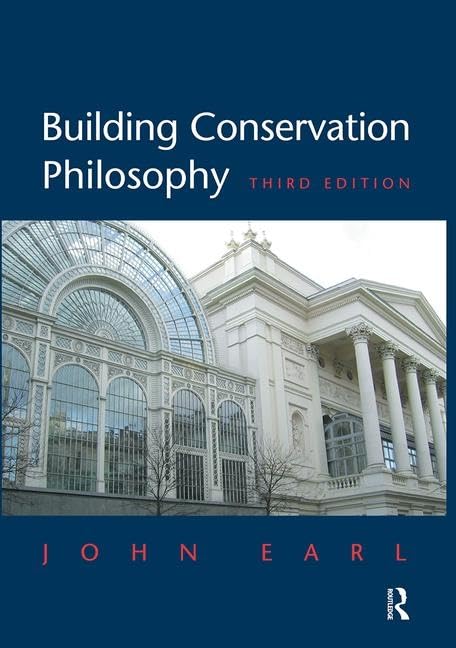
This is a book about ideas rather than techniques. Public thirst for visible evidence of the past is not, as it is often represented, a recent phenomenon. It was already well developed when an overseer of ancient monuments was appointed in sixthcentury Rome. But if the desire to preserve aspects of the past is to do more than respond to popular whims and fashions or represent the personal views of ivorytowered scholars and specialists, it needs to have some kind of solid logical basis. Philosophical questions are raised at every turn. On what basis can buildings be singled out as 'historic buildings', demanding special protection? On what authority can we justify interfering with private property rights in pursuing such protective processes? And how should we judge what is acceptable and unacceptable in the treatment of the buildings we value? In this third, substantially revised edition, the author examines the nature of monuments and the varied motives for preserving them. He traces the history of movements to preserve old buildings and the furious conflicts that have frequently surrounded restoration campaigns. Philosophical problems arising in modern conservation practice, including such controversial issues as 'skindeep preservation' and the use of substitute materials, are considered in detail. More space is devoted in this edition to contextual issues.New sections deal with issues of sustainability and the relationship of buildings to the townscape and landscape. The number of illustrations has also been greatly increased. The book is designed especially for students approaching the subject for the first time but may well be found stimulating by practitioners. No easy formulae are offered. What conservators, have to nurture, the author insists, is an inquiring and selfcritical frame of mind enabling them to proceed from comprehensive knowledge of the buildings for the time being in their care, via logical argument, to defensible, if not inevitable, solutions.
⚠️ WARNING (California Proposition 65):
This product may contain chemicals known to the State of California to cause cancer, birth defects, or other reproductive harm.
For more information, please visit www.P65Warnings.ca.gov.