
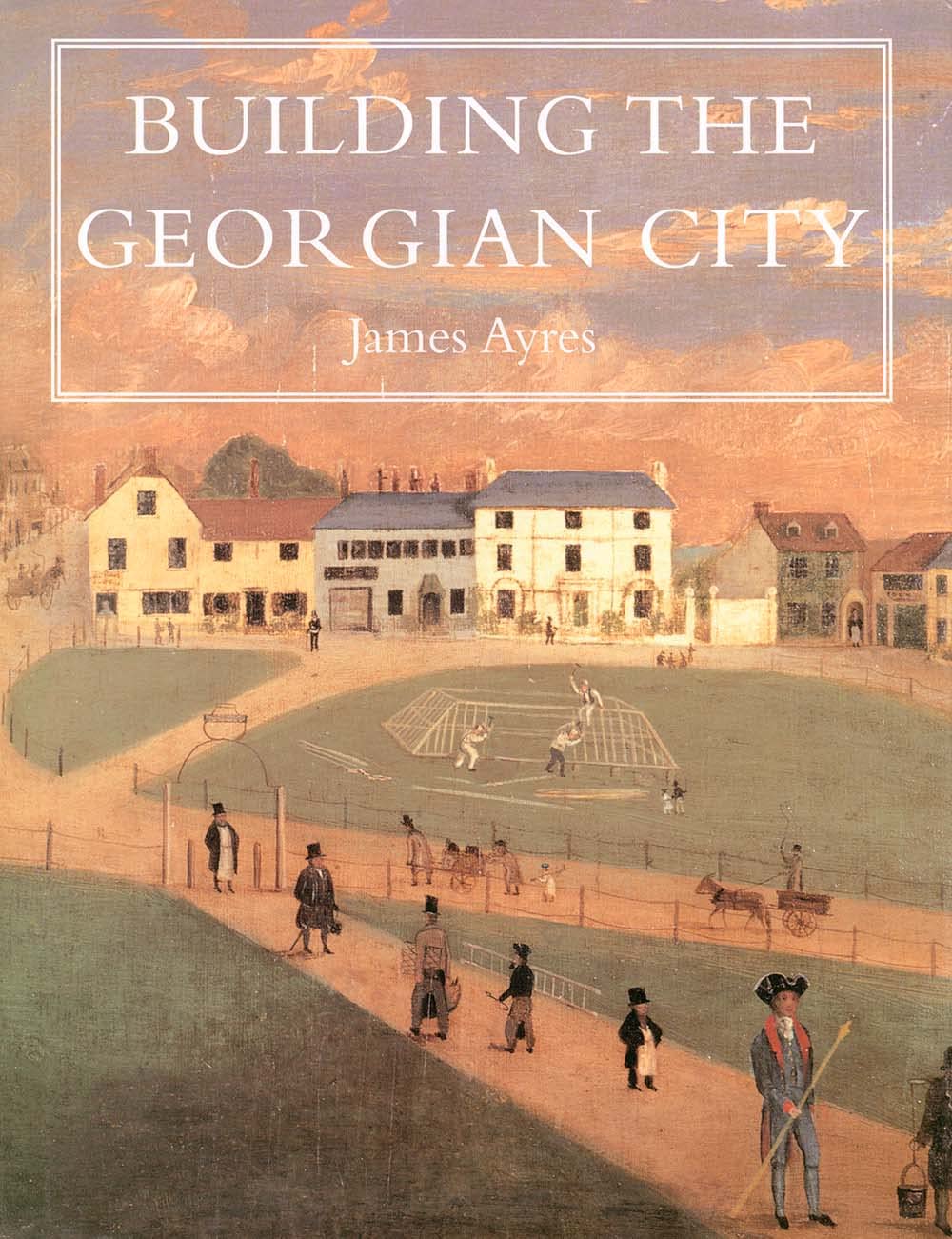
Title

Building The Georgian City
Sold by Ergodebooks, an authorized reseller.
Returns accepted within 30 days | support@ergodebooks.com
Shipping Information
- Free Standard Shipping — United States only
- Processing Time: 3–5 business days
- Estimated Delivery: 6–10 business days after dispatch
- Double-boxed, fully insured & discreetly packaged
- Tracking number sent via email once dispatched
Returns & Refund
Returns accepted within 30 days of delivery.
Damaged or Defective Item
Free return shipping + replacement or full refund
Wrong Item Received
Free return shipping + replacement or full refund
Change of Mind
Return shipping at customer's expense · 25% restocking fee applies
Payment Option

Georgian Architecture Had Its Roots In The Great Fire Of London In 1666. Out Of That Disaster Grew The Need For Rapid Redevelopment, Which Was Accomplished Through Standardization And The Relaxation Of Restrictive Practices In The Building Trades. This Book Investigates The Decline In Crafted Buildings Of The Traditional Client Economies And The Introduction Of Mass Produced Components That Characterized An Emerging Consumerism. It Is An Approach That Offers Fresh Insights Into Our Architectural Heritage By Focusing On The Traditions And Innovations In The Building Methods Of The Timethe Construction Processes, The Role Of The Building Craftsmen, And The Tools And Materials They Used.James Ayres Describes How Builders In London Developed The English Terraced House And Towncentered Building Systems That Influenced The Architecture Of Bath, Edinburgh, Dublin, And Distant Philadelphia. He Takes Us Through The Building Processes Craft By Craft, From The Work Of The Surveyors And Laborers Who Established The Foundations To The Joiners And Painters Who Finished The Interiors. Ayres Outlines The Ways In Which Forms Do Not Only Follow Functions But Are Also Conditioned By Materials And Methods. He Describes How, With The Burgeoning Industrialization Of The Second Half Of The Eighteenth Century, A Separation Emerged Between Making And Designing, A Division That Led To The Decline Of The Craftsman As Designer. This Led To A Shift In Power, A Move From The Empirical Understanding Of Those Involved In The Processes Of Making To The Theoretically Based Activities Of Architects.Published For The Paul Mellon Centre For Studies In British Artpublished For The Paul Mellon Center For Studies In British Art
⚠️ WARNING (California Proposition 65):
This product may contain chemicals known to the State of California to cause cancer, birth defects, or other reproductive harm.
For more information, please visit www.P65Warnings.ca.gov.
- Q: What is the size of 'Building the Georgian City'? A: The book measures eleven point five nine inches in length, eight point eight three inches in width, and one point one inches in height.
- Q: How many pages does this book have? A: This book contains two hundred eighty-eight pages, providing a comprehensive exploration of Georgian architecture.
- Q: What type of binding does this book have? A: The book is bound in hardcover, ensuring durability and a classic presentation.
- Q: Who is the author of 'Building the Georgian City'? A: The author is James Ayres, who provides detailed insights into Georgian architecture and building practices.
- Q: What is the main focus of the book? A: The book investigates Georgian architecture's evolution, particularly the shift from crafted buildings to mass-produced components.
- Q: What historical event influenced Georgian architecture? A: The Great Fire of London in sixteen sixty-six significantly influenced the development of Georgian architecture and urban planning.
- Q: Is this book suitable for architecture students? A: Yes, this book is suitable for architecture students as it offers valuable insights into historical building practices and design evolution.
- Q: Can casual readers enjoy this book? A: Yes, casual readers interested in history or architecture will find the book engaging and informative.
- Q: Does this book include illustrations or diagrams? A: While the product details do not specify, books of this nature typically include illustrations or diagrams to enhance understanding.
- Q: How should I store 'Building the Georgian City'? A: Store the book upright in a cool, dry place to avoid moisture damage and ensure longevity.
- Q: Can I clean the cover of this hardcover book? A: Yes, you can clean the cover with a soft, dry cloth to remove dust and maintain its appearance.
- Q: What is the recommended reading age for this book? A: The book is suitable for adults and older teens interested in architectural history.
- Q: What if my book arrives damaged? A: If your book arrives damaged, you should contact the seller for return or replacement options.
- Q: Is there a warranty for this book? A: Typically, books do not come with a warranty, but check with the seller for their specific policies.
- Q: What are the key themes discussed in the book? A: Key themes include the evolution of building methods, the role of craftsmen, and the impact of industrialization on architecture.