
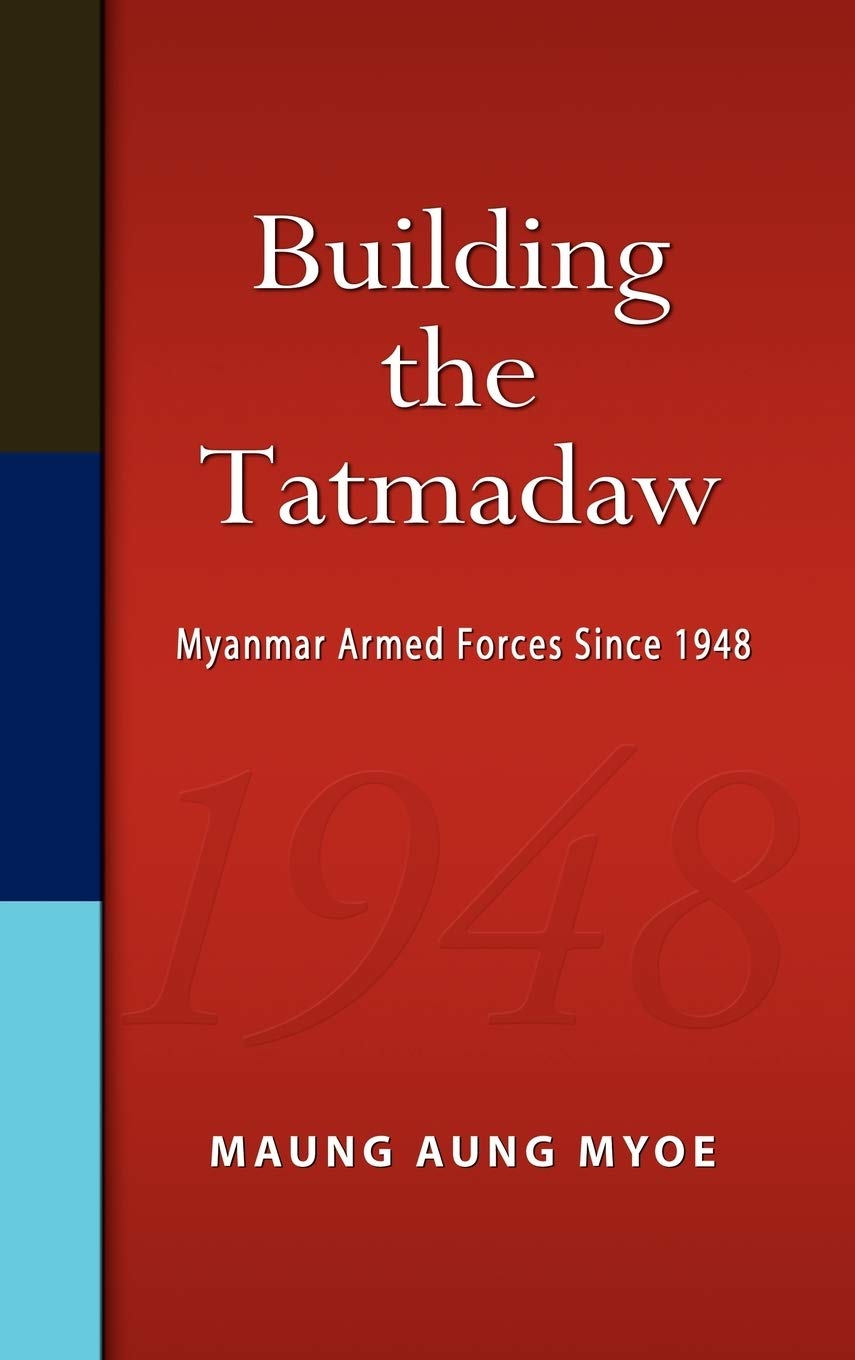
Title
Building the Tatmadaw: Myanmar Armed Forces Since 1948,New
Sold by Ergodebooks, an authorized reseller.
Returns accepted within 30 days | support@ergodebooks.com
Shipping Information
- Free Standard Shipping — United States only
- Processing Time: 3–5 business days
- Estimated Delivery: 6–10 business days after dispatch
- Double-boxed, fully insured & discreetly packaged
- Tracking number sent via email once dispatched
Returns & Refund
Returns accepted within 30 days of delivery.
Damaged or Defective Item
Free return shipping + replacement or full refund
Wrong Item Received
Free return shipping + replacement or full refund
Change of Mind
Return shipping at customer's expense · 25% restocking fee applies
Payment Option

Ever since Myanmar regained her independence in January 1948, the Tatmadaw (Myanmar Armed Forces) has been crucial in restoring and maintaining law and order. It is one of the most important institutions in Myanmar politics. Various aspects of the Tatmadaw have been studied. The most notable area of study has been the political role of the military. This study looks at the organizational development of the Myanmar armed forces. It analyses four different aspects of the Tatmadaw: military doctrine and strategy, organization and force structure, armament and force modernization, and military training and officer education. It sets out security perceptions and policies, charting developments in each phase against the situation at the time, and also notes the contributions of the leading actors in the process. Since early 1990s, the Tatmadaw has implemented a force modernization programme. This work studies rationales and strategy behind the force modernization programme and examines the military capabilities of the Tatmadaw. Drawing extensively from archival sources and existing literature, this empirically grounded research argues that, while the internal armed security threat to the state continues to play an important role, it is the external security threat that gives more weight to the expansion and modernization of the Tatmadaw since 1988. It also argues that, despite its imperfections, the Tatmadaw has transformed from a force essentially for counterinsurgency operations into a force capable of fighting in limited conventional warfare.
⚠️ WARNING (California Proposition 65):
This product may contain chemicals known to the State of California to cause cancer, birth defects, or other reproductive harm.
For more information, please visit www.P65Warnings.ca.gov.