
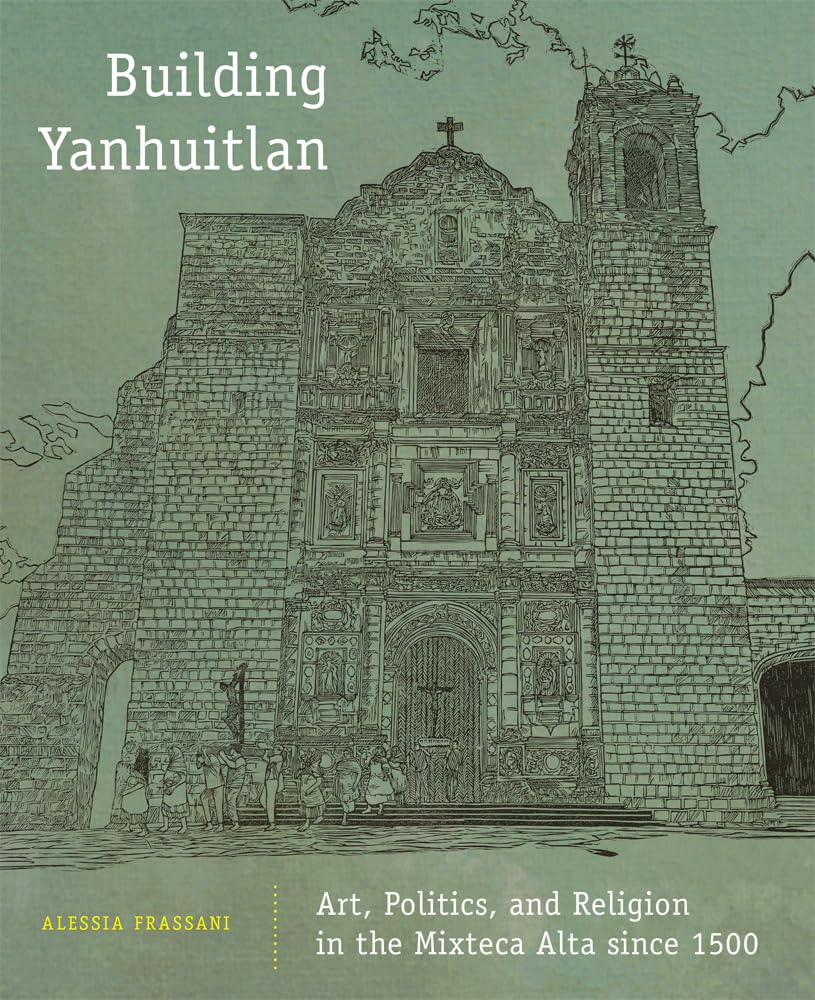
Title
Building Yanhuitlan: Art, Politics, And Religion In The Mixteca Alta Since 1500,Used
Sold by Ergodebooks, an authorized reseller.
Returns accepted within 30 days | support@ergodebooks.com
Shipping Information
- Free Standard Shipping — United States only
- Processing Time: 3–5 business days
- Estimated Delivery: 6–10 business days after dispatch
- Double-boxed, fully insured & discreetly packaged
- Tracking number sent via email once dispatched
Returns & Refund
Returns accepted within 30 days of delivery.
Damaged or Defective Item
Free return shipping + replacement or full refund
Wrong Item Received
Free return shipping + replacement or full refund
Change of Mind
Return shipping at customer's expense · 25% restocking fee applies
Payment Option

Through years of fieldwork in the state of Oaxaca, Mexico, art historian and archaeologist Alessia Frassani formulated a compelling question: How did Mesoamerican society maintain its distinctive cultural heritage despite colonization by the Spanish? In Building Yanhuitlan, she focuses on an imposing structurea sixteenthcentury Dominican monastery complex in the village of Yanhuitlan.For centuries, the buildings have served a central role in the village landscape and the lives of its people. Ostensibly, there is nothing indigenous about the complex or the artwork inside. So how does such a place fit within the Mixteca, where Frassani acknowledges a continuity of indigenous culture in the towns, plazas, markets, churches, and rural surroundings? To understand the monastery complexand Mesoamerican cultural heritage in the wake of conquestFrassani calls for a shifting definition of indigenous identity, one that acknowledges the ways indigenous peoples actively took part in the development of postconquest Mesoamerican culture.Frassani relates the history of Yanhuitlan by examining the rich store of art and architecture in the towns church and convent, bolstering her account with more than 100 color and blackandwhite illustrations. She presents the first two centuries of the church complexs construction works, maintenance, and decorations as the product of cultural, political, and economic negotiation between Mixtec caciques, Spanish encomenderos, and Dominican friars. The author then ties the villages presentday religious celebrations to the colonial past, and traces the cult of specific images through these celebrations history. Cultural artifacts, Frassani demonstrates, do not need preHispanic origins to be considered genuinely Mesoamericanthe processes attached to their appropriation are more meaningful than their having any preHispanic past.Based on original and unpublished documents and punctuated with stunning photography, Building Yanhuitlan combines archival and ethnographic work with visual analysis to make an innovative statement regarding artistic forms and to tell the story of a remarkable community.
⚠️ WARNING (California Proposition 65):
This product may contain chemicals known to the State of California to cause cancer, birth defects, or other reproductive harm.
For more information, please visit www.P65Warnings.ca.gov.