
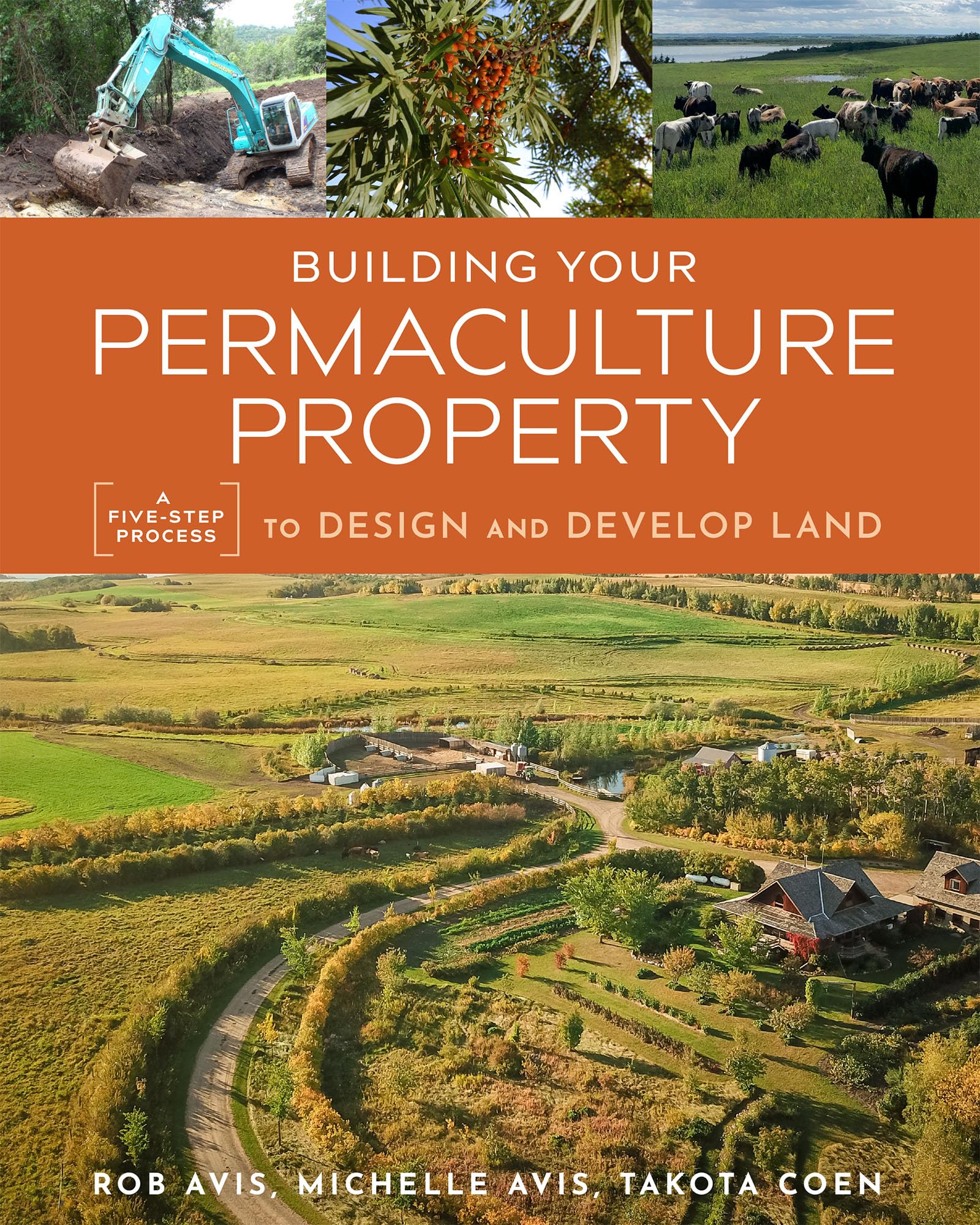
Title
Building Your Permaculture Property: A FiveStep Process to Design and Develop Land (Mother Earth News Wiser Living Series),New
Sold by Ergodebooks, an authorized reseller.
Returns accepted within 30 days | support@ergodebooks.com
Shipping Information
- Free Standard Shipping — United States only
- Processing Time: 3–5 business days
- Estimated Delivery: 6–10 business days after dispatch
- Double-boxed, fully insured & discreetly packaged
- Tracking number sent via email once dispatched
Returns & Refund
Returns accepted within 30 days of delivery.
Damaged or Defective Item
Free return shipping + replacement or full refund
Wrong Item Received
Free return shipping + replacement or full refund
Change of Mind
Return shipping at customer's expense · 25% restocking fee applies
Payment Option

The best person to design the property of your dreams is you. This book gives you the tools to succeed.Building Your Permaculture Property offers a revolutionary holistic method to overcome overwhelm in the complex process of resilient land design. It distills the authors' decades of experience as engineers, farmers, educators, and consultants into a fivestep process complete with principles, practices, templates, and workflow tools to help you: Clarify your vision, values, and resources Diagnose your land and resources for strengths, weaknesses, opportunities, and threats Design your land and resources to meet your vision and values Implement the right design to enhance your strengths and improve your weakest resource Establish benchmarks to monitor the sustainability and success of your development.When designing a regenerative permaculture property, too many land stewards suffer from option paralysis, a lack of integrated holistic design, fruitless trialanderror attempts, wasted money, and the frustration that results from too much information and no context.Building Your Permaculture Property is the essential guide for everyone looking to cut through the noise and establish an ecologically regenerative, financially sustainable, enjoyable, and thriving permaculture property, anywhere in the world.
⚠️ WARNING (California Proposition 65):
This product may contain chemicals known to the State of California to cause cancer, birth defects, or other reproductive harm.
For more information, please visit www.P65Warnings.ca.gov.
- Q: What is the main focus of 'Building Your Permaculture Property'? A: The book focuses on providing a holistic five-step process to design and develop land using permaculture principles, aiming to help individuals create ecologically regenerative and financially sustainable properties.
- Q: Who is the author of this book? A: The author of 'Building Your Permaculture Property' is Rob Avis, who brings decades of experience in engineering, farming, and education.
- Q: How many pages does the book contain? A: The book contains 248 pages, offering comprehensive insights into permaculture design.
- Q: When was 'Building Your Permaculture Property' published? A: The book was published on May 11, 2021.
- Q: Is this book suitable for beginners in permaculture? A: Yes, the book is designed to assist beginners by breaking down the complex process of land design into manageable steps.
- Q: What type of binding does the book have? A: The book is available in paperback binding.
- Q: Does the book provide practical tools for land design? A: Yes, it includes principles, practices, templates, and workflow tools to help readers effectively design their land.
- Q: Can this book help with existing land modifications? A: Absolutely, it offers methods to diagnose existing land for strengths and weaknesses, making it useful for both new designs and modifications.
- Q: What is the target audience for this book? A: The target audience includes anyone interested in permaculture, land design, and sustainable living, from beginners to experienced practitioners.
- Q: Are there any specific permaculture principles discussed in the book? A: Yes, the book distills key permaculture principles that guide the design process, ensuring a focus on ecological sustainability.