If you have any questions, you are always welcome to contact us. We'll get back to you as soon as possible, withing 24 hours on weekdays.
Customer service
All questions about your order, return and delivery must be sent to our customer service team by e-mail at yourstore@yourdomain.com
Sale & Press
If you are interested in selling our products, need more information about our brand or wish to make a collaboration, please contact us at press@yourdomain.com
Help
If you have any questions, you are always welcome to contact us. We'll get back to you as soon as possible, withing 24 hours on weekdays.
Customer service
All questions about your order, return and delivery must be sent to our customer service team by e-mail at yourstore@yourdomain.com
Sale & Press
If you are interested in selling our products, need more information about our brand or wish to make a collaboration, please contact us at press@yourdomain.com
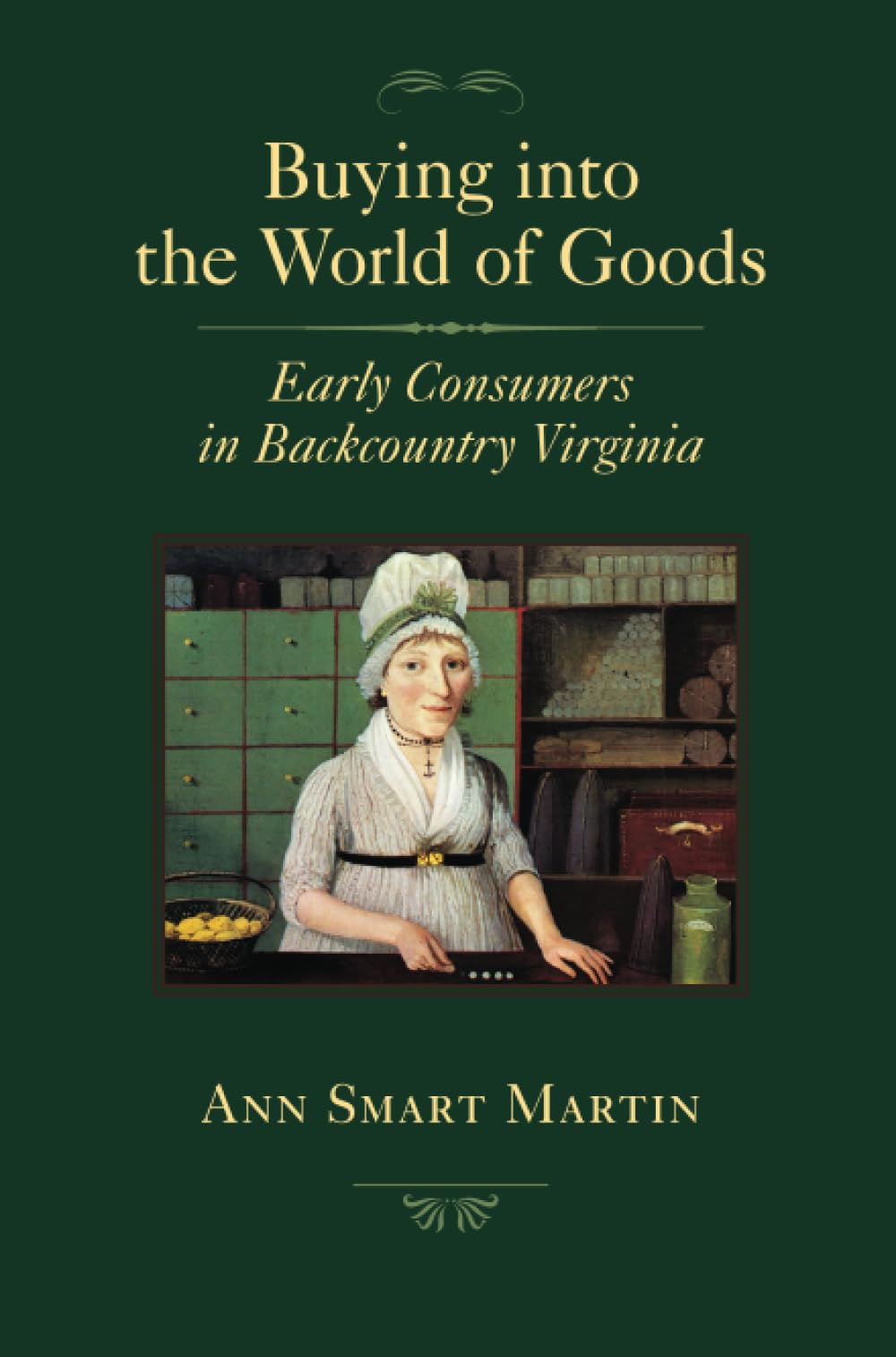
Cowinner, 2008 Fred Kniffen Book Award. Pioneer America Society/Association for the Preservation of Landscapes and ArtifactsHow did people living on the early American frontier discover and then become a part of the market economy? How do their purchases and their choices revise our understanding of the market revolution and the emerging consumer ethos? Ann Smart Martin provides answers to these questions by examining the texture of trade on the edge of the upper Shenandoah Valley between 1760 and 1810.Reconstructing the world of one country merchant, John Hook, Martin reveals how the acquisition of consumer goods created and validated a set of ideas about taste, fashion, and lifestyle in a particular place at a particular time. Her analysis of Hook's account ledger illuminates the everyday wants, transactions, and tensions recorded within and brings some of Hook's customers to life: a planter looking for just the right clock, a farmer in search of nails, a young woman and her friends out shopping on their own, and a slave woman choosing a looking glass.This innovative approach melds fascinating narratives with sophisticated analysis of material culture to distill large abstract social and economic systems into intimate triangulations among merchants, customers, and objects. Martin finds that objects not only reflect culture, they are the means to create it.
⚠️ WARNING (California Proposition 65):
This product may contain chemicals known to the State of California to cause cancer,
birth defects, or other reproductive harm.
For MAP (Minimum Advertised Price) violations and Intellectual Property (IP) or Trademark concerns, please contact:
support@ergodebooks.com
⚠️ California Proposition 65 Warning: Some products sold on this website may expose you to chemicals known to the State of California to cause cancer, birth defects, or other reproductive harm. For more information, visit www.P65Warnings.ca.gov.