
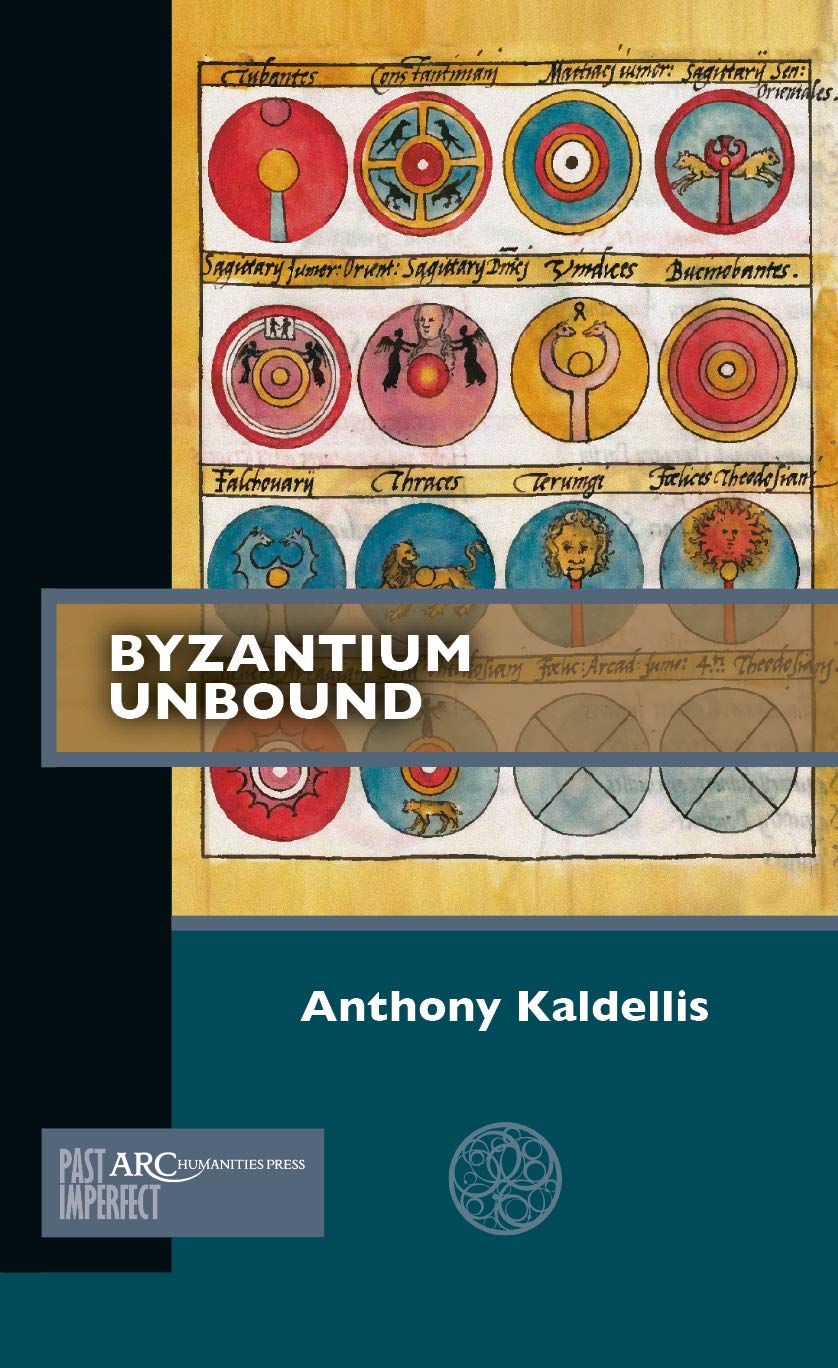
Title
Byzantium Unbound (Past Imperfect),Used
Sold by Ergodebooks, an authorized reseller.
Returns accepted within 30 days | support@ergodebooks.com
Shipping Information
- Free Standard Shipping — United States only
- Processing Time: 3–5 business days
- Estimated Delivery: 6–10 business days after dispatch
- Double-boxed, fully insured & discreetly packaged
- Tracking number sent via email once dispatched
Returns & Refund
Returns accepted within 30 days of delivery.
Damaged or Defective Item
Free return shipping + replacement or full refund
Wrong Item Received
Free return shipping + replacement or full refund
Change of Mind
Return shipping at customer's expense · 25% restocking fee applies
Payment Option

For a civilization that preserved its existence and integrity against overwhelming odds and contributed in captivating ways to the diversity of human culture, Byzantium is strangely one of the most maligned and misunderstood civilizations of the past. The way in which history has been carved up into periods has worked to its disadvantage, and Byzantium has been artificially cut off from its Roman roots. This book proposes a long view of Byzantium, one that begins in the early Roman empire and extends all the way to the modern period. It is a provocative thoughtexperiment which posits Byzantium as the most stable and enduring form of GrecoRoman society, forming a sturdy bridge between antiquity and the early modern period, as well as between East and West, and which sees the ancient Greek, Roman, and Christian traditions as flowing together. It offers a Byzantium unbound by other cultures and fields of study that would artificially cut it down to size.
⚠️ WARNING (California Proposition 65):
This product may contain chemicals known to the State of California to cause cancer, birth defects, or other reproductive harm.
For more information, please visit www.P65Warnings.ca.gov.
- Q: What is the page count of 'Byzantium Unbound'? A: This book has one hundred twenty pages. It provides a comprehensive exploration of the Byzantine civilization.
- Q: What are the dimensions of 'Byzantium Unbound'? A: The book measures four point twenty-five inches in length, zero point twenty-five inches in width, and seven point zero one inches in height.
- Q: What type of binding does 'Byzantium Unbound' have? A: This book is available in paperback binding. This makes it lightweight and easy to handle.
- Q: Who is the author of 'Byzantium Unbound'? A: The author of this book is Anthony Kaldellis. He is known for his expertise in ancient civilizations.
- Q: What category does 'Byzantium Unbound' belong to? A: The book is categorized under Ancient Civilizations. It focuses on the history and impact of Byzantium.
- Q: What themes are explored in 'Byzantium Unbound'? A: The book explores themes of cultural continuity and the connection between East and West. It challenges common misconceptions about Byzantium.
- Q: How is 'Byzantium Unbound' relevant to modern readers? A: This book is relevant as it provides insights into cultural diversity and historical connections. It encourages readers to appreciate the complexities of history.
- Q: Is 'Byzantium Unbound' suitable for academic study? A: Yes, this book is suitable for academic study. It offers a deep analysis of Byzantine history that can support various research topics.
- Q: What is the main argument of 'Byzantium Unbound'? A: The main argument is that Byzantium represents a stable form of Greco-Roman society. It emphasizes the civilization's significance in bridging ancient and modern worlds.
- Q: Can I gift 'Byzantium Unbound' to someone interested in history? A: Yes, it makes an excellent gift for history enthusiasts. The book provides a fresh perspective on a vital historical period.
- Q: How does 'Byzantium Unbound' compare to other history books? A: This book offers a unique viewpoint by linking Byzantine history to broader cultural themes. It differs from many conventional history texts.
- Q: What audiences would benefit from reading 'Byzantium Unbound'? A: Students, educators, and history buffs would benefit from this book. Its insights are valuable for anyone interested in ancient civilizations.
- Q: Is there a digital version of 'Byzantium Unbound' available? A: Yes, a digital version may be available. Check major online retailers for options.
- Q: What is the publication date of 'Byzantium Unbound'? A: The publication date can be found on the book's details page. This information is essential for understanding its relevance.
- Q: Are there any illustrations in 'Byzantium Unbound'? A: The book primarily focuses on text. It may not contain many illustrations, as it emphasizes scholarly content.