
Title
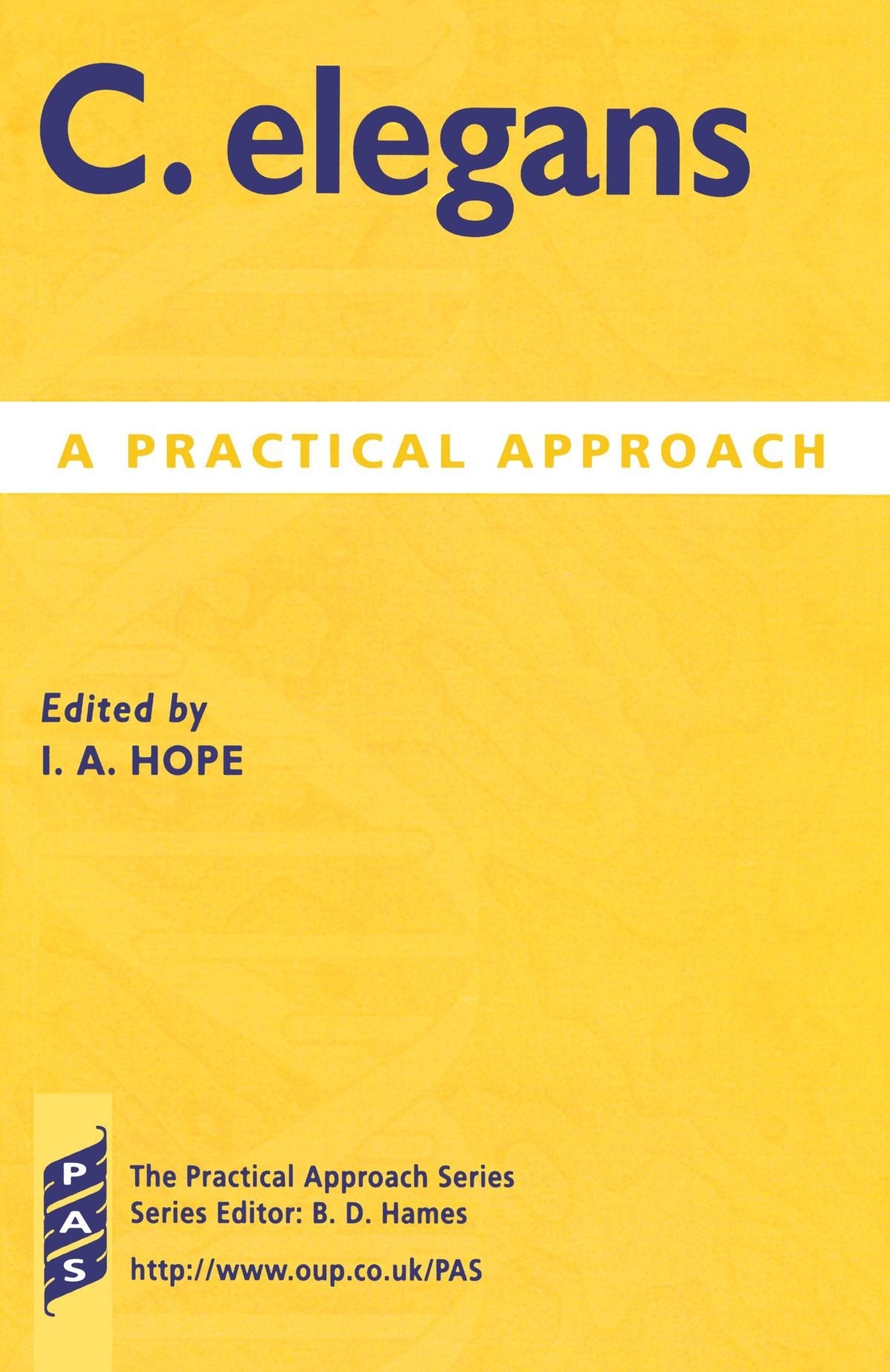
C. Elegans: A Practical Approach,New
Sold by Ergodebooks, an authorized reseller.
Returns accepted within 30 days | support@ergodebooks.com
Shipping Information
- Free Standard Shipping — United States only
- Processing Time: 3–5 business days
- Estimated Delivery: 6–10 business days after dispatch
- Double-boxed, fully insured & discreetly packaged
- Tracking number sent via email once dispatched
Returns & Refund
Returns accepted within 30 days of delivery.
Damaged or Defective Item
Free return shipping + replacement or full refund
Wrong Item Received
Free return shipping + replacement or full refund
Change of Mind
Return shipping at customer's expense · 25% restocking fee applies
Payment Option

Caenorhabditis Elegans Has Been A Popular Model Organism For Biological Research For Over Thirty Years And Has Been Used To Investigate Many Aspects Of Animal Development, For Example Apoptosis, The Hox Genes, Signal Transduction Pathways, And The Development Of The Nervous System. It Has Recently Taken On New Importance With The Publication Of The Entire Genome Sequence In 1998. The First Chapter Gives All The Basic Information On C. Elegans Required To Use It: It'S Natural History, Anatomy, Life Cycle, Development, And Evolution. Information On How To Obtain, Grow, And Maintain C. Elegans For Use As A Model System Is Given In Chapter 4. Chapters 2 And 3 Describe The Genome Project And Show How To Use Genome Sequence Information By Searching The Database For Homologues Using Different Search Methods And Then How To Analyse The Search Data. The Next Chapter Gives The Essential Practical Details Of Transformation And Common Uses For The Technique. Chapter 6 Covers Reverse Genetics And Describes Strategies For Gene Inactivation That Are Known To Work In C Elegans: Epigenetic Inactivation And Mutational Germ Line Inactivation. Chapter 7 Is Designed To Help The User Analyse Phenotype By Microscopy And Includes Normaski, Fluorescence, 4Dimensional, And Electron Microscopy. Techniques For Studying The Neurobiology Of C. Elegans Are Given In Chapter 8. Chapter 9 Describes The Three Commonly Used Approaches For Studying Gene Expression And Chapter 10 Deals With The Common Methods Of Molecular Biology Essential For Gene Characterization. C. Elegans Is Not The Ideal Organism For Biochemical Studies, But Chapter 11 Describes Several Procedures For Producing Biochemically Useful Quantities Of Pure Tissues. The Final Chapter Is About Conventional Genetics And Details The Standard Procedures For Selfing And Crossing; Mutagenesis And Mutant Screening; Characterization Of Mutants; Gene Mapping; Temperatureshift Experiments And Mosaic Analysis. Caenorhabditis Elegans: A Practical Approach Will Therefore Provide All The Background Information Necessary For Use Of C. Elegans As A Model System.
⚠️ WARNING (California Proposition 65):
This product may contain chemicals known to the State of California to cause cancer, birth defects, or other reproductive harm.
For more information, please visit www.P65Warnings.ca.gov.
- Q: How many pages does this book have? A: This book contains three hundred four pages. It provides extensive information on using C. elegans as a model organism.
- Q: What are the dimensions of the book? A: The book measures nine point eighteen inches in length, six point three inches in width, and zero point six three inches in height. These dimensions make it a convenient size for reading and reference.
- Q: What type of binding does this book have? A: This book is bound in paperback. This binding makes it flexible and lightweight for easy handling.
- Q: Who is the author of this book? A: The author of this book is Ian A. Hope. He is known for his expertise in the field of cell biology.
- Q: Is this book suitable for beginners? A: Yes, this book is suitable for beginners. It provides foundational knowledge about C. elegans, making it accessible for those new to the subject.
- Q: What topics are covered in this book? A: The book covers topics such as anatomy, life cycle, genome sequencing, and molecular biology techniques. It is a comprehensive resource for studying C. elegans.
- Q: How should I store this book? A: Store the book in a dry, cool place to maintain its condition. Avoid direct sunlight to prevent fading of the cover and pages.
- Q: Can this book be cleaned if it gets dirty? A: Yes, you can clean the book gently using a soft, dry cloth. Avoid using water or cleaning solutions to prevent damage.
- Q: What if the book arrives damaged? A: If the book arrives damaged, you should contact the seller for a return or exchange. Most sellers have a return policy in place.
- Q: Is there a warranty on this book? A: No, there is typically no warranty on books. However, check the seller’s policy for specific return options.
- Q: How does this book compare to others in cell biology? A: This book is unique in its focus on C. elegans as a model organism, unlike broader cell biology texts that cover multiple organisms.
- Q: Is this book appropriate for advanced researchers? A: Yes, advanced researchers will find valuable insights and techniques in this book. It includes detailed protocols and methodologies relevant to their work.
- Q: What specific techniques does this book discuss? A: The book discusses techniques such as microscopy, gene inactivation, and molecular biology methods, crucial for studying C. elegans.
- Q: Does this book include practical applications? A: Yes, it provides practical applications for using C. elegans in research, including transformation and gene analysis techniques.
- Q: Can I use this book for university coursework? A: Yes, this book is suitable for university coursework in biology and related fields. It is a valuable resource for students.
- Q: What age group is this book suitable for? A: This book is suitable for adults and advanced students in biological sciences. It is not designed for younger audiences.