If you have any questions, you are always welcome to contact us. We'll get back to you as soon as possible, withing 24 hours on weekdays.
Customer service
All questions about your order, return and delivery must be sent to our customer service team by e-mail at yourstore@yourdomain.com
Sale & Press
If you are interested in selling our products, need more information about our brand or wish to make a collaboration, please contact us at press@yourdomain.com
Help
If you have any questions, you are always welcome to contact us. We'll get back to you as soon as possible, withing 24 hours on weekdays.
Customer service
All questions about your order, return and delivery must be sent to our customer service team by e-mail at yourstore@yourdomain.com
Sale & Press
If you are interested in selling our products, need more information about our brand or wish to make a collaboration, please contact us at press@yourdomain.com
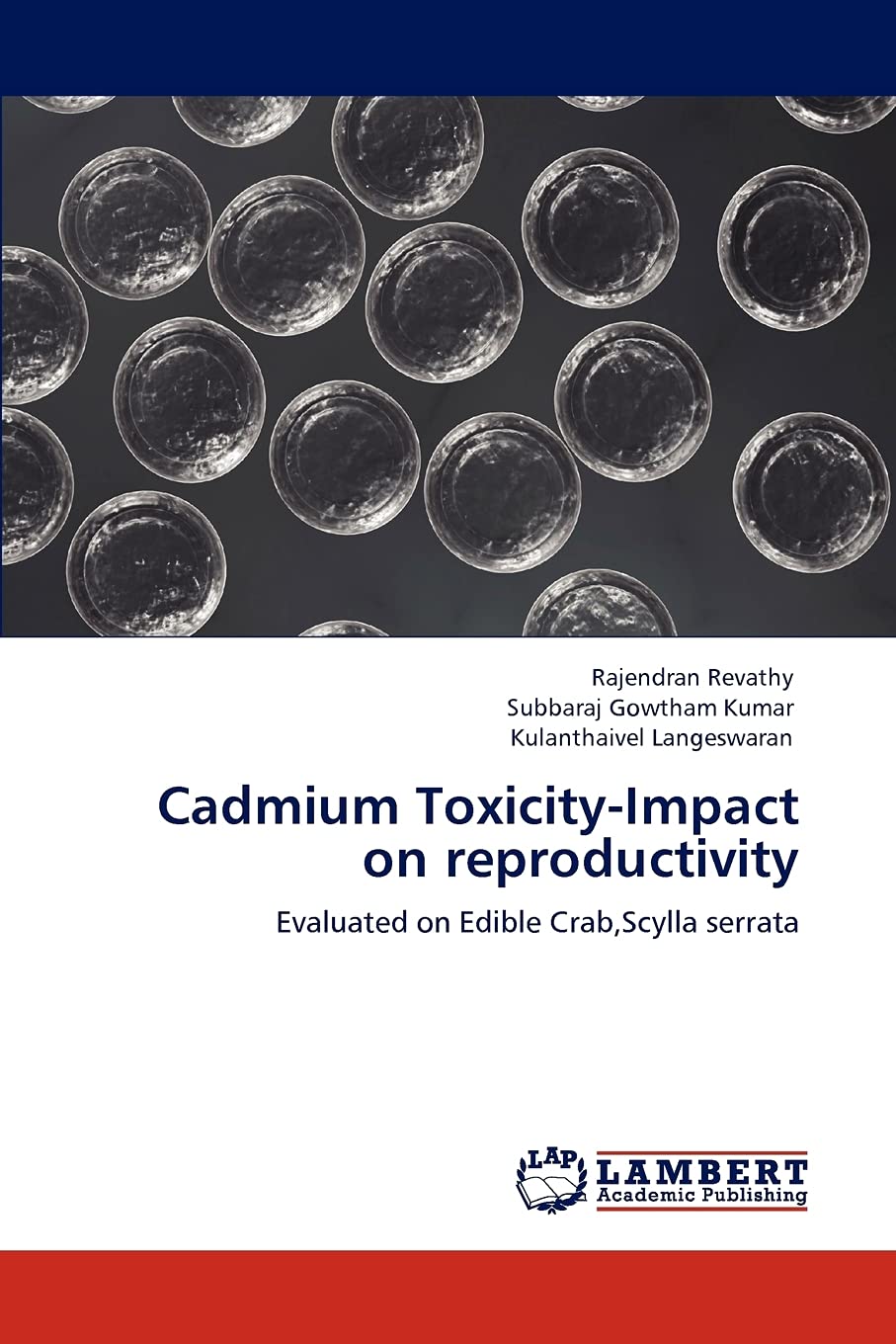
Cadmium is toxic to a wide range of organisms; the main effects are on the growth and reproduction. Dissolved cadmium salts released in drainage water from mines may represent a significant threat to aquatic wildlife. Reproductively active aquatic animals exposed to pollutant stress undergo alterations in their biochemical and physiological functions leading to the disturbed reproductive processes. Biochemical constituents and enzymes are the first detectable / quantifiable responses to environmental changes and can serve as markers for both exposures and effects in organisms. In the edible crab Scylla serrata, the protein, carbohydrate, lipid, marker enzymes and antioxidants have been estimated in the ovary, hepatopancreas, muscle and haemolymph during various stages of the ovarian maturation. The results revealed there were declined levels of protein, carbohydrates, lipid and antioxidants in the cadmium reared crabs when compared to the control. The marker enzymes were increased in the haemolymph. The results were tested statistically and concluded that Cadmium toxicity has significant role in reproductivity.
⚠️ WARNING (California Proposition 65):
This product may contain chemicals known to the State of California to cause cancer,
birth defects, or other reproductive harm.
For MAP (Minimum Advertised Price) violations and Intellectual Property (IP) or Trademark concerns, please contact:
support@ergodebooks.com
⚠️ California Proposition 65 Warning: Some products sold on this website may expose you to chemicals known to the State of California to cause cancer, birth defects, or other reproductive harm. For more information, visit www.P65Warnings.ca.gov.